As properties modernize, perimeter gates are becoming core components of a building’s security and access control strategy. Multifamily communities, gated HOAs, and commercial facilities now expect gate intercom systems to support remote management, reliable outdoor performance, and integration with IP-based access control.
The “best” gate intercom system isn’t defined by features alone. It depends on how well the system performs at the perimeter entrance, integrates with automated gate operators, and supports real-world vehicle and visitor workflows.
In this guide, you’ll learn how to evaluate wired, wireless, cellular, and cloud-managed gate intercom systems based on infrastructure, traffic patterns, and long-term scalability, so you can choose a solution that fits your property’s operational needs.
This article draws on publicly available access control standards, including IEC 60529 (IP Code for ingress protection), IEC 62262 (IK impact resistance ratings), cloud vendor assurance frameworks such as SOC 2, and current deployment models used in residential and commercial properties.
Key Takeaways
- For 2026, we recommend systems from Swiftlane, Aiphone, LiftMaster, DoorKing, and DoorBird.
- The best gate intercom system depends on infrastructure, traffic volume, and integration with your broader access control system.
- Wired, wireless, cellular, and cloud-managed IP intercom systems offer different performance at perimeter gates.
- Outdoor gate hardware should meet IP-rated and IK-rated durability standards to withstand weather and high traffic.
- Reliable deployment requires compatibility with automated gate operators, support for relay outputs, and stable connectivity.
- Cloud-managed systems support remote credential provisioning, mobile credentials, and audit trails, improving scalability for multifamily and commercial properties.
Table of Contents
- Our Top Picks at a Glance
- What Makes a Gate Intercom System “The Best?”
- Key Factors to Consider Before Choosing a Gate Intercom System
- Gate Intercom Connectivity and System Architecture Explained
- Choosing the Right Gate Intercom by Property Type
- Common Mistakes When Choosing a Gate Intercom System
- Quick Comparison: Which Gate Intercom Type is Best for Your Setup
- Where Swiftlane Fits
- Gate Intercom Evaluation Checklist for Property Managers
- FAQs
Related Articles
- Gate Intercom Systems: How to Choose the Right One for Your Property (2026 Checklist Included)
- Intercom for Gated Communities: What to Install at Your Gate Entrance
- Smart Intercom for HOA Communities: What to Install and How to Improve Security
Our Top Picks at a Glance
Below are our top picks after researching and comparing the leading gate intercom systems. We evaluated each based on features, reliability, ease of installation, and user experience across different property types.
Best Overall — Swiftlane SwiftReader X


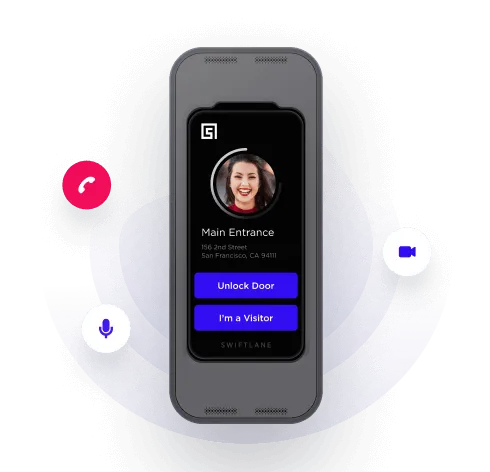
Swiftlane SwiftReader X combines cutting-edge technology with ease of use. It supports video calling, mobile app access, PIN codes, key fobs, and facial recognition from a single sleek panel. It works well at apartment gates, HOA entry points, and commercial facilities, earning our top overall spot.
Key Specs:
- Full HD (1080p) wide-angle camera with night vision
- Cloud-based management dashboard
- Supports unlimited users and multiple credential types
- Two-way audio and video calling to smartphones
- IP65 weather-resistant housing
- Integration with popular access control and property management platforms
Ideal For: Property managers and building owners who want a single, future-proof platform that can scale across apartments, HOAs, and commercial sites.
Best for Apartments — Aiphone IX Series


Aiphone has been a trusted name in intercom technology for decades. The IX Series is their flagship IP-based system for multi-tenant residential buildings. It handles large directories easily and offers tenants several ways to grant visitor access.
Key Specs:
- SIP-compatible IP video intercom
- Hands-free and handset tenant stations available
- Wide-angle camera with auto-focus
- Built-in relay outputs for gate/door control
- PoE (Power over Ethernet) for simplified wiring
Ideal For: Large apartment complexes (50+ units) that value proven reliability and need a system that can handle a massive tenant directory without breaking a sweat.
Best for HOAs — LiftMaster CAPXLV


HOA communities need vehicle gate access, visitor management for many homeowners, and minimal maintenance. The LiftMaster CAPXLV was built for gated communities and integrates with LiftMaster’s gate operators, already installed in thousands of HOA communities nationwide.
Key Specs:
- Built-in camera with live video feed to smartphones via their app
- Supports CAP2D 4-door access controller
- Virtual directory with search-by-name functionality
- Works with LiftMaster gate operators out of the box
- RFID, PIN, and mobile credential support
Ideal For: HOA-managed gated communities, especially those already using LiftMaster gate operators, who want a plug-and-play solution with a resident-friendly app.
Best Budget — DoorKing 1834

Not every property needs facial recognition or cloud dashboards. The DoorKing 1834 is a dependable, no-nonsense telephone entry system that has been a staple at gated properties for years. It delivers core intercom functions—directory, call-to-phone, and gate release—at a price that fits most budgets.
Key Specs:
- Built-in directory with backlit LCD display
- Calls residents via landline or cell phone
- Built-in postal lock for mail carrier access
- RS-485 networking for multi-entry setups
- Heavy-duty aluminum housing
Ideal For: Budget-conscious apartment complexes, smaller HOAs, and commercial properties that need basic but reliable gate entry without recurring cloud fees.
Best Video Quality — DoorBird D2101V


If crystal-clear video is your priority, the DoorBird D2101V delivers the best image quality. It also records and stores video of every interaction, giving you a searchable visual log.
Key Specs:
- Full HD 1080p camera with 180° wide-angle lens
- Infrared night vision
- Live video streaming and automatic snapshot/video recording
- POE (Power over Ethernet)
- Open API for integration with smart home and automation systems
- Available in multiple finishes (stainless steel, titanium, custom RAL colors)
- IP65-rated for outdoor installation
Ideal For: Luxury apartments, upscale HOAs, and commercial properties where video quality, aesthetics, and smart home integration are top priorities. The D2101V is a single-button unit, designed for single-tenant or small-scale use.
What Makes a Gate Intercom System “The Best?”
The best gate intercom system is the one that works reliably at your gate, every day.
Because gate systems operate outdoors, manage vehicle traffic, and often sit far from building infrastructure, durability and connectivity matter more than feature lists. A system that works in a lobby may not perform the same way at a long driveway or high-traffic entry point.
When evaluating options, focus on four core factors:
- Durability – Can the hardware withstand weather exposure, frequent vehicle use, and outdoor conditions?
- Connectivity – Does the gate support wired, Wi-Fi, or cellular communication reliably?
- Operator Integration – Can property managers monitor, grant access, and manage credentials remotely without friction?
- Workflow Fit – Does the system align with how residents, visitors, vendors, or staff actually enter the property?
The right solution fits the property’s layout, supports remote and mobile access, and scales as needs change.
In short, the best gate intercom system is the one built for real-world conditions and the way your property actually operates.
Key Factors to Consider Before Choosing a Gate Intercom System


Focusing on real-world operational factors helps narrow down the best gate intercom system option without overcomplicating the decision.
Gate Entry and Workflow
Start by considering what kind of gate you’re managing. Vehicle gates, pedestrian gates, and dual-entry setups all have different access needs. For example, a vehicle gate typically requires faster verification and remote unlock capability, while pedestrian gates may prioritize ease of use and clear communication.
Property Size, Layout, and Gate Connectivity
The distance between the gate and the main building is more important than many expect. Gates far from a property’s core infrastructure often face connectivity limitations that affect audio quality, video performance, and remote access reliability.
Not all gate entrances have wired internet or strong Wi-Fi, especially those at the edge of the property. Connectivity becomes a primary planning consideration rather than a technical afterthought.
Larger properties, gated communities, and campuses with multiple entry points typically require systems designed for long-range communication and centralized management. Understanding whether your gate supports wired, wireless, or cellular connectivity helps ensure consistent performance, even during peak usage times.
Traffic Volume and Daily Usage
A low-traffic residential gate can function well with simpler systems, but high-traffic properties need solutions that can handle frequent calls, multiple visitors, and continuous access requests without slowing down.
If the gate has regular visitor flow, staff access, and delivery traffic, prioritize systems that support efficient call handling and remote management to keep entry moving smoothly.
Security and Verification Needs
Some properties require only audio intercom communication, while others need video verification to support stronger access control. Higher-security environments, such as gated communities or commercial facilities, benefit from systems that allow visual confirmation before granting access.
A layer of verification can improve both safety and operational control without making the entry process overly complicated.
Management Style and Remote Access Expectations
Finally, consider how the gate is managed day-to-day. Properties with on-site staff may prefer centralized control systems, while remotely managed properties often benefit from mobile-based access and cloud-enabled features.
Modern gate intercom systems that support remote unlocking, user management, and real-time monitoring can significantly reduce manual workload while keeping entry management consistent and efficient.
Gate Intercom Connectivity and System Architecture Explained
When selecting a gate intercom, it’s important to distinguish between how the device connects and how the system is managed. Connectivity affects installation and reliability at the gate, while architecture determines how credentials, users, and events are controlled.
Understanding both reduces confusion and leads to better long-term decisions.
Connectivity Options at the Gate
Connectivity determines how the gate intercom communicates with the rest of the system.
| Connectivity Type | How It Works | Best For | Key Considerations |
| Wired (Ethernet / PoE) | Physical cabling connects the gate intercom to the network or control system. | Properties with existing conduit or stable infrastructure. | Highly reliable and low latency, but may require trenching and higher installation costs. |
| Wi-Fi | Connects to a nearby wireless access point or radio receiver. | Gates located near the main building with strong signal coverage. | Signal strength and interference can affect performance over distance. |
| Cellular (LTE / 5G) | Uses a built-in cellular modem to transmit data over mobile networks. | Remote gates, long driveways, or properties without network access at the entrance. | Reduces trenching needs but requires a data plan and reliable carrier coverage. |
System Architecture: On-Premise vs Cloud-Managed
Architecture defines where access permissions and system logic are managed.
| Architecture Type | How It Works | Best For | Key Considerations |
| On-Premise System | Managed through a local control panel or server installed on-site. | Properties with existing legacy infrastructure. | Greater hardware dependency; updates and management occur locally. |
| Cloud-Managed System | Managed through a secure cloud platform accessible remotely. | Multifamily, HOAs, and properties requiring remote administration. | Depends on internet connectivity but enables centralized updates, audit logs, and remote credential control. |
Choosing the Right Gate Intercom by Property Type
The best gate intercom system can look very different depending on the type of property you’re managing. A setup that works well for a small residential gate may not be suitable for a large multifamily entrance or a commercial facility with a constant vehicle flow.
Instead of looking for a one-size-fits-all solution, it’s more useful to match the system to how the property operates on a daily basis.
Apartment Complexes and Multifamily Properties
Multifamily properties typically manage steady visitor traffic, deliveries, and resident vehicle access throughout the day. Remote management and scalability are critical, especially for communities without staffed gatehouses.
Key features to look for:
- Mobile-based resident access
- Tenant directory with remote unlock capability
- Cloud-based management dashboard
- Integration with building-wide access control
- Scalable user management as occupancy grows
Best fit:
Cloud-based gate intercom systems with mobile-first access and centralized management are typically the strongest fit for modern multifamily communities.
Gated Communities and HOAs
HOAs and gated communities often manage a mix of residents, guests, vendors, and service providers across multiple entry points. Entry should feel secure but seamless.
Key features to look for:
- Video-enabled calling for visitor verification
- Remote access management for board members or property managers
- Multi-gate centralized control
- Guest access scheduling or temporary credentials
- Reliable connectivity (wired or cellular)
Best fit:
Video-capable gate intercom systems with centralized cloud management are well-suited for communities managing shared access policies across multiple entrances.
Commercial and Industrial Properties
Commercial and industrial sites often operate on structured schedules with vendor deliveries, employee access windows, and higher daily vehicle volume.
Key features to look for:
- High-durability hardware rated for outdoor exposure
- Low-latency audio/video communication
- Role-based access permissions
- Integration with existing access control or credential systems
- Cellular backup for uptime protection
Best fit:
Enterprise-grade gate intercom systems designed for high traffic and structured access workflows perform best in commercial and industrial environments.
Common Mistakes When Choosing a Gate Intercom System


Even well-planned properties sometimes run into issues with the gate intercom systems. Not because the system is low-quality, but because it wasn’t designed with the gate environment in mind. Gates operate very differently from indoor entry points, so small oversights during selection can lead to daily frustrations later on.
Being aware of these common mistakes can help you choose a system that performs reliably over time rather than one that only looks good on paper.
Choosing a System Designed for Indoor Use
One of the most frequent missteps is selecting an intercom that works well indoors but isn’t built for outdoor gate conditions. Gate entrances are exposed to weather, temperature changes, dust, and constant use, which requires IP-rated outdoor hardware.
Systems specifically designed for outdoor installation tend to offer better longevity and more consistent performance in real-world gate environments.
Overlooking Connectivity at the Gate
It’s easy to assume the gate will have the same connectivity as the main building, but that’s not always the case. Gates located at long driveways, perimeter entrances, or separate access points may have weaker Wi-Fi or limited wired infrastructure.
If connectivity isn’t considered early, this can lead to delays, call latency, or packet loss, or inconsistent remote access. Evaluating internet availability at the gate helps prevent reliability issues after installation.
Focusing Only on Features Instead of Daily Workflow
A system with many features may seem like the best option, but if it doesn’t match how the gate is used, those features may not add much value. For example, a property with high vehicle traffic benefits more from fast response times and easy remote unlock capability than from overly complex settings.
Looking at the daily entry patterns, such as resident access, deliveries, and visitor flow, often leads to a more practical and effective choice.
Ignoring Long-Term Scalability
Some properties choose systems that meet current needs but don’t account for future growth. As traffic increases or access policies evolve, a limited system may require upgrades or full replacement sooner than expected.
Selecting a gate intercom that can scale with additional users, entry points, or integrations can help maintain consistency as the property expands.
Underestimating Remote Management Needs
Modern properties are increasingly managed remotely, whether partially or fully. Choosing a system that requires constant on-site handling can add unnecessary operational strain over time.
Gate intercom systems that support remote monitoring, mobile access, and centralized control can make day-to-day management more efficient, especially for properties without dedicated gate staff.
Quick Comparison: Which Gate Intercom Type is Best for Your Setup
To simplify the decision process, it helps to map your property’s setup directly to the type of gate intercom system that will perform best. This keeps the focus on real usage and infrastructure rather than just features.
| Property Factor | Recommended Gate Intercom Type | Why It Works Well |
| Gate close to the building | Wired or wireless intercom | Easier connectivity and stable communication due to shorter distance |
| Long driveway or perimeter gate | Cloud-managed IP intercom with LTE backup | More reliable for remote locations with limited wiring access |
| Moderate traffic (apartments, small communities) | Video intercom with mobile access | Balances convenience, verification, and remote entry management |
| High-traffic entrances (large communities, commercial sites) | Cloud-based gate intercom systems | Enables remote monitoring, mobile access, and centralized control |
| On-site staffed properties | Wired or centrally managed systems | Allows direct control from a security desk or management office |
| Remotely managed properties | Cloud-based gate intercom systems | Enables remote monitoring, mobile access, and centralized control |
| Higher security environments | Video intercom with event logging and access audit trail | Supports visual verification and better access tracking |
| Multi-entry properties (multiple gates) | Cloud-based or integrated smart systems | Easier to manage multiple entry points from a single platform |
Where Swiftlane Fits
Swiftlane offers a cloud-managed video intercom and access control platform designed for multifamily and commercial buildings. Its system supports mobile-based credentials, video verification at entry points, and centralized management through a dashboard.
For gate deployments, property teams typically evaluate:
- Compatibility with gate operators via relay output
- Outdoor-rated hardware for perimeter installation
- Support for mobile credentials and remote unlock
- Audit logging for access events
As with any access control investment, decision-makers should compare system architecture, integration capabilities, and operational fit — including how the platform integrates with existing gate operators and broader access control infrastructure.Looking to evaluate vendors? Use the decision checklist below to compare systems based on infrastructure, durability, and long-term scalability rather than feature lists alone.


Gate Intercom Evaluation Checklist for Property Managers
Use this framework when comparing vendors or preparing for demos.
Infrastructure & Connectivity
- Supports PoE or low-voltage power requirements
- Offers LTE/cellular backup for perimeter gates
- Functions reliably over long driveway distances
- Compatible with existing network infrastructure
Gate Operator Integration
- Provides dry contact relay output
- Compatible with current gate operator brand/model
- Adjustable relay timing
- Supports integration with existing access control panels
Durability & Environmental Protection
- Rated IP65 or higher for outdoor use
- IK-rated for vandal resistance
- Designed for high-traffic vehicle environments
Access Control & Credential Management
- Supports mobile credentials (smartphone-based access)
- Allows remote credential provisioning
- Enables role-based access control (RBAC)
- Provides entry event logging and audit trails
Operational Fit
- Supports remote unlock capability
- Multi-site management from one dashboard
- Scales to additional gates or entry points
- Integrates with property management workflows
FAQs
What is the best type of gate intercom system for modern properties?
For most modern properties, cloud-based smart gate intercom systems are often the most practical choice because they support remote access, mobile credentials, and centralized management. They are especially useful for multifamily buildings, gated communities, and commercial properties that handle frequent visitor and delivery traffic.
Are wireless gate intercom systems reliable?
Wireless gate intercom systems can be reliable when the gate is close to the building, and the signal strength is stable. However, for longer driveways or perimeter gates, performance may vary depending on connectivity, which is why many properties evaluate wired or cloud-based options for more consistent operation.
Can a gate intercom system work with automatic gates and access control?
Yes, most modern gate intercom systems can integrate with automatic gates and broader access control systems. This allows property managers to verify visitors, grant remote access, and manage entry points more efficiently.
Can a gate intercom work without the internet?
Yes. Many modern gate intercoms support built-in cellular connectivity, allowing them to operate without wired internet at the gate.
This is especially useful for entrances located far from the main building, where running Ethernet would require trenching. Some systems also use cellular as a backup to maintain uptime if the primary internet connection fails.
Before selecting a system, confirm whether cellular connectivity is included and how failover is handled.