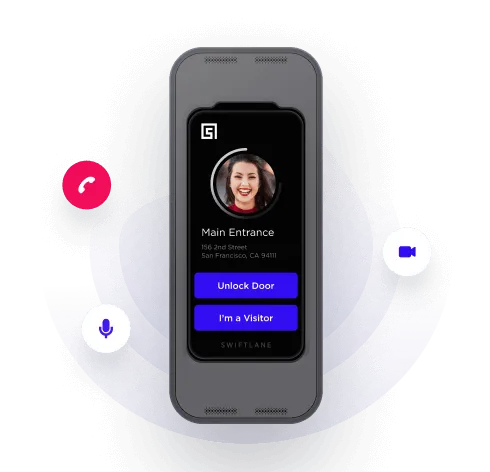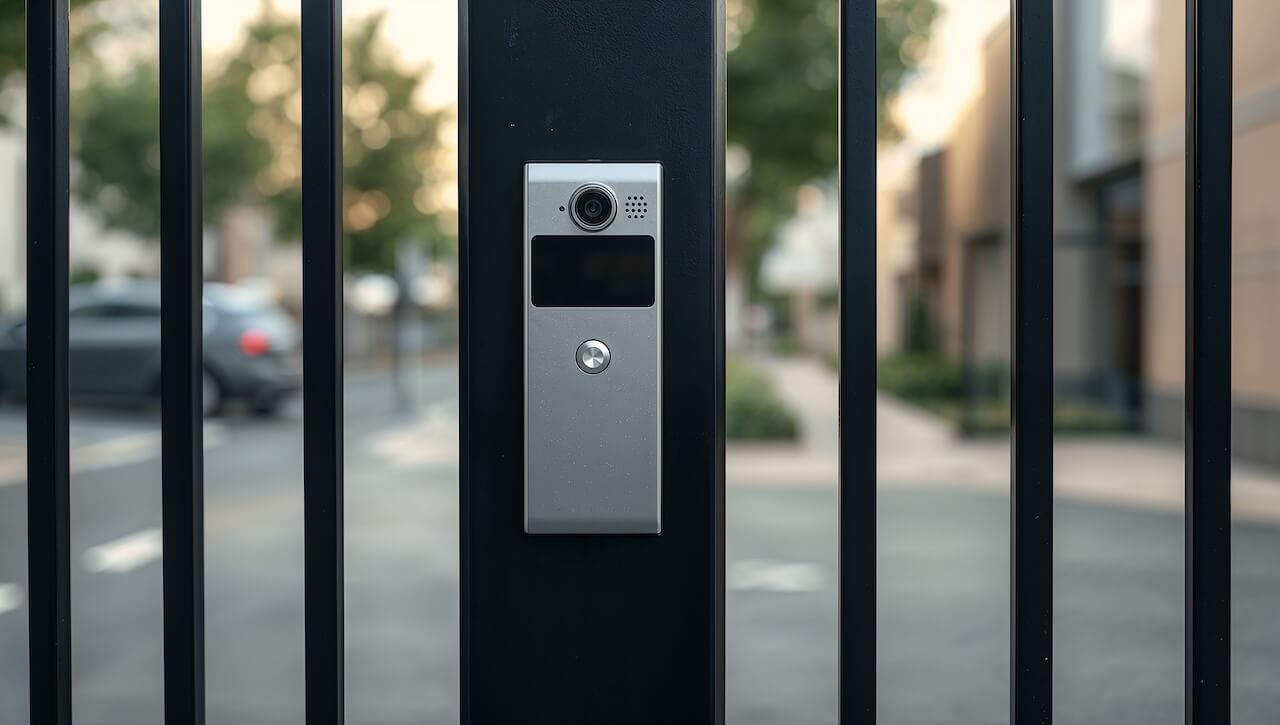
A gate security system controls vehicle and pedestrian entry at apartment complexes, gated communities, and commercial properties. It pairs a physical gate with an access control method such as a keypad, key fob, license plate recognition (LPR), or smartphone-based credential. For multifamily buildings and HOAs, a gate security system is usually the first layer of defense, screening residents, guests, delivery drivers, and service workers before they reach building entrances.
The right setup depends on traffic volume, budget, and required security level, ranging from a keypad and manual gate for a small community to an integrated LPR and video intercom system for a larger property. This guide covers the components, security tiers, gate types, and costs involved in choosing a gate security system for apartments, gated communities, and commercial sites.
How We Researched This
This refresh is built on Google Search Console query data identifying where the page lost traffic due to intent mismatch, plus direct primary-source verification rather than secondary citations. Property crime figures cited come directly from the Bureau of Justice Statistics’ National Crime Victimization Survey, the federal government’s own household crime data, rather than a vendor-commissioned survey.
We checked UL 325 and ASTM F2200 against UL’s and DASMA’s own standards documentation, not a blog’s paraphrase. Cost guidance draws on Swiftlane’s own deployment data instead of unverifiable competitor figures. We dropped statistics we couldn’t trace to a defensible primary source rather than publishing them as unsourced claims.
Key Takeaways
- The essential components of security gate access control
- Why gate security has become so important for apartments, gated communities, and HOAs
- Managing deliveries, vendors, and guest access at apartment properties
- Different types of access control credentials and security levels of gate hardware
- Gate safety standards (UL 325, ASTM F2200) to know before installing
- How to get started purchasing a gate and access control solution
Table of Contents
- Why Buildings and Communities Turn to Gate Access Control
- Apartment Gate Security & Entry Management
- Key Components of Gate Security Systems
- Multi-Family Residential Gate Security Solutions
- Gated Community Access Control
- What is the Best Gate Access Control System?
- Security Gate Access Control Levels
- Gate Safety Standards (UL 325 / ASTM F2200)
- Gate Types For All Security Levels
- The Swiftlane Access Control Platform for Gates, Doors, and Entryways
- How To Obtain a Gate Security System
- Frequently Asked Questions
Why Buildings and Communities Turn to Gate Access Control
Today, access control solutions are more critical than ever. Across many communities and building types, foot traffic and vehicle congestion are rising due to:
- Increasing use of food, meal kits, and grocery deliveries
- Online shopping and package deliveries (e.g., Amazon, FedEx, UPS)
- Service workers, such as landscapers, house cleaners, and pet care providers
- Childcare providers, including tutors, babysitters, and nannies
- Visits from friends and family
- The everyday coming and going of employees to and from work
As traffic increases, it can create bottlenecks and strain property management or gate staff. A modern gate security system, such as one with smartphone access control and an online management platform, can provide reliable access for authorized users while adding a layer of security.
The need is real: households in urban areas, where most apartment buildings and multifamily communities are located, experienced property crime at a rate of 192.3 victimizations per 1,000 households in 2023, up from 176.1 the year before, according to the Bureau of Justice Statistics’ National Crime Victimization Survey.
Some of the key reasons for installing gate security today include:
Eliminate Package Theft: Would-be “porch pirates” target residential communities and steal packages or even food deliveries from building entrances or the front porches of single-family homes.
Protect Inventory and Valuables: Whether a gated property is residential, commercial, or industrial, it often contains valuable property or equipment worth protecting. Gate security systems help keep potential thieves out.
Stop Parking Poachers and Traffic: Communities of all types are installing gate access control to limit excess traffic, speeding, and to protect limited parking spots from parking poachers.
Reduce Solicitations: Solicitors go door-to-door and disrupt residents. Gate access lets residents pre-screen visitors and only allow those they want to meet.
Protect Youth: Keep kids safe by reducing neighborhood traffic and keeping strangers out. Give parents and the community tools to control access to unsupervised facilities like community gyms or pools.
Maintain Privacy: With a comprehensive access control system, residents can maintain their privacy, and communities can feel safe and exclusive.
Apartment Gate Security & Entry Management
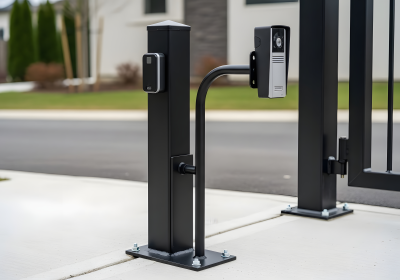
Apartment complexes and multifamily properties face entry challenges that single-family gated communities generally don’t: constant delivery traffic, a rotating cast of vendors and service providers, frequent guest visits, and tenants who move in and out regularly. A gate security system built for apartment operations needs to handle all of this without turning into a bottleneck at the front entrance or a burden on property management staff.
Managing Deliveries and Vendor Access
Package deliveries, food delivery drivers, landscapers, cleaning crews, and maintenance contractors all need access to the property, often on a recurring or scheduled basis. Rather than issuing permanent credentials to every vendor, many apartment gate systems support temporary or scheduled access codes, so a landscaping crew might get access only during business hours on service days, and a one-time delivery driver gets a single-use code tied to a specific unit.
This keeps the access list clean and makes it easy to see exactly who came through the gate and when.
Guest Access Without a Front Desk
Most apartment complexes don’t staff a full-time gatehouse, so guest entry must work without someone physically verifying every visitor. Video intercoms paired with a gate let residents see and speak with a guest before granting access remotely, from anywhere, rather than needing to walk to the entrance.
For apartment properties evaluating intercom systems, this is often one of the highest-impact upgrades for guest and delivery access, since it replaces both a call box and a physical walk to the gate with one interaction from a resident’s phone.
Tenant Turnover and Credential Management
Apartment communities see regular turnover as leases end and new residents move in, and every move-out means deactivating an old credential and issuing a new one. Gate systems with a cloud-based management platform let property managers add and remove residents remotely, without reprogramming the gate hardware itself.
This matters most at larger properties, where manually swapping fobs or updating a keypad code every time a lease turns over quickly becomes unmanageable. It also closes a common security gap: a former tenant’s fob or code that was never deactivated.
Key Components of Gate Security Systems
- The Gate Itself: The physical barrier: swing, sliding, or lift gate made of wood, aluminum, steel, or iron.
- Access Control Devices: Keypads, card/fob readers, LPR cameras, intercoms, or smartphone-based readers that verify who is requesting entry.
- Gate Operators: The motor and mechanism that physically opens and closes the gate once access is granted.
- Security Cameras: Cameras positioned at the gate to monitor entry and exit, often integrated with the access control platform.
- Entry/Exit Sensors: Sensors that detect vehicles or pedestrians to trigger gate operation and prevent the gate from closing on an obstruction.
- Remote Management Platforms: Cloud-based dashboards that let property managers add or remove users, review entry logs, and manage the system remotely.
Multi-Family Residential Gate Security Solutions
Beyond day-to-day security, a gate system on a multi-family property is also an investment in the property itself. Developers, building owners, and HOA communities that implement community-wide access control often see it reflected in property value, since controlled access signals a higher security standard to prospective buyers, renters, and investors.
College administrators and multi-family residential property owners increasingly treat gate and access control technology as an amenity residents actively look for when choosing where to live, which supports tenant satisfaction and helps keep occupancy rates high.
Owners of commercial and industrial facilities operating alongside residential property, such as mixed-use developments, often find that a perimeter-wide gate security system also lowers insurance costs and reduces overall liability exposure.
Developers and Owners
Property developers, building owners, and individual homeowners can significantly enhance security and increase property values by implementing a community-wide access control system. Condo and homeowners in an HOA see their property values increase because these systems provide a sense of community-wide security.
Meanwhile, college administrators and multi-family residential property owners can offer technology that residents highly value, improving tenant satisfaction and keeping occupancy rates high.
Owners of commercial and industrial facilities often find that a perimeter-wide gate security system lowers insurance costs and reduces overall risk.
Gated Community Access Control
Homeowners associations and community boards face a different decision-making process than a single apartment property manager, since gate access changes typically affect every household and often require community buy-in before installation moves forward.
Getting Community Approval
Most HOAs require board approval, and often a resident vote, before installing or upgrading a gate access system, especially when the cost is shared through dues or a special assessment. Boards typically need to weigh security benefits against the impact on residents’ daily lives, since an inconvenient gate system tends to get propped open or bypassed, which defeats the purpose.
Getting resident input early on preferred access methods (fob, app, keypad) can reduce pushback once the system is installed.
Evaluating Vendors and Installers
HOAs typically don’t have in-house technical staff, so most rely on outside vendors for both installation and ongoing maintenance. Boards should look for installers with experience specifically in residential gated communities, since community gates have different traffic patterns and access needs than commercial or industrial sites.
A key fob system installer with HOA experience can help a board avoid choosing hardware that doesn’t fit the community’s actual usage patterns.
Integrating with Shared Amenities
Many gated communities extend access control beyond the main entrance to shared amenities like pools, tennis courts, fitness centers, or clubhouses. Using the same credential (a fob, app, or code) across the main gate and amenity areas simplifies management for the board and gives residents one system to remember instead of several.
This also makes it easier to track and restrict amenity access separately from general gate access, for example, limiting pool hours without affecting main gate entry.
Ongoing Management and Liability
Once installed, someone on the board or a management company needs to handle day-to-day administration: adding new residents, removing former ones, and managing guest and vendor access.
Boards should also consider gate safety and liability, particularly for vehicle gates, and confirm the installed system meets applicable local safety standards before daily use.
What is the Best Gate Access Control System?
In our experience, there is no such thing as a “best gate access control system” because every property, facility, and community has unique needs. Most private homes don’t need a gate with anti-ramming technology or biometric identification, even though those features might be used at a maximum-security facility or industrial site. What is “best” is what meets the use-case requirements at a reasonable price. Below, we list different types of gates by access control mechanism and security level.
That said, a few standout features matter in a gate security system, especially when both visitors and authorized community members like residents or employees use it.
- Remote access – so that community members can remotely open the gate for their authorized guests without having to go to the gate.
- Smartphone-based access – incredibly convenient because most people today carry smartphones and may want to leave keys, wallets, fobs, and other credentials behind. Smartphones can also operate gates for drivers without taking their hands off the wheel.
- Cloud-based management platform – allows the property manager to remotely program each entrance point, add and remove users, and check the logs of who came and went.
- Video Intercom – A gate integrated with a video intercom lets community members visually verify who is at the gate before granting remote access.
Security Gate Access Control Levels
To meet the needs of residential and commercial security gate systems, gate access control options vary to match different security requirements. We provide a brief overview of gate types in increasing order of security and durability.
Manual Gates & Lock-and-Key Systems – Minimal Security
- Description: Opened and closed by hand. May use a padlock or deadbolt.
- Security: Minimal; depends entirely on human action. This minimal security level is vulnerable to lost keys, duplication, or bolt cutters.
- Use Case: Rural properties, farms, low-traffic private roads, private driveways, and simple residential lots.
Keypad Entry Systems – Moderate
- Description: Users enter a PIN code on a keypad to open the gate.
- Security: Moderate; risk of code sharing or observation.
- Use Case: Small apartment buildings, businesses. Common for pedestrian gates and facilities like pools or tennis courts.
Remote Control (RF Transmitter) Systems – Moderate
- Description: Users operate the gate using a dedicated remote or clicker.
- Security: Moderate; the clicker can be cloned or lost, and usually cannot be remotely deactivated. Doesn’t account for visitors.
- Use Case: Residential communities, gated homes. Common for automatic vehicle gates and gated parking areas.
Telephone Entry Systems – Moderate
- Description: Visitors call residents or security from a dedicated call box to request access.
- Security: Moderate; improved visitor screening; requires human approval, though it doesn’t allow visual verification of who’s calling.
- Use Case: Multi-tenant buildings, gated communities, commercial gate security systems, parking areas.
License Plate Recognition (LPR) Systems – Moderate
- Description: Cameras automatically open gates for authorized license plates.
- Security: Moderate; convenient for frequent users, though a stolen plate or vehicle could bypass it.
- Use Case: Corporate campuses, gated communities, logistics centers.
Card/Fob and RFID Sticker Access Control Systems – Moderate
- Description: Gate readers read RFID cards, key fobs, or RFID windshield stickers to unlock and open the gate.
- Security: Moderate; harder to copy than keys, but can be cloned, lost, or stolen. Can be remotely deactivated if lost.
- Use Case: Offices, HOAs, warehouses, multi-tenant residential properties, hotel/motel/resort properties, parking lots.
Mobile Gate Security: Smartphone App-Based Gate Systems – High
- Description: Access via mobile app, Bluetooth, or cloud.
- Security: High; can include real-time monitoring, revocable credentials, or require two-factor authentication. Can use encrypted data.
- Use Case: Modern residential, commercial, and mixed-use properties.
Video Intercom Systems – High
- Description: Audio/video call between visitor and resident; access granted remotely.
- Security: High; visual confirmation of identity. May include facial recognition for resident or employee entry (see next section).
- Use Case: Apartments, urban buildings, small campuses.
Biometric Gate Access (e.g., Facial Recognition, Fingerprint) – Very High
- Description: Gate opens only via unique biological traits.
- Security: Very high; hard to spoof, as no physical credentials are required, and credentials can’t be shared with anyone else. Biometric identifiers such as facial geometry or fingerprints are regulated under laws including the Illinois Biometric Information Privacy Act (BIPA), the Texas Capture or Use of Biometric Identifier Act (CUBI), and Washington’s RCW 19.375; property owners should confirm compliance requirements in their jurisdiction before deploying biometric access.
- Use Case: High-end residences, high-security buildings, research facilities, VIP estates, or VIP HOAs.
Integrated Multi-Factor Systems – Maximum
- Description: Combines two or more methods (e.g., card + PIN, face + app).
- Security: Maximum; reduces risk of any single point of failure.
- Use Case: Government buildings, data centers, military bases.
Gate Safety Standards (UL 325 / ASTM F2200)
Two standards commonly come up when evaluating automated gate systems: UL 325 and ASTM F2200. They cover different things, and it’s worth understanding the distinction before buying or installing a gate.
UL 325: Gate Operator Safety
UL 325 governs the safety of automated gate operators, the motorized components that open and close a gate. The current edition of the standard generally requires two independent means of entrapment protection per gate zone (such as photo-eye sensors and edge sensors), monitored safety devices that can detect a fault and stop operation, and warning signage posted on both sides of the gate.
The goal is to prevent the gate from closing on a person or vehicle without detecting the obstruction. DASMA’s overview of gate operators and UL 325 covers the practical requirements in more depth.
ASTM F2200: Automated Vehicular Gate Construction
ASTM F2200 is a separate standard that covers the physical construction of automated vehicular gates, rather than the operator or access control components. It addresses gate design and construction practices intended to reduce entrapment and structural failure risks specific to vehicle gates.
Why This Matters for Buyers
Gate operators and installers should be able to confirm that their equipment and installation practices meet the current edition of both standards. Local requirements can vary, so confirm specifics with the local authority having jurisdiction (AHJ) or a licensed gate installer before finalizing a system, particularly for any community or commercial property installing an automated vehicular gate.
Gate Types For All Security Levels
The access control system and its security level are just one piece of the puzzle. A system with biometric access control and multi-factor authentication is meaningless if the gate can be easily broken, cut, or physically destroyed. Gates come in several key types, offering different levels of protection.
1. Wooden Swing Gates – Least Secure
- Security: Low
- Why: Can be kicked, cut, or burned; hinges are often exposed.
- Use Case: Decorative residential or garden gates for low security needs.
2. Chain-Link Gates
- Security: Low to moderate
- Why: Easy to climb or cut with bolt cutters; minimal resistance to tampering.
- Use Case: Temporary construction sites, utility yards, or facilities that have round-the-clock security staff already in place to prevent tampering.
3. Sliding Metal Gates (Steel or Iron)
- Security: High
- Why: Heavier and harder to force open; the track and motor can be secured. More common in various commercial settings, including hotel properties, commercial campuses, and industrial sites.
- Use Case: Apartment complexes, gated communities, warehouses.
4. Lightweight Aluminum or Vinyl Gates and Swinging Arms
- Security: Moderate
- Why: More durable than wood, but can bend or break under force.
- Use Case: Budget-conscious residential properties and HOAs, parking areas.
5. Ornamental Iron or Steel Swing Gates
- Security: Moderate to high (depends on build)
- Why: Stronger materials; better for lock integration; still vulnerable to hinge attacks or being lifted off tracks unless reinforced. Most common in residential settings that are looking to make a visual statement.
- Use Case: Residential driveways, estates.
6. Vertical Pivot or Vertical Lift Gates
- Security: Very high
- Why: No exposed hinges or tracks at ground level; hard to tamper with.
- Use Case: Commercial, government, or industrial facilities.
7. Crash-Rated or Anti-Ram Gates – Most Secure
- Security: Maximum
- Why: Designed to withstand vehicle impact. Rated under ASTM F2656, using an M-rating for vehicle speed (M30, M40, M50) combined with a penetration rating (P1–P4) that measures how far a vehicle penetrates past the barrier on impact. Older specs sometimes still reference K-ratings (K4, K8, K12) from a retired State Department standard, which correspond roughly to the M30, M40, and M50 speed classes, but a spec written today should call out ASTM F2656 with an M-rating and penetration class rather than a K-rating.
- Use Case: Military bases, embassies, data centers, government buildings.
How To Obtain a Gate Security System


Gate security systems require a few types of knowledge, including familiarity with mechanical components, motors, electrical wiring, and IT communications. For this reason, professional security system integrators familiar with systems like security cameras, alarm systems, and building controls usually handle installation.
If the property doesn’t already have gates, the process starts with researching gate hardware and choosing the type of physical gate the property or community needs. Gate manufacturers can also provide a motorized system to open the gates. Most gates can work with a variety of different access control systems. For properties that already have gates, the next step is choosing an access control system.
The access control system should meet the community’s needs for price, features, and security level. The system manufacturer sells the access control device hardware, such as controllers, key fob systems, and intercoms, and may provide ongoing services through an online platform. The manufacturer may perform installations, but typically contracts them out to security companies that can install the hardware and connect it to the gate.
How much does a gate access control system cost?
Total cost depends on the gate type, the access control technology chosen, and the installation complexity. Costs generally fall into a few tiers:
- Basic manual or swing gates with simple keypad or lockbox access sit at the entry-level tier.
- Automated sliding or ornamental gates paired with card, fob, or RFID access land in the mid-range tier, with cost driven mainly by gate materials, motorization, and reader hardware.
- Smartphone-based, video intercom, or LPR systems sit at the advanced tier, reflecting the added hardware and software integration involved.
- Biometric or fully integrated multi-factor systems represent the highest tier, given the specialized hardware and security requirements.
Installation adds cost beyond hardware through wiring, trenching, and gate integration, and cloud-based platforms typically carry an ongoing monthly or annual software fee. For a general benchmark, Swiftlane’s door access control cost breakdown is based on real deployment data.
Gate systems typically run higher than door systems alone, since gate hardware such as operators, vehicle arms, and LPR cameras adds cost on top of the access control device itself. The best way to get an accurate number is to request a quote based on gate type, property size, and desired security level.
The Swiftlane Access Control Platform for Gates, Doors, and Entryways
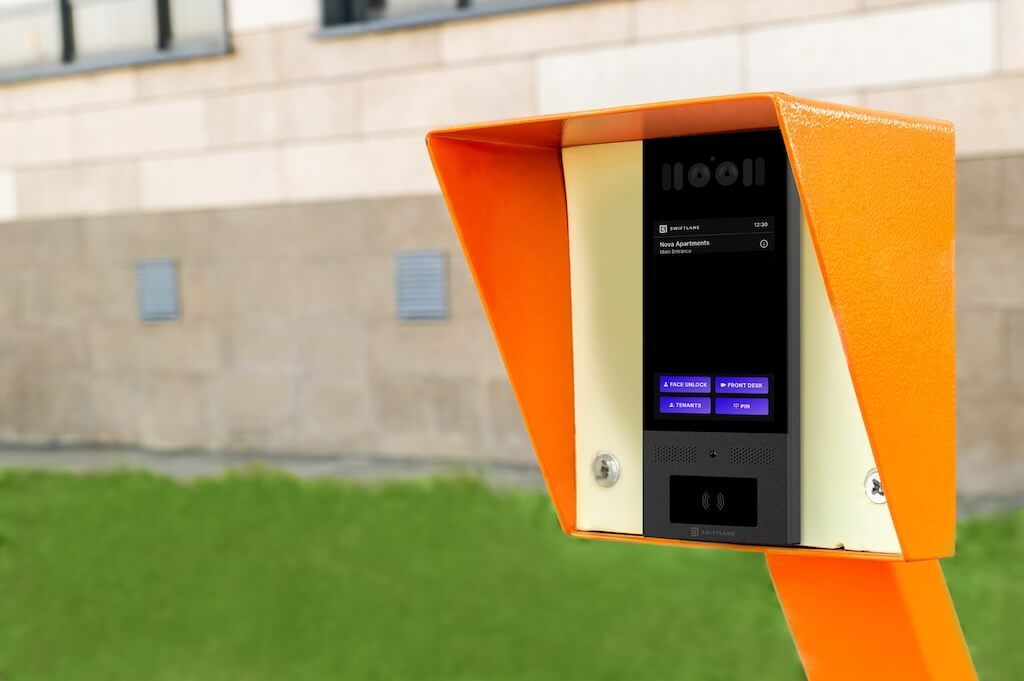
Our platform combines user-friendly mobile access with a range of hardware, including facial recognition video intercoms, RFID vehicle tags and readers, key fob systems, and classic gate clickers. At the heart of it all is our highly rated mobile app, earning 4.7 stars on Google Play and 4.8 on the App Store, for effortless smartphone-based access.
Swiftlane systems go beyond just gates. They’re fully compatible with door access systems and can be integrated into a broader access control strategy. Whether starting from scratch or upgrading an outdated setup, our team is here to help.
Speak with a Swiftlane sales expert to learn more about:
- Available hardware and configuration options
- Our cloud-based admin dashboard and remote management features
- Round-the-clock technical support
- Solutions tailored for new construction or development projects
- Retrofitting support for existing gated communities
- Our trusted network of installation partners across the country
- Integration with existing infrastructure, including gates, doors, and elevators
- Warranty details and flexible pricing based on your community’s size and needs
Get a Quote from Swiftlane for a Gated Entry System
Contact Swiftlane for a free consultation or quote to upgrade your gated entry system.
Frequently Asked Questions
How much does a gate security system cost?
Cost depends on the gate type, access control technology, and installation complexity, generally ranging from basic keypad or lockbox setups at the low end to smartphone, video intercom, or LPR systems at the higher end. See the How much does a gate access control system cost? section above for a full breakdown, or reference Swiftlane’s door access control cost data for a general benchmark.
How long does installation take?
Installation timelines vary based on whether gates are already in place, whether electrical or trenching work is needed, and whether the property requires permitting. A simple access control upgrade on an existing gate can often be completed in a day or two, while a full gate and operator installation with wiring and permitting can take several weeks. A licensed installer can give a property-specific timeline after a site visit.
How do deliveries and guests get in?
Most modern gate systems handle this with temporary or scheduled access codes for known vendors and delivery windows, plus a video intercom that lets residents see and remotely admit guests without a physical gatehouse. See the Apartment Gate Security & Entry Management section above for more detail on managing recurring vendor and guest access.
Can residents open the gate from their phone?
Yes, smartphone-based gate systems let residents open the gate remotely via a mobile app, Bluetooth, or a cloud-based platform, without needing a physical fob, key, or clicker. Many of these systems also support two-factor authentication and let residents grant guests temporary remote access.