If you’re managing a building still running a legacy buzzer or audio-only intercom, you’re likely weighing a few questions at once: Can I upgrade without rewiring? What will it actually cost? How long will the installation disrupt my tenants?
This guide answers those questions directly. It’s written for property managers and building owners evaluating intercom options in 2026. Not for someone still deciding whether to upgrade, but for someone who has already decided and needs to choose the right path.
What follows is a breakdown of your three main upgrade paths, real cost ranges by building size and scenario, installation timelines, and a features checklist to use before shortlisting vendors. The operational case for upgrading, 11 reasons property managers are making the switch, is covered as supporting context after the decision framework.
How We Researched This
This guide draws on Swiftlane’s direct experience across 3,000+ multifamily retrofit deployments, installation data from buildings ranging from under 20 units to 200+ unit communities, and ongoing feedback from property managers collected through surveys and post-upgrade interviews.
Specific figures, costs, and timeline ranges by building size come from aggregated project data across Swiftlane installations.
Tenant experience insights, including the most-cited features after an upgrade, are drawn from post-installation feedback collected from Swiftlane customers. Industry cost benchmarks, such as the average apartment turn cost, are sourced from the National Apartment Association.
The upgrade paths, cost ranges, and feature recommendations in this guide reflect criteria property managers actually use when evaluating systems.
Key Takeaways
- Legacy buzzer systems lack access logs, offer limited security visibility, and face increasing maintenance risk as hardware ages out.
- The best upgrade choice depends on your wiring, the number of entry points, and the level of remote admin control you want.
- For most upgrades, using a hybrid or 2-wire-to-IP system means you don’t need to rewire everything, which saves time and money on installation.
- Total cost includes hardware, installation labor, and ongoing software fees. Budget on a three to five-year horizon, not just upfront.
- For 2026, the non-negotiables are smartphone access, audit logs, and role-based admin. Everything else is secondary.
Table of Contents
- What “Upgrading an Apartment Intercom” Means
- How We Evaluated These Systems
- The Operational Case for Upgrading: 11 Reasons Property Managers Are Switching in 2026
- Upgrade Options: Choose the Right Upgrade Path
- Upgrade Costs: What You’ll Actually Pay
- Features to Prioritize in 2026
- How Swiftlane Fits This Upgrade
- Frequently Asked Questions
What “Upgrading an Apartment Intercom” Means


Not every intercom problem requires a full system replacement. Before committing to a budget, it helps to get clear on what you’re actually dealing with.
Upgrade vs Replace (What Changes, What Can Stay)
Upgrading usually means changing the entry panel and tenant devices but keeping your current wiring. A full replacement takes out everything, including the cables, and starts fresh. Since wiring is often the highest cost, knowing your setup before getting quotes saves time and avoids surprises.
Upgrading is now easier than before because many new systems work with old 2-wire setups. This lets older buildings add features such as smartphone access, video calls, and audit logs without a full rewire.
When a Repair is Enough vs When to Modernize
If your system has an isolated hardware problem, if only one part of your system is broken and everything else works, a repair might be enough for now. But if you keep having maintenance problems, can’t see who comes in, or lose tenants because your access system feels outdated, a repair just puts off a bigger issue.
It produces access logs, lacks remote unlock, and requires physical keys or fobs for every entry; it has already fallen behind 2026 tenant expectations.
How We Evaluated These Systems
Not every intercom upgrade gives you the same value. To make this guide more helpful than just a list of features, we compared upgrade options using the criteria property managers actually use when making decisions.
Retrofit flexibility. How well does the system work with existing wiring? Can it run over a 2-wire infrastructure, or does it require a full rewire? This is often the deciding factor for older buildings where re-cabling is cost-prohibitive.
Admin and permissions workflow. Can you add or remove tenant access remotely? Is there role-based control so that on-site staff have different permissions than the building owner? Systems that require on-site changes to manage access create ongoing operational overhead.
Mobile access. Can tenants receive calls and grant entry from smartphones? Can property managers unlock doors remotely? Mobile access is now a baseline expectation, not a premium feature.
Audit logs. Does the system record who accessed which entry and when? Without logs, you cannot investigate incidents or verify vendor access. This matters more as buildings scale.
Integration depth. Does the system connect with door locks, parking gates, and elevators on a single platform, or does each access point require separate management?
Total cost of ownership. Hardware price is only part of the picture. Installation labor, ongoing software subscriptions, and support SLAs affect the real cost over three to five years.
The Operational Case for Upgrading: 11 Reasons Property Managers Are Switching in 2026


The case for upgrading goes beyond convenience. For most multifamily properties, the right intercom system directly affects security, operating costs, and tenant renewal rates. Here are 11 reasons property managers are switching in 2026.
1. Offer Contactless, Self-Guided Apartment Tours
Vacancy is expensive. The faster you can get a prospective tenant through a unit, the better. Modern intercom systems let property managers issue time-limited PIN codes to prospects, giving them secure, self-guided access to a unit during a scheduled window without anyone needing to be on-site.
This helps speed up the leasing process, especially for managers with several properties. The PIN automatically expires after use, so you don’t need to worry about taking away access later.
What to look for: single-use or time-limited PIN generation, audit log entry for each use, and the ability to set access windows in advance.
2. Increase Physical Security and Surveillance
A legacy buzzer system tells you almost nothing about who is entering your building. A video intercom system provides a visual record at every entry point, both deterring opportunistic access attempts and providing evidence in the event of an incident.
When tenants see cameras at entry points, it signals to them that the building is well-managed. This impression helps keep current tenants and attract good new ones.
What to look for: HD video with night vision, local or cloud video storage, and motion-triggered capture at entry points.
3. Remote Access and Video Communication
Tenants should be able to see who’s at the door and let them in from their phone, whether they’re home or away. This is the feature residents praise most right after an upgrade.
For property managers, remote access means handling access requests, letting in vendors, and managing temporary credentials without being physically present.
What to look for: two-way video calling via a mobile app, remote unlock capability, and reliable push notifications with low latency.
4. Comprehensive Delivery Management
Package theft and missed deliveries are among the most consistent tenant complaints in multifamily properties.
A video intercom system addresses this directly by allowing tenants to grant couriers remote access after visual verification or by issuing single-use PIN codes in advance with delivery instructions.
As e-commerce volumes continue to rise, this is no longer a nice-to-have. Buildings that handle deliveries poorly show it in reviews and renewal decisions.
What to look for: single-use PIN generation for delivery access, video verification at entry, and a log of all courier access events.
5. Secure Access Points
Older intercom systems are almost always installed only at the main entrance. But most multifamily properties have six to ten credentialed entry points once you account for parking gates, package rooms, fitness centers, rooftop decks, laundry rooms, and side or service doors. Each unmanaged entry point is a gap.
In Swiftlane deployments, more than 60% of unauthorized entry incidents occur at secondary access points. The main entrance gets the hardware; the side gate gets a padlock and a key that hasn’t been changed in three years.
Access logs make this visible. Once a cloud-based system is running across all entry points, property managers routinely discover access patterns at secondary doors they previously had no visibility into, including propped doors, after-hours gym access by non-residents, and delivery couriers using unmonitored side entrances.
What to look for: support for multiple entry points on a single admin dashboard, per-door access rules, credential management that applies across the whole property, and alerting for propped or held-open doors.
6. Scaling Apartment Visitor Management
Managing visitor access manually does not scale. As your portfolio grows, systems requiring on-site intervention for every access change become liabilities. Cloud-based platforms let you manage visitor credentials, temporary access, and tenant permissions across multiple buildings from one interface.
This is particularly relevant for management companies operating multiple properties, where consistency and centralized visibility are essential.
What to look for: multi-property dashboard support, role-based access for staff across locations, and visitor log consolidation.
7. Emergency Preparedness
During an emergency, it’s crucial to know who’s in the building and which doors are open. Modern intercom systems give property managers real-time access to information, helping them respond faster and communicate clearly with emergency services.
Legacy systems without logging create ambiguity at the moment when clarity matters most.
What to look for: real-time access event monitoring, the ability to lock down entry points remotely, and exportable access logs for incident reporting.
8. Increase Property Resilience
A system that frequently breaks down, requires specialist repairs, or depends on hardware that is no longer manufactured is an operational liability — not just an inconvenience. Cloud-based intercoms reduce this risk through automatic software updates, remote diagnostics, and hardware that doesn’t depend on legacy telephony infrastructure.
The most common legacy failure pattern Swiftlane’s installation teams encounter: POTS-dependent call boxes going dead when the local phone carrier upgrades its infrastructure.
Buildings still running intercoms over Plain Old Telephone Service lines face mandatory transition risk. The FCC’s copper retirement framework means carriers are no longer required to maintain POTS service, and many are actively decommissioning lines. For buildings in that situation, the question is not whether the system will fail, but when.
In competitive rental markets, access system downtime is a visible operational failure. Tenants notice immediately, and the calls start within the hour.
What to look for: cloud-hosted infrastructure with uptime SLAs, offline fallback modes for connectivity interruptions, IP-based (not POTS-dependent) call routing, and a clear vendor-provided hardware replacement policy.
9. Improve Tenant Retention
Tenant turnover is one of the highest controllable costs in property management. According to the National Apartment Association, a single apartment turn costs an average of $4,000, and up to $5,000 or more in higher-cost markets. Access experience is a bigger factor in renewal decisions than most managers expect.
In post-upgrade feedback from Swiftlane customers, the three features tenants mention most are: receiving video calls on their phone when someone buzzes, letting in deliveries without going to the door, and never needing to wait for a replacement fob.
The fob point comes up more than most managers expect. Lost and forgotten fobs generate a surprising volume of after-hours support requests that disappear immediately after a mobile-access upgrade.
Tenants who can manage visitors, receive packages securely, and move through their building without friction are more likely to renew. Those who cannot will mention it when they leave.
What to look for: a tenant-facing mobile app with a clean interface, easy visitor credential sharing, and responsive in-app support.
10. Decrease Ongoing Costs
Modern systems eliminate many ongoing costs that property managers often overlook. Things like rekeying locks, making new key fobs, handling lost credentials, and sending staff for access problems all add up. Mobile and PIN access removes most of these expenses.
Cloud-based management also means fewer on-site visits for routine access changes, saving managers with many properties significant time.
What to look for: mobile and PIN-based access as standard, remote credential management, and transparent software subscription pricing with no hidden per-door fees.
11. Elevated Tenant Experience
Access is one of the first things tenants notice about their building and something they use often. A system that works well, looks modern, and lets tenants control who comes in makes a big difference in how they feel about living there.
This is harder to quantify than cost savings, but it shows up in reviews, referrals, and renewal rates. In markets where renters have options, the building’s experience matters.
What to look for: a well-designed tenant app, consistent performance across all entry points, and a vendor with a track record of regular product updates.
Upgrade Options: Choose the Right Upgrade Path
Not every building needs the same solution. The right upgrade path depends on your existing infrastructure, budget, and how much functionality you need on day one. Here are the three main options property managers are working with in 2026.
Legacy Refresh (Short-Term Stopgap)
A legacy refresh means replacing aging hardware with a newer version of a similar system, typically from the same manufacturer or product category. Audio-only or basic video panels with no cloud connectivity fall into this bucket.
This option has the lowest upfront cost and the least disruption during installation. Consider it if your wiring is poor and a full upgrade is not in this cycle’s budget, or if you plan a larger capital project in the next one to two years and want to defer full investment.
The trade-off is the absence of features that drive tenant satisfaction and operational efficiency: no smartphone access, no audit logs, and no remote management. A legacy refresh buys time but does not solve the underlying problem.
Hybrid or 2-Wire-to-IP Upgrade (Avoid Full Rewire)
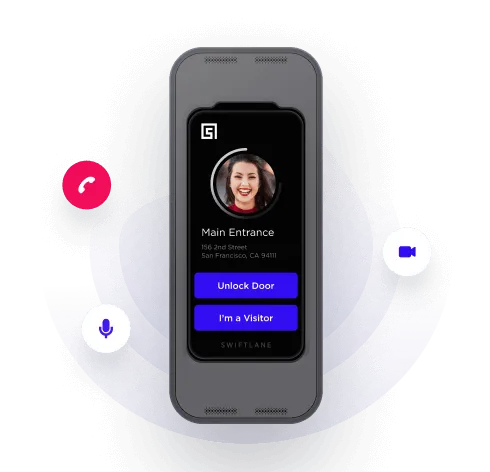
This is the most common upgrade path for existing multifamily properties. Hybrid systems are designed to run over existing 2-wire infrastructure while delivering cloud-based features such as smartphone calling, remote unlocking, video verification, and centralized admin.
Based on Swiftlane’s retrofit experience across 3,000+ buildings, approximately 80% of multifamily properties built after 1990 have wiring that supports a 2-wire-to-IP upgrade without any recabling. Pre-1980 buildings with degraded or non-standard wiring are the exception. Before committing to a hybrid path, always run a continuity test. Discovering incompatible wiring after contracts are signed is the most common source of retrofit cost overruns.
For buildings where re-cabling is cost-prohibitive or disruptive, this path offers most full cloud system functionality at a fraction of the installation cost. It is also the fastest to deploy, which is important for occupied buildings to minimize tenant disruption.
Before choosing this path, verify that your wiring is in good condition and that the system has been tested with your wiring type. Not all hybrid systems perform equally on older infrastructure.
Full Cloud Video Intercom Upgrade
A full cloud video intercom system replaces everything: panels, tenant devices, cabling, and backend management. This is the right path for buildings doing a larger renovation, new construction, or properties where the existing wiring is too degraded to support a hybrid approach.
The operational upside is significant. Full cloud systems offer the full feature set: HD video, smartphone access, audit logs, role-based admin, multi-property management, and integrations with door locks, gates, and elevators. They are also the most future-proof option, with ongoing software updates and vendor support built into the subscription.
The trade-off is higher upfront installation costs and greater disruption. For a full rewire on a large property, plan phased installation and include tenant communication in your timeline.
Upgrade Costs: What You’ll Actually Pay
Vendors quote hardware. Installers quote labor. The software subscription shows up later.
| Upgrade path | Hardware | Installation | Ongoing (per year) |
| Legacy refresh | $500 – $2,000 | $500 – $1,500 | Minimal |
| Hybrid / 2-wire-to-IP | $1,500 – $5,000 | $1,000 – $3,000 | $300 – $1,200 |
| Full cloud video intercom | $3,000 – $15,000+ | $2,000 – $8,000+ | $600 – $2,400 |
For context: based on Swiftlane project data, a hybrid 2-wire-to-IP upgrade for a 50-unit building with one primary entry point typically runs $4,500–$8,000 all-in (hardware + installation + year 1 software). A full rewire on the same building typically runs $12,000–$20,000. The hybrid path delivers 90% of the operational benefit at roughly 40% of the cost, which is why it’s the most common choice for occupied buildings where installation disruption is a constraint.
Always get at least three quotes. Installation labor and ongoing software fees vary the most between vendors. Watch for separate charges on video storage, extra admin users, and third-party integrations.
Four costs are rarely in initial quotes: permits, after-hours labor, network extension to entry points, and tenant communication time. For a full breakdown by building size, see our apartment intercom replacement cost guide.
Upgrade Timeline and Disruption Planning
The two questions tenants ask most are: how long will it take, and will they lose access during installation?
| Building size | Estimated timeline |
| Under 20 units | 1 day |
| 20 to 50 units | 2 to 3 days |
| 50 to 200 units | 3 to 5 days |
| 200+ units | 1 to 3 weeks (phased) |
Notify tenants at least one week in advance. Cover dates, access interruptions, and the new process after go-live.
Before approving installation, confirm call routing, remote unlock, audit log recording, and admin permissions work as configured.
Features to Prioritize in 2026
Not every feature a vendor pitches will matter equally to your operation. Here is how to separate the essential from the optional.
| Feature | Must-have | Nice-to-have |
| Smartphone calling and remote unlock | ✓ | |
| Audit logs (who, when, which door) | ✓ | |
| Role-based admin and resident management | ✓ | |
| HD video and night vision | ✓ | |
| Door, gate, and elevator integrations | Depends on the property | |
| Wireless capability | ✓ | |
| Voice-enabled unlock | ✓ | |
| Support SLA and installer availability | ✓ |
Before shortlisting vendors, confirm they clearly answer three questions: what happens to access if the internet goes down, how software updates are handled, and the support response time for critical issues.
How Swiftlane Fits This Upgrade


Swiftlane is a cloud-based video intercom and access control platform built specifically for multifamily retrofit scenarios. The hybrid and full cloud upgrade paths are described in this guide.
For hybrid 2-wire-to-IP upgrades: Swiftlane’s SwiftReader X is designed to run over existing 2-wire infrastructure without requiring a full rewire. In a recent deployment at a 72-unit building in Austin, the property manager completed the upgrade in two days with no wiring changes. The building had been running a 1990s-era audio intercom; after the upgrade, tenants received video calling on their phones, and the manager gained a full access log across three entry points for the first time.
For full cloud upgrades: At The Wellshire, a 107-unit high-rise community in South Denver, undergoing a larger renovation, Swiftlane replaced the existing panel, in-unit devices, and access infrastructure across seven entry points. The main entrance, two parking gates, the gym, the package room, the rooftop, and the service entrance. All managed under a single dashboard. The property management company had previously been running three separate systems. Post-upgrade, they consolidated to one.
The platform covers the full access stack: video intercom, mobile and PIN access, face recognition, smart locks, vehicle gate control, and elevator access. Every access event is logged automatically, credentials are managed remotely, and the system does not depend on POTS lines.
If you’re ready to evaluate whether Swiftlane fits your building’s upgrade path, the fastest way to get started is a site survey. Costs and timelines depend on your wiring, entry point count, and building size, so quotes without a survey are usually inaccurate.
Frequently Asked Questions
Can I replace my apartment intercom system?
Yes. Most buildings can upgrade their existing system without a full replacement. Whether you need a partial or full swap depends on the condition of your wiring and the number of entry points you are managing.
Can you upgrade without rewiring?
In most cases, yes. Hybrid and 2-wire-to-IP systems are designed specifically to run over existing infrastructure, making them the most common upgrade path for occupied multifamily properties.
How much does an upgrade cost?
Costs range from around $1,000 for a basic legacy refresh to $20,000 or more for a full cloud video intercom upgrade on a large property. See the cost section above for a full breakdown by upgrade path.
How long does installation take?
Anywhere from one day for a small building to two to three weeks for a large property with a full rewire. See the timeline table above for estimates by building size.
Are wireless upgrades reliable?
Reliability depends on the quality of the network at each entry point. Wired or hybrid systems are generally more stable for primary entry points. Wireless works well as a secondary or supplementary option.
Do upgraded systems keep access logs?
Cloud-based systems automatically log every access event, including who accessed which door and when. Legacy systems typically do not.
What is the difference between an intercom and a buzzer?
A buzzer grants access without any verification. An intercom adds two-way communication, and a video intercom adds visual verification. Modern cloud systems add remote access, logging, and admin management on top of that.
Can intercoms integrate with door access and elevators?
Yes. Most cloud-based platforms support integrations across doors, gates, and elevators from a single dashboard.
Upgrade Your Building Security
Tell us about your multifamily building and a Swiftlane specialist will help you find the best solution.