Apartment intercom replacement cost depends on the number of doors, audio vs. video, IP vs. analog wiring, and whether you can reuse existing cabling. Repairs typically cost less than replacement, but aging analog systems often reach a point where replacing is more economical.
Apartment intercom replacement often starts around $2,200 to $5,000 for a small building, while minor repairs typically run $150 to $400. If your apartment intercom system is outdated, unreliable, or no longer meeting your building’s needs, an apartment intercom replacement is no longer a “someday” project. It’s a priority. When an intercom becomes unreliable, the impact goes beyond inconvenience: missed deliveries, resident lockouts, recurring service calls, and security gaps at the front door.
The longer a legacy system stays in place, the more likely you are to face rising maintenance costs, hard-to-find replacement parts, and downtime that frustrates residents and staff alike.
At Swiftlane, we’ve guided properties through this exact decision: upgrading outdated intercoms to meet modern resident and operational needs.
Based on recent multifamily deployment research, 70% of multifamily companies have electronic access control on at least one property, and 76% of those plan to upgrade, replace, or deploy a new access system within the next two years. This guide breaks down current pricing and the real-world cost drivers, including installation complexity, wiring conditions, and network requirements. We’ll also explain when a repair still makes sense and when a full intercom replacement is the smarter long-term move.
Quick Answer:
Small buildings with one entrance typically cost $2,200 to $5,000 to replace, based on published installer and national-average pricing. A basic 4-unit audio system runs around $3,500 to install, and a comparable video system runs $4,000 to $5,000 (DTV Installations). Mid-size and larger multifamily buildings typically require a site-specific quote, as costs scale significantly with entrance count, wiring condition, and system type.
Repairs are harder to benchmark nationally since most pricing is set locally. Diagnostic visits and minor fixes, such as a faulty handset or loose wiring, often cost between $150 and $400. Panel replacement and wiring work fall outside that range and should be quoted separately, since public benchmark data doesn’t cover that scope.
Replacement usually makes more financial sense once a system is over 10 years old, parts are discontinued, or repair calls keep recurring instead of resolving the problem. A site survey is the fastest way to get pricing specific to your building.
Key Takeaways
- Small-building replacements often start around $2,200 to $5,000. Larger multifamily projects typically require a site-specific quote, since cost depends heavily on entrances, wiring, and system type.
- Repairs are usually much cheaper. A diagnostic visit or minor fix typically runs $150 to $400.
- Cost scales with entrances and doors, not just unit count.
- Video adds only a modest premium over audio-only at small scale.
- Repair makes sense for isolated issues on a system under 10 years old. Replace once repairs recur or residents need capability the current system can’t provide.
- All ranges here are planning estimates from named, dated sources. Get a site-specific survey for an exact number.
Table of Contents
- Apartment Intercom Repair vs Replacement Cost: Quick Comparison
- Cost by Intercom System Type
- How Much Does It Cost to Fix an Intercom System?
- Replacement Cost by Building Size
- What Impacts Apartment Intercom Replacement Cost?
- Should You Repair or Replace Your Apartment Intercom?
- How to Get an Accurate Replacement Estimate
- Worked Examples: What Different Buildings Actually Pay
- Swiftlane’s Approach to Apartment Intercom Replacement
- Methodology: How We Built These Cost Ranges
- Wrapping Up: Repair, Replace, or Get a Site-Specific Quote
- FAQs
Related Reading:
- How Much Does a Video Intercom System Cost in 2026
- Apartment Intercom Installation Cost: Full Price Breakdown
- WiFi vs. Cellular Gate Intercom Systems
Apartment Intercom Repair vs Replacement Cost: Quick Comparison
| Scenario | Repair Cost | Replacement Cost | Best Choice |
| Broken handset | $150–$400 | $2,200–$5,000+ (small building); larger buildings require a quote | Repair |
| Door panel failure | $150–$400+ | $3,500–$5,000+ for small-building replacement | Depends |
| Power supply issue | $150–$400 | — | Repair |
| Wiring/riser failure | Rises fast with scope | $3,500–$5,000+ | Often replace |
| Obsolete parts | Not repairable | Full system cost | Replace |
| No video/mobile access | Not a repair | $4,000–$5,000+ | Replace |
| Recurring lockouts | $150–$400, repeats | $2,200–$5,000+ (small building); larger buildings require a quote | Replace |
| Multi-entrance upgrade | Not cost-effective | Requires site-specific quote | Replace |
Isolated issues (handset, power, one panel) usually favor repair. Anything tied to wiring, obsolete parts, or missing video/mobile capability tips toward replacement.
Cost by Intercom System Type
| System Type | Best Fit | Cost Range | Pros / Cons |
| Audio-only | Small buildings needing basic visitor communication, budget-conscious upgrades | $2,175–$3,500 | Homewyse and DTV Installations both anchor this tier. Lowest upfront cost, but no video verification and limited long-term feature support |
| Video intercom | Most modern multifamily properties, now standard for security and resident experience | $4,000–$5,000+ (small building) | DTV Installations. Adds camera/display cost but is now the baseline expectation for new deployments |
| IP/cloud video intercom | Properties wanting mobile access, remote management, and scalability across entrances | Priced as total cost of ownership, not a single hardware number | Ask vendors for a 3-year and 5-year cost view covering hardware, installation, network/infrastructure, and recurring software/support, rather than comparing hardware quotes alone |
| Mobile-app intercom | Buildings prioritizing app-based entry over in-unit hardware | No dedicated source at this granularity. Cost sits within the IP/cloud range above depending on license tier, not a separate tier | Directional only. Mobile-first configurations are typically a licensing choice within an IP/cloud platform rather than a separate hardware category. Confirm licensing structure directly with vendors |
| Retrofit using existing wiring | Buildings with usable existing cabling/conduit | Lower end of applicable tier above | No dedicated source. Retrofit savings depend entirely on existing wiring condition, which varies too much building-to-building for a fixed range |
| Full rewiring project | Buildings with failed, outdated, or incompatible wiring | Adds meaningfully above the base ranges. No fixed multiplier available from sourced data | Directional only. Rewiring cost depends on building construction, access, and labor conditions rather than system type |
Sources (last checked: August 2026): Homewyse, DTV Installations.
How Much Does It Cost to Fix an Intercom System?
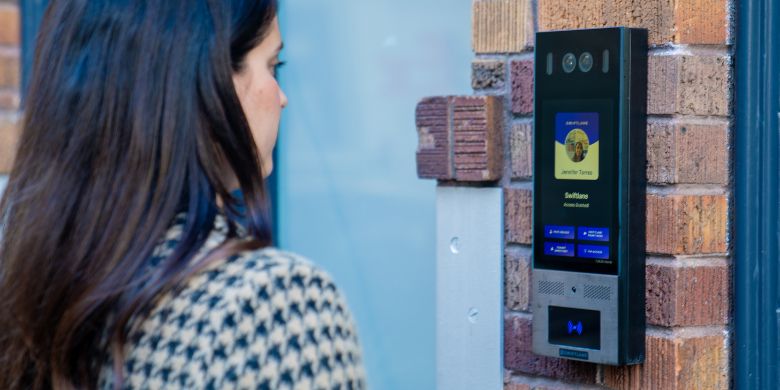
Diagnostic visits and minor repairs often cost between $150 and $400, covering issues such as a faulty handset, loose wiring, or a blown fuse. This range does not apply to panel replacement, riser work, or building-wide wiring issues. Those should be quoted separately, since public benchmark data for that scope is limited. Full building-wide rewiring or panel replacement can approach the cost of a new system, at which point repair is often only a temporary fix.
Repair costs for an apartment intercom system depend heavily on what’s actually broken. A stuck button and a failing riser cable are not the same job.
Diagnostic and component replacement: Nationally, repair pricing isn’t as well benchmarked as replacement pricing. Most repair costs are set by local labor markets rather than published rate cards. As a planning estimate, a typical service call or diagnostic fee runs $150 to $250, and straightforward fixes that need some additional labor at national low-voltage labor rates can bring the total to roughly $150 to $400. This is our own estimate based on typical service-call structures rather than a single published benchmark, so treat it as directional.
repair.
Limited wiring repair: Once the issue involves running new wire, opening walls, or repairing a section of riser cable, costs rise fast and vary by building access and labor conditions. There isn’t a clean industry-wide number for this tier. It depends too much on the specific building, so treat any quote here as building-specific rather than a fixed range.
Building-wide repair caveat: If the same issue recurs across multiple units or entrances, you’re no longer dealing with an isolated repair. You’re looking at a systemic problem, and the per-incident repair costs above will add up faster than a single replacement project.
When repair is only a temporary fix: it restores function but doesn’t add capability. If your system can’t support video, mobile unlock, or modern access credentials no matter how many times it’s repaired, every repair dollar is going toward keeping an aging system alive, not toward anything residents will notice as an upgrade.
Replacement Cost by Building Size
| Building Size | Typical Scope | Cost Range | Notes / Cost Drivers |
| Small walk-up (5–20 units) | 1 entrance, basic audio or video system | $2,200–$5,000 | Anchored by Homewyse’s national average basic system install ($2,175–$2,587) and DTV Installations’ 4-unit video figure ($4,000–$5,000) |
| Mid-size multifamily (20–75 units) | 2+ entrances, additional access-controlled doors | Requires site-specific quote | Public, neutral pricing for this tier is limited. Use small-building benchmarks above as a floor, then request a scoped quote covering entrances, doors, wiring reuse, and mobile credentials |
| Large apartment building (75–200 units) | Multiple entrances, centralized/cloud-managed system | Requires site-specific quote | Large properties move into custom-quote territory. Entrance count, wiring condition, and software scope vary too much for a defensible national range. Use the small-building benchmarks as a starting floor only |
| Multi-building / gated community | Multiple buildings, phased installation | Scales per building | No source prices a multi-building rollout as one figure, presented as a scaling principle, not a range |
Sources (last checked: August 2026):
- Homewyse, “Cost to Install an Intercom System,” May 2026 — homewyse.com
- DTV Installations, “Installation Cost for a Video Intercom,” March 31, 2026 — dtv-installations.com
What Impacts Apartment Intercom Replacement Cost?
Number of Doors/Entrances
Every additional controlled entrance adds hardware (entry panel, controller, reader) and installation labor. Cost scales with door and entrance count, not just unit count, so a small building with two entrances can cost more than a larger building with one. Ask any vendor to itemize hardware per opening rather than quoting a single building-wide number.
Audio vs. Video
Video adds camera hardware, higher-bandwidth wiring or network requirements, and often a monitor or app license per unit. DTV Installations’ real pricing shows this gap concretely: a 4-unit audio system runs around $3,500, while a comparable video system runs $4,000–$5,000+ — roughly a 15–40% premium for video at small scale.
IP/cloud vs. Analog/On-Premise
Cloud-managed and IP-based systems typically shift cost from one-time hardware toward recurring software and support, in exchange for remote management and easier scaling. Analog/on-premise systems usually cost less upfront but cost more to maintain and don’t support mobile access without added hardware. Which model costs less depends on your time horizon, so compare both on a multi-year basis rather than upfront price alone.
Wiring Condition
This is the single hardest variable to price nationally. Reusing existing wiring keeps costs near the low end of any range in this guide; wiring that needs to be replaced, or work that requires opening walls or running new risers, adds costs that scale with building construction and access — not something a national range can capture. Treat any wiring-related quote as building-specific.
Mobile Access, PIN Codes, and QR/Credential Features
These are largely licensing and software decisions rather than hardware ones. Mobile credentials are typically priced separately from hardware, sometimes per unit, per user, or bundled into a platform fee, so confirm exactly how a vendor structures this before comparing quotes. Feature scope can change total cost significantly without changing the physical installation.
Labor Market and Permits
Labor rates vary by region and by the extent to which local demand exceeds the supply of qualified low-voltage technicians. Homewyse’s installation labor data implies a rate of roughly $120 to $145 per hour when divided across the hours involved in a basic install, though Homewyse doesn’t publish a standalone hourly rate, so treat this as our own derived estimate rather than a direct benchmark.
Actual local rates can run higher in dense urban markets. Permit requirements vary by municipality and building type and should be confirmed with a local contractor rather than assumed from any national range.
Ongoing Support and Software Costs
Beyond the initial installation, cloud-based systems carry recurring software and license costs that don’t show up in a one-time installation quote. Always separate recurring costs from the installation quote itself, and ask what happens to pricing if unit count, entrance count, or feature needs change after year one.
Should You Repair or Replace Your Apartment Intercom?
| Factor | Repair | Replace |
| System age | Under 5–7 years, functioning otherwise well | Over 10 years, or parts no longer manufactured |
| Repair frequency | First or isolated issue | Same issue recurring, or multiple service calls within 12 months |
| Cost so far | Single repair within the typical $150–$400 | Cumulative repairs approaching the cost of a small system upgrade (see DTV Installations, $3,500 or more for a small building). |
| Capability gap | System does what residents/staff need | No video, no mobile access, no modern credentials — and residents are asking for it |
| Wiring condition | Existing wiring is usable | Wiring needs to be opened up building-wide regardless of what’s chosen |
| Compliance/security needs | No new requirements | New access-control, video, or credential requirements from ownership, insurance, or local code |
As a general rule of thumb, if a single repair costs less than roughly 10 to 15% of a full replacement for your building size, and the system isn’t showing a pattern of failure, repair is usually the right call. This threshold is a decision guideline, not a repair-cost estimate. Actual repair costs typically fall in the $150 to $400 range discussed above.
Once repairs start recurring, or once residents are asking for capability the current system simply can’t provide no matter how well it’s maintained, the math and the resident experience tip toward replacement.
How to Get an Accurate Apartment Intercom Replacement Estimate
Every range in this guide is a planning estimate. The fastest way to get an accurate number for your building is to have the following ready before you contact an installer:
- Number of entrances
- Number of units
- Existing wiring type and condition
- Whether you need video, mobile app access, PIN codes, or delivery access features
- Existing lock and door hardware
- Whether the building needs phased installation to minimize resident disruption
- Photos of your existing panel(s)
Having this information ready before a site visit means a faster, more accurate quote, and fewer surprises once work begins.
Get a replacement estimate for your building.
Worked Examples: What Different Buildings Actually Pay
Example 1: Small walk-up, 4–20 units, 1 entrance, reusable wiring
Basic audio system: $2,175–$3,500, anchored directly by Homewyse’s national average basic install ($2,175–$2,587) and DTV Installations’ real 4-unit audio figure (~$3,500).
Video upgrade, same building: $4,000–$5,000+, DTV Installations’ real 4-unit video figure.
Assumptions: single entrance, no additional access-controlled doors, existing wiring usable. Costs rise if wiring needs replacement or a second entrance is added.
Example 2: Mid-size multifamily, 50–75 units, 2 entrances, legacy audio-to-video upgrade
No neutral public source gives a defensible installed cost range for this exact scope, so this scenario should be quoted directly rather than estimated. When requesting quotes, ask each vendor to itemize:
- Entry panels for each entrance
- Door controllers and readers for any additional access-controlled doors
- Installation labor
- Wiring and network infrastructure work
- Mobile credentials or software licensing
- Ongoing support and maintenance
Comparing vendors line by line, rather than by a single bottom-line number, is the only reliable way to evaluate proposals at this scale.
Example 3: Large property, 150+ units, multiple entrances, wiring condition unknown
Large properties usually require custom quoting. Public, neutral pricing does not reliably cover 150+ unit, multi-entrance, wiring-unknown projects, and no sourced example directly covers a property at this scale. When requesting quotes, ask vendors to itemize hardware per entrance, installation labor, wiring/network infrastructure, software/credential licensing, and ongoing support, the same line items as the mid-size example above, scaled to your building’s entrance and door count. A site survey is essential before budgeting a project at this size.
Swiftlane’s Approach to Apartment Intercom Replacement
Swiftlane is a cloud-based video intercom and access control system built for multifamily properties. It’s worth understanding where it fits well and where it doesn’t before assuming any single vendor is right for your building.
Where Swiftlane tends to be a good fit:
- Properties moving from a legacy audio system to video and mobile-first access, without needing to keep in-unit hardware dependency where mobile unlock covers resident needs
- Buildings that want remote management and visibility across multiple entrances from a single dashboard, rather than managing hardware building by building
- Properties that need resident directory management integrated with the intercom itself, rather than as a separate system
- Buildings planning to integrate intercom with broader access control, such as keypads or key fobs, rather than treating intercom as a standalone system
Where it may not be the right fit:
- Buildings that need to preserve extensive existing in-unit hardware with no appetite for resident-facing app adoption
- Properties with very limited network infrastructure and no plan to add it as part of the project
- Small buildings where a basic audio-only system genuinely meets resident and operational needs, and the cost of a full platform isn’t justified by the building’s size or requirements
If you’re weighing whether a cloud-based system like Swiftlane makes sense for your specific building, a site survey is the most direct way to find out.
Methodology: How We Built These Cost Ranges
Pricing for apartment intercom systems is not standardized nationally. Unlike categories with a single dominant price index, intercom costs vary by manufacturer, installer, region, and building condition. Rather than presenting a single misleading “average,” we built the ranges in this guide using a tiered source hierarchy:
Hard-number public benchmarks. We used DTV Installations’ published apartment intercom installation pricing (dated March 2026) and Homewyse’s national average cost data (dated May 2026) as our confirmed hard-number sources. Homewyse is a useful sanity check for basic, single-property installs, not a multifamily-specific benchmark, and we noted that distinction wherever it’s used.
Quote-prep frameworks for everything else. For mid-size, cloud, software, rewiring, and large-building scenarios, public neutral pricing is limited. Rather than presenting an unsupported national average, we outline the line items to request from vendors so proposals can be compared accurately.
Swiftlane deployment data. Where we have direct experience from our own installed base, we noted it as internal experience rather than third-party proof.
What we avoided. We did not use competitor marketing pages as a pricing basis, and we did not use unsourced aggregator figures without independent verification. Where no credible source existed for a given scenario (for example, full building-wide rewiring, or repair costs for modern IP/video systems specifically), we said so directly rather than presenting an invented number as fact.
Last checked: August 2026. Pricing changes over time. Treat every range in this guide as a planning estimate, not a quote. A site-specific survey is the only way to get an exact number for your building.
Sources cited in this guide:
- DTV Installations, “Installation Cost for a Video Intercom”, March 31, 2026
- Homewyse, “Cost to Install an Intercom System”, May 2026
Wrapping Up: Repair, Replace, or Get a Site-Specific Quote
Apartment intercom costs come down to a few consistent variables: how many entrances need coverage, whether you’re staying with audio or moving to video, whether existing wiring is usable, and how much mobile access and software licensing you want built in.
The ranges in this guide, from $150 to $400 for a straightforward repair to $2,200 to $5,000 for a small-building replacement, are planning estimates built from real installer and national-average pricing, not quotes. Mid-size and larger projects are intentionally handled as quote-prep frameworks rather than fixed ranges, since public pricing doesn’t reliably cover that scope.
If you’re dealing with a single, isolated issue and the system is otherwise working, repair is usually the right call. If repairs are recurring, parts are discontinued, or residents are asking for capability your current system can’t provide, it’s worth getting a site-specific quote rather than continuing to patch an aging system.
Ready for a site survey and a quote specific to your building?
FAQs
How much does it cost to fix an intercom system?
A diagnostic visit or minor component repair typically costs $150 to $400, based on typical service labor rates and time on site or a straightforward fix. Larger repairs, like wiring or panel replacement, cost more depending on building access and local labor conditions. See the full breakdown above.
How much does apartment intercom replacement cost?
Small buildings with one entrance typically start around $2,200 to $5,000. Mid-size and larger multifamily properties usually require a site-specific quote, since cost depends heavily on entrance count, wiring condition, and whether you’re adding video or mobile access. See the cost by building size table above for specifics.
What is a typical intercom repair estimate?
Most repair estimates start with a diagnostic or service call fee, typically $150 to $250, which some providers apply toward the final repair cost. The total repair estimate depends on what’s actually wrong: a loose wire or faulty button is inexpensive to fix, while wiring or panel issues cost more. Ask for a written estimate before authorizing work beyond the initial diagnostic.
What information do installers need to quote an intercom replacement?
Installers typically need the number of entrances and units, existing wiring type and condition, whether you need video, mobile access, or PIN/QR features, existing lock and door hardware, and whether installation needs to be phased. Photos of your existing panel help too. See the quote-prep checklist above for the full list.
How do I know if I should repair or replace my intercom system?
Repair generally makes sense for isolated issues on a system under 10 years old with usable wiring. Replacement makes more sense once repairs are recurring, parts are discontinued, or residents need capability like video or mobile access that the current system cannot provide no matter how well it’s maintained. See the decision table above for a full comparison.
What makes apartment intercom replacement more expensive?
The biggest cost drivers are the number of entrances and access-controlled doors, whether you’re moving from audio to video, existing wiring condition, and whether you’re adding mobile access or software licensing. Projects that require building-wide rewiring or centralized cloud management cost more than a straightforward panel swap. See the cost driver breakdown above for specifics.
Do I need a permit to replace an apartment intercom system?
Permit requirements vary by municipality and building type. Confirm with your local building department or installer before starting a project, especially if the work involves new wiring, electrical work, or changes to fire or life-safety systems.
Is it cheaper to repair or replace an apartment intercom?
Repair is usually cheaper for a single, isolated issue, typically $150 to $400 versus $2,200 or more for even a small-building replacement. But repair stops being cheaper once it’s recurring. Three years of repeat service calls can cost more than one replacement project, and repair never adds capability like video or mobile access. See the repair vs replacement decision table above.
How long does apartment intercom replacement take?
Most single-entrance replacements take one to three days for installation once equipment is on site. Larger multifamily properties with multiple entrances, additional access-controlled doors, or building-wide rewiring can take one to several weeks, depending on wiring condition and whether work is phased to avoid disrupting residents. Get a site survey for a timeline specific to your building.
Can you replace an apartment intercom without rewiring the building?
Often yes, if the existing wiring is in good condition and compatible with the new system. Many replacements reuse existing low-voltage wiring to keep costs down. Rewiring becomes necessary when existing wiring is damaged, incompatible with IP-based hardware, or when new access points are added that don’t have wiring in place.