Intercom systems aren’t something most people think about until they stop working the way they should. Maybe your current setup feels outdated, maintenance is becoming a headache, or residents and tenants are asking for more modern features like mobile access or remote management. That’s usually when the question comes up: do you upgrade to a cloud intercom, or keep things on-site with an on-premise system?
While both options handle visitor access and communication, they work very differently behind the scenes. Installation, system control, maintenance, and long-term costs can vary a lot depending on the model you choose, and those differences can directly affect your day-to-day operations.
Cloud intercoms are often associated with flexibility and remote access, while on-premise systems are known for keeping everything local. Neither option is a one-size-fits-all solution. What works well for one building might not make sense for another.
This guide is informed by independent market research on cloud intercom adoption, including publicly available industry reports, alongside best practices in physical security and building operations. It also reflects common operational challenges reported by multifamily property managers, such as maintenance overhead, staffing constraints, and long-term cost management, so readers can evaluate cloud and on-premises intercoms based on how these systems perform in real buildings, not just product specifications.
Key Takeaways
- Cloud and on-premise intercom systems solve the same problem, but in very different ways.
- Cloud systems are better suited for remote management, flexibility, and growing properties.
- On-premise systems work best in stable environments with on-site control.
- Cost differences go beyond upfront pricing and affect total cost of ownership (TCO) over time.
- The “right” system is the one that supports your building’s daily reality.
Table of Contents
- What is a Cloud Intercom System?
- What is an On-Premise Intercom System?
- Cloud vs. On-Premise Intercom Systems: Key Differences
- Cost Differences: Upfront Vs. Long-Term Costs
- Use Cases: When Each Intercom Makes Sense
- Decision Checklist
- How Swiftlane Supports Modern Intercom Needs
- Summary
- FAQs
What is a Cloud Intercom System?


A cloud intercom system works a lot like other cloud-based tools you probably already use. Instead of managing everything from equipment inside the building, the system connects to software hosted online. That software handles how calls are routed, who has access, and how the system is updated over time.
For day-to-day operations, this usually means less hands-on work. Access settings can be updated from a browser instead of a control room, and changes don’t require someone to be physically on-site. Many cloud intercoms also let residents answer calls or remotely unlock doors, which can be more convenient than traditional in-unit hardware.
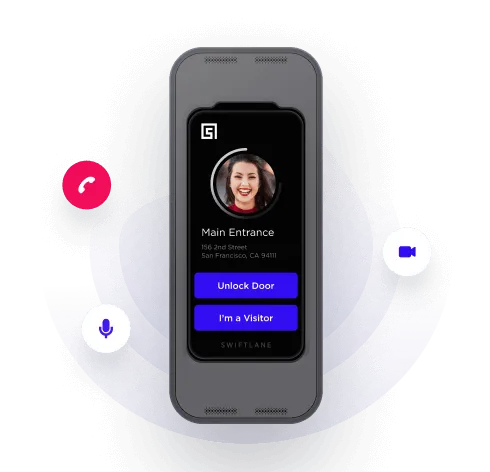
The physical intercom hardware still lives at the entrance, but the “brains” of the system live in the cloud. Updates, security patches, and new features are handled automatically by the provider, so the system stays current without much ongoing maintenance.
Because everything is software-driven, cloud intercom systems are easier to adjust as a building’s needs change. Whether you’re adding residents, expanding to new doors, or managing multiple properties, updates tend to be simpler and faster compared to on-premise systems.
What is an On-Premise Intercom System?


An on-premise intercom system keeps everything local to the building. The hardware, software, and control equipment are all installed on site, and the system doesn’t rely on the cloud to function day to day. This is the more traditional setup that many older buildings are already familiar with.
With an on-premise system, access settings, call routing, and system changes are usually managed through an on-site control panel or local server inside the property. If the updates or adjustments are needed, someone typically has to be on-site to make those changes, whether that’s building staff or a technician.
Because the systems run locally, on-premise intercoms don’t depend on an internet connection in the same way cloud systems do. For some buildings, that sense of control and independence is a major reason they stick with this model. Everything stays within the property’s local network and hardware environment, and there’s no ongoing reliance on external software platforms.
That said, on-premise systems can be harder to adapt over time. Expanding to new doors, adding features, or upgrading capabilities often requires additional hardware or manual configuration. For buildings with stable needs and minimal changes, this setup can still work well, but flexibility is more limited compared to cloud-based systems.
Cloud vs. On-Premise Intercom Systems: Key Differences
While cloud and on-premise intercom systems serve the same purpose, they differ in how they’re installed, managed, and maintained over time.
The table below breaks down the key differences between cloud and on-premise intercom systems at a glance.
| Category | On-Premise Intercom Systems | Cloud Intercom Systems |
| System Ownership | Hardware and control systems are owned and managed on-site by the building | Core software is hosted and managed by a cloud provider and accessed via web or mobile dashboards |
| Installation and Setup | Requires on-site servers, control panels, and often more wiring | Entry hardware connects to the building network and internet; setup is largely software-based |
| Upfront Costs | Higher upfront investment due to hardware and installation | Lower upfront costs, typically paired with a subscription model |
| Ongoing Costs | Maintenance, repairs, and upgrades handled internally | Ongoing software, updates, and support included through the provider |
| Remote Management | Limited or unavailable without additional configuration | Designed for remote access via web or mobile dashboards |
| Scalability | Expansion requires additional hardware and configuration | Easy to scale users, doors, or buildings through software |
| Maintenance & Updates | Manual updates, often requiring on-site technicians | Updates are handled remotely, with automatic patches and feature improvements delivered through the cloud |
| Internet Dependence | Can operate independently of the internet | Requires a stable internet connection |
| Flexibility Over Time | Works well for stable environments with minimal change | Adapts easily as building needs evolve |
| Ideal Use Case | Buildings that prefer full on-site control and limited change | Properties that value flexibility and remote management, and organizations managing multiple buildings or large portfolios |
Cost Differences: Upfront Vs. Long-Term Costs
Cost is often one of the biggest deciding factors when choosing between a cloud and on-premise intercom system, but it’s not always as straightforward as it looks at first.
Upfront Costs
On-premise intercom systems typically come with higher upfront costs. This usually includes dedicated hardware, on-site control equipment, and more involved installation work. For some buildings, especially older ones, wiring and infrastructure updates can add to that initial investment.
Cloud intercom systems tend to have lower upfront costs. The physical hardware is still installed at entry points, but there’s no need for local servers or extensive on-site control equipment.
Ongoing and maintenance cost
With on-premise systems, ongoing costs are often tied to maintenance and support. Updates, repairs, and upgrades may require on-site technicians or internal IT resources. Over time, aging hardware can also lead to higher repair or replacement costs.
Cloud intercom systems usually operate on a subscription model. While there’s a recurring fee, that cost typically includes software updates, security patches, cloud hosting and storage, and ongoing support. Instead of paying for upgrades as issues arise, costs are more predictable month to month.
Long-Term Cost Considerations
The long-term cost difference often comes down to how much your building changes over time. On-premise systems can work well for properties with stable needs, but scaling like adding new doors, users or buildings, often means additional hardware and installation costs.
Cloud intercom systems are generally easier to scale without major new investments. As access needs grow or change, updates are handled through software rather than physical upgrades, which can help control long-term expenses for growing or multi-property portfolios.
Use Cases: When Each Intercom Makes Sense
Let’s get real: understanding use cases helps see how these systems perform in actual buildings. Below are the scenarios where each type shines.
Cloud Intercom Systems
Cloud intercom systems are gaining traction as buildings become smarter and teams manage multiple properties. In fact, the cloud intercom adoption is increasing as buildings become more connected, with demand driven by the need for scalable, real-time communication and remote management.
Here’s where cloud intercoms make a lot of sense:
- Multi building or multi site portfolios: If you manage several properties or plan to grow, cloud systems allow you to handle access settings from a single dashboard; no trips to the office or control room required.
- Busy front desks and guest traffic: Buildings with frequent visitors, like coworking spaces, hotels, or mixed-use developments, benefit from features like mobile unlocking and visitor pre-approval, which reduce manual work.
- Remote operations team: Property managers who work off-site, or teams with hybrid schedules, appreciate the ability to update access rules or respond to issues from anywhere.
- Buildings embracing smart technology: Cloud intercoms pair well with smart access control, mobile credentials, and analytics tools that help track usage trends and security alerts in real time.
In short, cloud systems are great for properties that value flexibility, remote management, and future-ready features.
On-Premise Intercom Systems
On-premise intercoms aren’t disappearing, they’re still a solid choice in several scenarios.
- Buildings with low change frequency: Properties that don’t expect frequent changes to access permissions or new doors often don’t need the flexibility of a cloud setup.
- Strong local IT support: If your team prefers direct control and already has in-house technical staff, managing an on-premise system might feel more comfortable.
- Limited or unreliable internet: Because on-premise systems can function independently of an internet connection, they’re useful where connectivity isn’t rock-solid or uptime is critical.
- Simplicity over flexibility: Some buildings simply want a “set it and forget it” access system that lives on-site and doesn’t require ongoing online management.
In these settings, keeping system components on-site can be easier for building teams who prefer hands-on control, such as on-site management, maintenance, or in-house IT.
Decision Checklist
If you’re still weighing your options, this checklist can help you narrow things down quickly.
Cloud intercom systems
- Manage multiple buildings or locations
- Need to update access remotely
- Property managers or staff work off-site or hybrid.
- Expect frequent resident or access changes
- Prefer mobile-based access for residents or staff
- Want automatic updates and feature improvements
- Plan to scale doors, users, or properties over time
- Prefer predictable monthly pricing
On-premise intercom systems
- Manage a single building with stable access needs
- Prefer full control of systems on-site
- Have limited or unreliable internet connectivity
- Have in-house technical or IT support
- Rarely changes users, access rules, or system settings
- Prefer a fixed system with minimal ongoing updates
- Want to avoid subscription-based software
How to use this checklist
- If most checks fall under Cloud, a cloud intercom system is likely the better long-term fit
- If most checks fall under On-premise, a traditional on-site system may better match your needs.
How Swiftlane Supports Modern Intercom Needs
Swiftlane is one example of how cloud intercom systems are being used in modern multifamily buildings today. It takes a cloud-based approach to access control, allowing property teams to manage entry points, residents, and visitors without relying on on-site servers or complex local infrastructure.
Swiftlane’s approach reflects broader industry shifts toward cloud-managed access systems in multifamily, rather than a proprietary or closed model.
For property managers, this means access settings can be updated remotely, whether you’re on-site or managing buildings from another location. Changes that once required physical access to control panels can now be handled through software, helping teams respond faster to day-to-day needs.
Swiftlane is designed with multifamily operations in mind, where access needs often change and visitor traffic can be unpredictable. Features like centralized management and mobile-based access help reduce manual work while keeping entry points secure.
Rather than replacing one rigid system with another, Swiftlane fits into the broader shift toward cloud-based intercoms, systems that prioritize flexibility, scalability, and ease of management as buildings and portfolios evolve. To see how this works in practice, explore Swiftlane customer reviews and multifamily case studies.
Want to explore how a cloud intercom system works in a real building? See how Swiftlane supports secure, flexible access for modern multifamily properties. Talk to our team.
Summary
Swiftlane is one example of how cloud intercom systems are being used in modern multifamily buildings today. It takes a cloud-based approach to access control, allowing property teams to manage entry points, residents, and visitors without relying on on-site servers or complex local infrastructure.
Swiftlane’s approach reflects broader industry shifts toward cloud-managed access systems in multifamily, rather than a proprietary or closed model.
Designed for multifamily operations where access needs change frequently, Swiftlane supports centralized management and mobile-based access to help teams reduce manual work while maintaining secure entry points across buildings and portfolios.
FAQs
What’s the main difference between a cloud and an on-premise intercom system?
The biggest difference is where the system is managed. Cloud intercom systems are managed through online software, while on-premise systems are managed locally within the building using on-site equipment.
Are cloud intercom systems secure?
Yes, when implemented properly. Most cloud intercom systems use encrypted communication, secure authentication, and regular software updates. Security often depends more on the provider and setup than whether the system is cloud-based or on-premise.
Do cloud intercom systems require an internet connection to work?
Yes. Cloud intercom systems rely on a stable internet connection for features like remote management, mobile access, and real-time updates. If internet reliability is a concern, this is an important factor to consider.
Can an on-premise intercom system work without the internet?
In many cases, yes. On-premise systems typically operate independent of the internet, which can be useful in buildings where connectivity is limited or inconsistent.
Can I upgrade from an on-premise to a cloud intercom later?
Yes, many buildings transition from on-premise to cloud systems over time. The process depends on existing infrastructure, wiring, and hardware, but it’s a common upgrade path as buildings modernize.