Upgrading an old intercom system doesn’t always mean opening walls, replacing building wiring, or installing new devices inside every apartment.
Many multifamily and commercial properties now choose a retrofit intercom system instead. A retrofit upgrade modernizes the entrance panel and software while reusing existing infrastructure, such as door hardware, cabling, and conduit, whenever possible.
The result is a more flexible, modern entry experience. Depending on the system, buildings can support features such as video calling, mobile access, remote management, delivery credentials, and access logs.
This guide is based on how retrofit projects are typically deployed across multifamily and commercial buildings, including common installer approaches, infrastructure constraints, and real-world upgrade scenarios.
In this guide, we’ll explain:
- What an intercom retrofit actually means
- When retrofitting makes sense for your building
- The three main retrofit options available today
- Typical cost ranges and installation timelines
Key Takeaways
- You can retrofit most analog, buzzer, or telephone entry systems.
- Retrofits work best when existing wiring is usable and running new cables is difficult or disruptive.
- There are three major retrofit approaches: reuse existing 2-wire wiring, install a new IP/PoE connection, or use a cellular (LTE) panel.
- Most retrofit projects cost $6,000 to $40,000 per entrance, plus $2 to $8 per unit/month for software.
- A quick site survey helps confirm feasibility and the best approach.
Table of Contents
- What Is an Intercom Retrofit?
- Is Retrofitting Right For Your Building?
- The Three Retrofit Options
- Common Retrofit Scenarios in Real Buildings
- Quick Cost Cheat Sheet (Planning Estimates)
- Choosing a Retrofit-Friendly Intercom System
- FAQs
What Is an Intercom Retrofit?


An intercom retrofit upgrades an existing building entry system to a modern video intercom while reusing infrastructure that still works.
Instead of replacing the entire system, retrofitting focuses on upgrading the most important components, typically the entrance panel, connectivity, and management software, while keeping things like door hardware and wiring whenever possible.
This allows buildings to add smartphone-based video calling, remote unlock, and cloud access management without installing new devices inside every apartment.
What Usually Stays
In many retrofit projects, installers can reuse parts of the existing system, including:
- Door hardware, such as electric strikes or maglocks
- Existing power supply
- Building conduit or cabling
What Gets Upgraded
The components that typically change during a retrofit include:
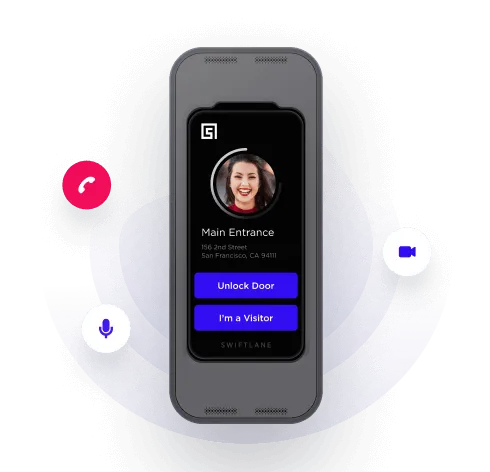
- Entrance panel with a camera and a digital directory
- Connectivity, such as IP/PoE networking or LTE
- Cloud-based management software
- Mobile app calling for residents
Why Retrofit Upgrades Are Popular
For many properties, retrofitting offers a practical way to modernize entry systems without a full replacement. Benefits often include:
- Video calls to residents’ smartphones
- Remote unlock capabilities
- Guest and delivery PIN access
- Centralized access logs and management tools
Because most work occurs at the building entrance rather than in units, retrofit upgrades are often faster, less disruptive, and more cost-effective than installing a completely new intercom system.
Is Retrofitting Right For Your Building?


Not every building needs a full intercom replacement. In many cases, a retrofit intercom system can deliver modern features without major construction or rewiring.
A quick evaluation of your building’s infrastructure can usually determine whether a retrofit upgrade will work.
Quick Retrofit Check
Your building is likely a good candidate if:
- Existing wiring is intact, or you can add a single network drop at the entrance
- You want app-based video calling instead of maintaining in-unit intercom devices
- Running new cables throughout the building would be difficult or disruptive
- There is a reliable LTE or cellular signal at the entry location
Yellow Flags (Site Survey Recommended)
Some situations require a quick survey before choosing a retrofit path:
- Damaged or inconsistent building wiring
- Weak cellular signal at the entrance
- Complex fire or emergency egress integrations
- Outdoor installations exposed to extreme weather
A short site survey by an installer usually confirms feasibility quickly and helps determine which retrofit approach will work best.
Green Flags for Retrofit
Certain building conditions make retrofits particularly straightforward.:
- Stable 2-wire riser wiring
- Working door strike or maglock
- Surface-mounted entrance panels
- Residents are comfortable using smartphone apps
Situations Where a Hybrid Approach May Help
Some properties still need to support residents who rely on traditional intercom handsets. In these cases, a hybrid system that supports both mobile apps and legacy devices may be worth considering.
When a Full Replacement May Be Better
A retrofit may not be the best option if:
- The building is already undergoing a major renovation
- New electrical risers or wiring upgrades are planned
- The existing infrastructure is severely damaged
The Three Retrofit Options
Most intercom retrofit projects follow one of three upgrade paths. The right option depends on your building’s wiring, network availability, and long-term goals.
Here’s a straightforward comparison to help you evaluate each approach:
| Retrofit Option | Best For | Infrastructure Needed | Advantage | Watch-Outs | Typical Cost (Per Entrance) |
| 2-Wire Reuse | Older buildings with existing wiring | Existing 2-wire cabling | Least disruptive; faster upgrade | Performance depends on the wiring condition | $8,000 – $30,000 |
| IP/ PoE (Cat6) | Mid to large properties | Ethernet (Cat6) + internet connection | Best performance and scalability | Requires a network drop and some cabling | $10,000 – $40,000 + (varies by building size and installation scope) |
| Cellular (LTE) | Gates, remote entries, hard-to-wire locations | Cellular signal (LTE) | No wiring or trenching needed | Ongoing data fees, signal reliability | $6,000 – $25,000 |
*Cost estimates are based on industry-reported intercom system pricing, installer quotes, and vendor documentation (typically $1,500 to $15,000+ per system) and are adjusted for real-world retrofit projects, where building size, wiring reuse, and installation complexity can increase total costs into the tens of thousands.
Common Retrofit Scenarios in Real Buildings
Retrofit intercom projects rarely follow the exact same path. The right approach depends on the building’s infrastructure, layout, and residents’ preferred method of receiving calls.
Here are a few common retrofit scenarios property owners encounter.
Upgrading An Old Analog Apartment Intercom
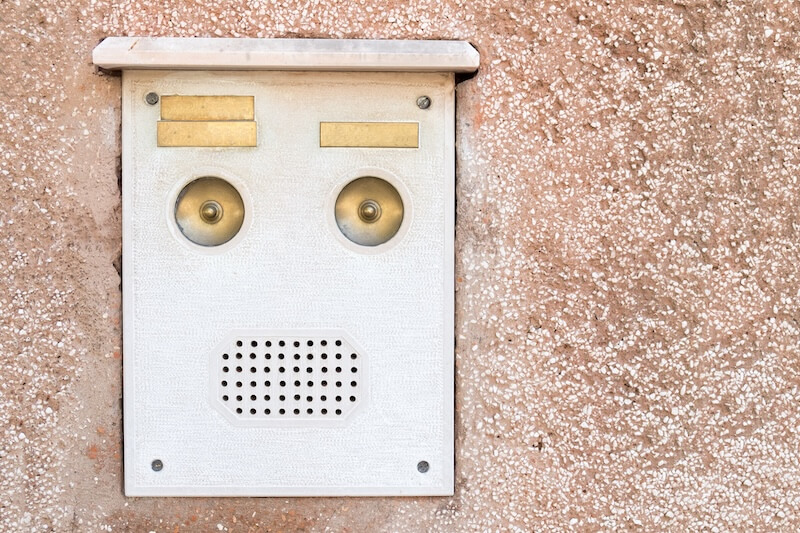
Many older apartment buildings still rely on analog buzzer systems with in-unit wall handsets. These systems often require frequent maintenance and provide limited functionality.
In these cases, retrofitting usually involves replacing the entrance panel and the calling system, while residents begin receiving video calls through a mobile app rather than a wall unit. The existing door strike and wiring can often remain in place.
Replacing a Broken or Unsupported Intercom
Some properties attempt to repair aging intercom systems only to discover that replacement parts are no longer available. Retrofit upgrades provide a way to modernize the entry system without fully rebuilding the infrastructure.
The new panel integrates with modern software and cloud services, enabling managers to update directories, manage credentials, and monitor entry activity remotely.
Modernizing Gate or Secondary Entrances
Retrofits are also common for parking gates, side entrances, and service doors where running new wiring would be difficult.
In these cases, cellular-enabled intercom panels can provide directory calling and secure access control without connecting to the building’s internal network.
Quick Cost Cheat Sheet (Planning Estimates)
Retrofit intercom costs vary depending on building size, entrance complexity, and the upgrade path you choose. The numbers below reflect typical planning estimates property managers use during early budgeting.
| Building Size | Typical Retrofit Cost per Entrance |
| Small ( ≤ 20 units ) | $6, 000 – $15,000 |
| Mid-size (21-100 units) | $12,000 – $35,000 |
| Large (101+ units) | $20,000+ varies based on installation scope and infrastructure |
These estimates usually include the intercom panel, installation, and basic system setup, but exact costs will depend on factors like wiring condition, mounting requirements, and network connectivity.
Cost ranges reflect Swiftlane’s estimates based on installer experience and real-world retrofit project scope, where building size, wiring reuse, and installation complexity affect the final figure. ‘Per entrance’ refers to one building entry point: lobby, gate, or secondary door. Multi-entrance buildings should budget per entry point accordingly. Software subscription pricing ($2 – $8 per unit per month) is charged separately from installation.
Additional costs may apply for:
- Cellular data plans (for LTE systems)
- Additional entrances or gate panels
- Integration with access control or building management systems
- Because building infrastructure varies, installers typically recommend starting with a brief site survey to confirm the most accurate budget.
Choosing a Retrofit-Friendly Intercom System


Not every intercom system is designed for retrofit projects. Some platforms require extensive rewiring, in-unit hardware installation, or complex infrastructure changes, making upgrades expensive and disruptive.
When evaluating retrofit intercom solutions, property managers typically look for systems that can:
- Work with existing door hardware, such as electric strikes or maglocks
- Support multiple connectivity options like IP, PoE, or LTE
- Enable app-based video calling instead of installing devices in each unit
- Provide cloud-based access management for easier administration.
Modern cloud intercom systems are often designed with these retrofit needs in mind. For example, platforms like Swiftlane allow buildings to upgrade entry systems while minimizing infrastructure changes.
Such retrofit-friendly systems help properties to:
- Replace legacy lobby panels with modern video intercom hardware
- Allow residents to receive video calls directly on their smartphones
- Enable mobile unlock, PIN access, and delivery credentials
- Manage building access through a centralized cloud dashboard
Modernize your intercom without a full replacement!
Upgrading to a modern video intercom doesn’t have to mean tearing open walls or replacing every device in your building. With the right retrofit approach, you can upgrade your entrance system, enable smartphone video calling, and manage building access from the cloud, often in just a few days.


FAQs
Can you retrofit an existing intercom system?
Yes, many older intercom systems can be retrofitted. In most buildings, installers can reuse existing components such as door hardware, power supply, and sometimes building wiring, while replacing the entrance panel and upgrading the system to support video calling and cloud-based management.
Will an intercom retrofit require work inside apartments?
Usually not. Many modern retrofit systems use smartphone-based calling, so residents receive video calls via a mobile app rather than an in-unit handset. Because of this, most installation work is done at the building entrance rather than in individual units.
How long does a retrofit intercom installation take?
Retrofit intercom installations are typically faster than full system replacements. Once equipment and approvals are in place, installation usually takes about 1-3 days per entrance, depending on the building infrastructure and mounting requirements.
Can I keep my existing door strike or maglock?
Yes. In most retrofit projects, installers reuse the existing electric strike or magnetic lock and connect it to the new intercom panel so residents can unlock the door remotely.
Do residents need to download an app to use a retrofit intercom?
Most systems require a mobile app for video calling and remote unlock, but alternatives such as PIN codes, key fobs, or call-to-phone options are available for residents who prefer not to use a mobile app.
What retrofit architecture should I choose?
Use 2-wire reuse if your existing wiring is intact and you want the least disruption. Choose IP/PoE for the most reliable, scalable, and future-proof setup. Go with cellular (LTE) for gates or entrances where running wiring isn’t practical.