Apartment buildings handle a constant flow of visitors: Guests, deliveries, vendors, or maintenance teams. A visitor management system for apartments helps bring structure to this constant movement.
Without a structured system, access becomes inconsistent. Security gaps appear. Residents get frustrated. And your staff gets overwhelmed.
A modern visitor management system fixes this. It brings control, visibility, and convenience to how people enter your building. Not just for security. But for everyday living.
Based on our experience, we created this guide to break down how apartment visitor management systems work, which features really matter, and how they can improve resident experience.
How We Researched This
This article draws on Swiftlane’s direct experience deploying visitor management systems across more than 3,000 multifamily properties annually throughout the U.S. It also reflects ongoing conversations with property managers, building operators, and facilities teams who use the platform day to day. Pricing ranges are based on Swiftlane’s quoting data and publicly available vendor information. Third-party statistics are cited inline with sources.
Key Takeaways
- A visitor management system for apartments can control and track every guest entry. It can replace your manual processes with an automated workflow.
- Improving security and resident experience, it allows guests to get in faster and residents to stay informed.
- Features like temporary credentials and real-time notifications allow you to reduce friction at entry points and eliminate reliance on your front desk staff.
- Compared to traditional intercoms, these systems can provide full visibility and audit trails. That translates to better accountability and fewer security gaps for your building.
Table of Contents
- What Is a Visitor Management System for Apartments?
- Why Apartment Buildings Need Visitor Management
- How Apartment Visitor Management Systems Work
- Key Features to Look For
- Benefits for Property Managers, Owners, and HOAs
- Visitor Management Use Cases in Apartment Buildings
- Visitor Management vs. Traditional Apartment Intercom Systems
- Visitor Management System Implementation Considerations for Multifamily Properties
- Why Choose Swiftlane for Apartment Visitor Management
- Frequently Asked Questions
Related Posts
- Visitor Management Systems: Ultimate Buyer’s Guide
- Building Access Control Systems: A Complete Guide for Multifamily and Commercial Properties
- Door Access Control: A Complete Guide
What is a Visitor Management System for Apartments?
A visitor management system (VMS) for apartments is a combination of software and entry hardware that can help you control and track guest access.
It replaces manual processes like signing in at a front desk or relying solely on an intercom. Instead, everything is handled digitally.
If residents expect guests, they can register them in advance. Visitors can be given a temporary credential, with each visit logged automatically in the system.
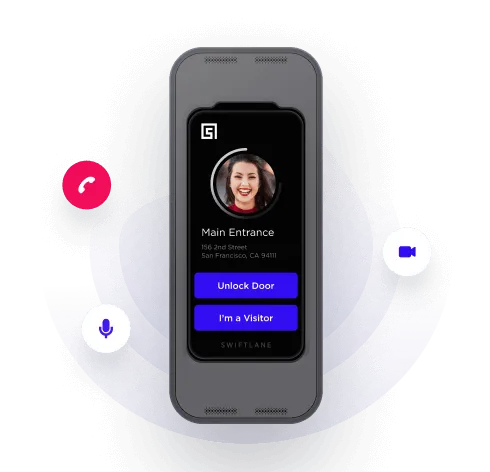
Most modern systems also have the advantage of integrating with video intercom and access control systems. That means your team won’t need separate tools for communication and tracking.
At its core, the system does three things:
- Control who can enter
- Verify the identity at the point of entry
- Record every visit
This is what separates it from older solutions. It doesn’t just let visitors in. It lets your team manage access with visibility and efficiency.
Why Apartment Buildings Need Visitor Management
Visitor access used to be simple. Someone shows up. They call the resident. The door opens.
That model no longer works at scale. Apartment buildings today deal with a much higher volume of traffic.
Deliveries alone have changed everything. The volume is significant. According to the NMHC/Kingsley Package Delivery Survey (the most widely cited benchmark in the industry), the typical apartment community receives roughly 150 packages per week, or approximately 600 per month per property. For a 200-unit building, that translates to an estimated 3 packages per unit per month, with holiday peaks running considerably higher. That volume creates a real coordination challenge when there is no structured system for delivery access.
Add vendors, maintenance teams, and short-term guests, and entry points become busy, unpredictable, and hard to control.
Without a system, common problems show up quickly. Examples:
- Residents miss guests because they never get notified.
- Delivery drivers wait too long or leave packages unattended.
- Unauthorized people follow others inside.
- Your staff spends time managing access instead of focusing on operations.
In our experience working with property teams across the U.S., the most consistent breaking point is unmanaged delivery traffic. Buildings that receive 30 or more packages per day with no structured access workflow put front desk staff in an impossible position.
This isn’t a minor inconvenience. Industry surveys consistently show that access and package-related questions account for 20% to 40% of total front-desk call volume at amenitized multifamily properties. In buildings without structured visitor or delivery management, roughly one in three staff interactions involves a task a modern system would handle automatically (Sources: Entrata and Reputation.com 2024–25 Property Management Trends Report).
Security is also harder to enforce. There’s no clear record of who entered, when they entered, or why they were there.
This creates risk. If something goes wrong, there is no audit trail. No way to review past activity. No way to verify who accessed the building.
At the same time, resident expectations have changed. People expect convenience. They want to manage guests from their phone. They don’t want to go downstairs just to open the door.
A visitor management system addresses both sides of the problem. It improves security while making access easier for residents.
How Apartment Visitor Management Systems Work
A good system should feel simple. For both residents and visitors. Behind the scenes, it handles multiple steps automatically.
Step 1: Guest Pre-Registration
Residents can register visitors ahead of time using a mobile app or web portal. They enter basic details. Name. Visit time. Sometimes a phone number or email. This step matters. It removes friction at the door and improves security.
Step 2: Temporary Access Is Issued
Once registered, the system generates a temporary credential (QR code, PIN, or mobile-based access link). The visitor receives it before arriving. No need to call or wait outside.
Step 3: Arrival at the Building
At the entrance, the visitor uses their credential. They scan a QR code, enter a PIN, or interact with a video intercom. The system verifies their access in real time.
Step 4: Resident Notification
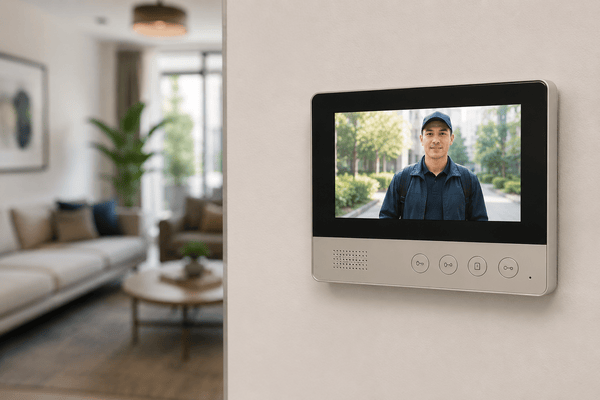
As soon as the visitor arrives or uses the system, the resident gets a notification. In some systems, they can also view video to see who’s at the door and even unlock the door remotely. This adds another layer of control without slowing things down.
Step 5: Entry Is Logged
Every action is recorded: The time of entry, the credential that was used, and the name of the associated resident.
This creates a full audit trail. Useful for both operations and security reviews.
Step 6: Access Expires Automatically
Temporary credentials are time-bound. Once the visit ends, access is revoked automatically. No manual cleanup required. This is important. It prevents lingering access and reduces risk.
Key Features to Look For
Not all visitor management systems are the same. Some focus only on check-in. Others offer full access control integration. The right system should cover four areas: Entry, resident experience, security, and operations.
Access and Entry Options
Visitors should have multiple ways to enter. Different situations require different methods.
QR codes work well for one-time guests. PINs are useful for recurring visitors like cleaners. Mobile credentials provide flexibility.
The key is temporary access. Credentials should expire automatically after use or after a set time window.
Resident Experience
Your residents should be able to manage their guests easily. Pre-registration is critical because it removes friction at the entrance. Real-time notifications also matter. Your tenants will need to know when their visitor arrives, not after the fact.
This is why mobile control is a major advantage. Residents should be able to unlock doors remotely if needed.
Security and Tracking
Every visit should be logged. That includes entry time, credential type, and associated unit.
Audit trails are critical. They provide visibility and accountability.
Some systems also support identity verification. This can include phone verification or linking access to a known contact.
Operational Flexibility
Buildings don’t just deal with guests. They deal with vendors, deliveries, and staff. A strong system should support different visitor types. It should allow recurring access schedules. It should handle multiple entry points across the property.
Integrations
This is where many systems fall short. Visitor management shouldn’t exist in isolation. It should connect with video intercoms and access control systems. That way, communication, verification, and entry all happen in one flow.
Without integration, property teams end up juggling multiple platforms.
Benefits for Property Managers, Owners, and HOAs
A visitor management system improves more than security. It changes how the building operates day to day.
For Property Managers
Property teams can reduce their reliance on manual processes. Your staff no longer needs to handle every visitor request. The result is fewer calls, fewer interruptions, and fewer resident complaints.
In terms of managing traffic, guests can get in faster. Your team can handle deliveries more smoothly, too.
Properties we work with consistently report that the biggest operational win isn’t the security layer. It’s the staff time. Eliminating 10 to 15 access-related interruptions per day compounds quickly across a portfolio. For a management company running five buildings, that’s a meaningful reduction in labor overhead without any headcount change.
Most importantly, you have better visibility. You can review access logs and understand building activity without relying on guesswork.
There’s an impact on your staff, too. Properties that give residents direct control over visitor access tend to have fewer front-desk interruptions related to visitor and delivery access. In buildings where we have deployed visitor management alongside video intercom, property teams have shifted time away from door coordination toward higher-value operational work.
Case Study: How Aviara Apartments Gained Full Visitor Visibility and Eliminated Shared Entry Codes
We’ve observed that mid-sized multifamily properties often struggle with legacy access systems built around shared entry codes. At Aviara Apartments, a 204-unit residential community in San Jose, CA managed by Sares Regis Group, codes were widely distributed across vendors and delivery personnel.
Over time, control broke down. Codes were reused and shared informally, and in some cases used by visitors no longer authorized to enter the property.
The bigger issue was visibility. The team had no reliable audit trail to see who entered or when a code was used. As one manager noted, “We couldn’t keep track of who was coming in or out… people were just passing off their codes to whoever.”
We’ve seen this create both security and operational challenges, especially when incidents required reconstructing access activity. Manual code management also added ongoing workload for staff.
To address this, Aviara transitioned to Swiftlane’s cloud-based access system. The upgrade introduced structured credentials, including PINs, mobile access, and video-based entry, all managed through a centralized dashboard.
With the new system, every access event is tied to a specific credential. The team can now review logs in real time, improving visibility across the property. Residents also gained the ability to issue one-time access codes for guests and deliveries, which automatically expire after use.
We’ve seen a clear improvement in accountability and day-to-day guest management, with fewer access uncertainties and better control across the building.
For Residents
The immediate impact is convenience. Residents can register guests in just seconds. They won’t need to wait by the phone or rush to the lobby. They can just receive notifications when visitors arrive.
More than helping residents stay in control of who enters their building, a visitor management system creates a better overall living experience. One that feels modern and responsive.
For Owners and HOA Boards
A visitor management system not only enhances security, it also reinforces accountability. There is a clear record of building access, which can reduce liability and support incident investigations.
At the same time, the property itself becomes more attractive. Modern access systems are now seen as a standard amenity, not just a luxury. That can impact occupancy and retention.Research supports this shift. According to MRI Software’s 2025 Multifamily Housing Trends report, properties with smart access and self-service resident tools see approximately 10% higher rental demand compared to properties without them. For owners in a competitive leasing environment, visitor management is no longer a luxury amenity. It’s an expected baseline.
Visitor Management Use Cases in Apartment Buildings


Visitor management systems are flexible by design. They’re built to handle the different types of people coming in and out of a building every day. Not just guests, but also deliveries and service providers.
Guest Visits
Residents can pre-register friends and family ahead of time. Guests can receive a credential before arrival, so they don’t have to wait at the entrance or call the resident.
The result is that entry becomes quick and predictable. It also removes friction during busy hours when multiple visitors arrive at once.
Deliveries
Deliveries are one of the biggest challenges in modern apartments. A visitor management system allows drivers to use temporary access codes to complete drop-offs. This can reduce wait times and help prevent package theft in common areas.
The labor savings are real. Manual package handling can take a few minutes per package. For a 200-unit building receiving 600 packages per month, that adds up to dozens of hours of staff time monthly (just for parcels). A visitor management system that handles delivery access codes and logs drop-offs digitally eliminates most of that burden.
Vendors and Maintenance
Service providers often need recurring access. Instead of issuing permanent keys (which can get lost) or coordinating with your staff (which will take up some of your team’s time), the system can just assign scheduled credentials.
For example, you can give cleaners access on Tuesday mornings only. This keeps access controlled without adding operational overhead.
Property Tours
Leasing teams can pre-register prospective tenants before they arrive. Visitors can check in and gain entry without manual intervention from your staff. This creates a smoother, more professional experience and helps tours stay on schedule.
Short-Term Rentals
Temporary guest access is particularly useful in buildings that allow short-term stays.
Hosts can issue time-bound credentials that automatically expire after the visit. This can reduce risk and prevent lingering access.
Household Services
You can manage entry for cleaners, dog walkers, and other recurring services more easily. That’s because access is scheduled and fully logged, giving you better visibility.
Case Study: How Gateway Park Apartments Modernized Access
Gateway Park Apartments is a 436-unit multifamily community in Northeast Denver managed by Apartment Management Consultants (AMC). We’ve observed that at properties of this scale, outdated access systems quickly become a daily operational burden.
Before upgrading, Gateway Park relied on physical key fobs and shared access codes. Fobs were frequently lost and visitor access had to be coordinated manually. In many cases, shared codes were being reused across guests and vendors.
As the property team shared, “We were always rekeying… it was nonstop. We had one master code that everyone used.”
AMC transitioned Gateway Park to Swiftlane’s cloud-based access system to streamline operations and improve control. Mobile access, PINs, and touchless entry options are now used, while staff manage access centrally through a cloud dashboard.
We’ve seen this significantly reduce manual rekeying and simplify onboarding, while improving visibility over visitor management and vendor access across the property.
Visitor Management vs. Traditional Apartment Intercom Systems
Traditional intercoms serve a purpose, but they’re limited. They allow communication, yes. However, they don’t manage access in a structured way.
Here’s a clear comparison:
| Capability | Traditional Intercom | Visitor Management System |
| Pre-registration | No | Yes |
| Visitor logs | No | Yes |
| Real-time notifications | Limited | Yes |
| Temporary credentials | No | Yes |
| Delivery handling | Manual | Streamlined |
| Multi-entry coordination | Limited | Yes |
The difference is simple. Intercoms answer the question: “Who’s at the door?”
Visitor management systems answer: “Who should be allowed in and when?”
They also create a record of that decision. That’s the shift from basic communication to full access control.
Implementation Considerations for Multifamily Properties
Adopting a visitor management system requires planning. The goal is to minimize disruption while maximizing value for your multifamily property.
Retrofitting vs. New Installations
Many modern systems can work with existing infrastructure. You can often reuse old wiring as long as it’s undamaged. Even your door hardware can be upgraded instead of getting a full replacement. Remember that when done properly, retrofits will not only reduce your costs but also save you installation time.
Internet and Connectivity
A cloud-based system is powerful, but you must have a stable internet connection to fully leverage its capabilities. The same goes for your entry hardware, which requires reliable connectivity. This is important because the system needs to be seamlessly connected in order to facilitate real-time verification and notifications.
Entry Point Coverage
You should think beyond your main entrance. Consider also your building’s service entrances and parking garages. A complete system should cover all relevant access points.
Data Privacy and Security
Visitor data needs to be handled carefully. Your team must have a good understanding of how such data should be saved and accessed. Accordingly, your system should utilize secure storage and crystal-clear access controls.
Resident Onboarding
Adoption matters. Your residents should be able to understand how to use the system quickly. When your system has a user-friendly interface, you can have a smoother onboarding process.
Vendor Coordination
Installation involves at least three components: hardware, software, and networking.
You can simplify this process by working with a single provider. This way, you can reduce coordination and prevent gaps from happening between systems.
Why Choose Swiftlane for Apartment Visitor Management
A visitor management system works best when it’s part of a larger access platform.
This is where Swiftlane stands out. Instead of separate tools, Swiftlane combines video intercom, access control, and visitor management into one system.
That means fewer vendors. Fewer integrations to manage. A more consistent experience.
Residents can register guests, receive notifications, and unlock doors from one interface. Property managers get centralized control. They can monitor access, review logs, and manage permissions across the building.
The system is cloud-based. Updates happen automatically. There is no need for on-site servers.
Installation is also streamlined. Existing infrastructure can often be reused. This reduces disruption during rollout.
Most importantly, the system is designed around both security and convenience. Residents move through the building more easily. Property teams maintain full control.
See How It Works
Managing visitors shouldn’t slow your building down. A modern system improves security while making everyday access easier for residents and guests.
If you are evaluating options, the next step is to see how a system works in practice.
Request a demo to explore how visitor management, video intercom, and access control can work together in one platform.
Frequently Asked Questions
How much does a visitor management system cost?
Cost depends on your building size, number of entry points, and integration depth. As a general framework based on 2025 market pricing:
- Small buildings (under 50 units, 1 to 2 entry points): $50 to $150 per month for software; hardware $1,500 to $3,000 per entry point (one-time)
- Mid-size properties (50 to 200 units, 2 to 4 entry points): $200 to $500 per month; hardware $3,000 to $8,000 per entry point
- Large or multi-building (200+ units): $500 to $1,500+/month depending on feature depth
Most costs split into one-time hardware investment + ongoing SaaS subscription. Retrofitting existing infrastructure can significantly reduce upfront hardware costs. Request a quote from Swiftlane for a building-specific estimate.
Can a visitor management system work with existing intercom systems?
In many cases, yes, it can. Some systems can integrate with or replace existing intercom hardware while using the same wiring.
How are visitors verified?
Verification methods vary. They can include QR codes, PINs, mobile credentials, or video-based confirmation through an intercom.
Is visitor data secure?
Yes, it is. Today’s systems employ encrypted storage and controlled access. Still, you should review your data policies and make sure they comply with local regulations.
Can a visitor management system handle deliveries and vendors?
Yes, it can. Visitor management systems come with support for multiple visitor types, including deliveries and recurring service providers.
Does a visitor management system require staff to operate?
No, it doesn’t. Most systems now can be automated, but your staff can still monitor and manage access only when absolutely needed.
Can residents pre-register guests in advance?
Yes. Most modern systems allow residents to pre-register guests through a mobile app or web portal. This generates a temporary access credential before the visitor arrives, which reduces wait times and improves entry flow.
What happens if a visitor arrives without a pre-registration?
Walk-in visitors can still be handled through the system. They’re typically verified at the entry point and can receive a one-time credential or request access through a video intercom, depending on the setup.
Do visitor management systems keep a record of who entered the building?
Yes. Every entry is logged automatically, including time of access, credential type, and associated unit or resident. This creates an audit trail that property teams can review when needed.
Can visitor access be restricted by time or schedule?
Yes. Property managers or residents can set time-based rules for access. For example, a vendor may only be allowed entry on specific days or within certain hours, and credentials automatically expire outside that window.