When property managers start thinking about better entry security, whether for deliveries or tighter control over shared entrances, the first question is usually simple: how do we interact with the person at the door? That’s why doorbell cameras and video intercoms often come up in the same conversation.
At a glance, both options seem to solve similar problems. They provide video, notifications, and a way to know when someone is at the entrance. But the way they’re designed, and the problems they’re meant to solve, are very different.
An apartment doorbell camera is primarily a monitoring tool. It records activity and sends alerts when someone approaches or rings the bell, typically alongside an existing lock or access system. A video intercom for apartments, on the other hand, is a comprehensive system built around communication and access control. It lets residents or staff speak with visitors, grant entry, and remotely release the door or gate.
That difference often becomes the deciding factor.
Some buildings only need basic visibility at a single entrance. Others need a system that can handle multiple residents, shared entrances, deliveries, and controlled entry throughout the day. Understanding where your building falls on the spectrum helps clarify which option makes sense now and what limitations might surface later.
This guide is based on common access control practices in multifamily housing, observed entry workflows across multi-tenant apartment buildings, and a review of how doorbell cameras and modern video intercom systems are typically deployed and managed by property teams.
Key Takeaways
- Doorbell cameras focus on monitoring; video intercoms manage access.
- Apartments with shared entrances often need visitor calling and remote access release.
- The right choice depends on traffic, access needs, and daily operations.
- Evaluate your needs carefully to understand which device best meets your security requirements before making a purchase.
Table of Contents
- Doorbell Camera vs Video Intercom: What’s the Difference
- Key Limitations to Consider in Apartment Buildings
- Operational Factors that Favor Video Intercoms
- Where Swiftlane Fits
- Final Thoughts
- FAQs
Doorbell Camera vs Video Intercom: What’s the Difference
Both doorbell cameras and video intercoms offer video at the door, but they’re built for different problems and apartment use cases.
What is a Doorbell Camera?


A doorbell camera is a video device installed at an entrance that captures activity and sends alerts when someone approaches or rings the bell. In apartment buildings, doorbell cameras are usually less about controlling access and more about giving residents and staff quick visibility into what’s happening at the door.
They’re often used alongside existing doorbells, intercoms, or access control systems to add video confirmation and motion alerts. And while security cameras are better for monitoring wide areas, doorbell cameras are designed for one job: making it easier to see and respond to whoever shows up at a specific entrance.
Residents or staff can see video footage, receive motion alerts, and review historical footage. Some models allow two-way audio, but they typically do not manage building access.
For apartments, doorbell cameras can work when the primary goal is visibility, knowing when someone is at the door or reviewing footage for security incidents or package deliveries.
What is a Video Intercom?


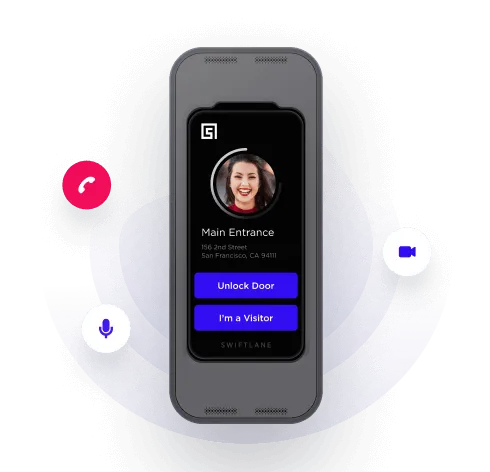
A video intercom for apartments is a communication and access control system designed for shared entrances and multiple residents. It allows visitors to call residents or staff, communicate through video and audio, and be granted access by buzzing them in or unlocking doors remotely.
Unlike doorbell cameras, video intercom systems are built to manage who gets in, not just record who shows up. They can integrate with door hardware and gate operators, and in some deployments, elevator controls too. Most doorbell video intercoms include resident directories, mobile apps, and access logs.
In apartment buildings, video intercoms are used to actively control entry throughout the day, especially in buildings with high foot traffic, deliveries, or shared access points.
Doorbell Camera vs Video Intercom Comparison Table
| Feature | Doorbell Camera | Video Intercom |
| Primary purpose | Monitoring and alerts | Visitor communication + access control |
| Video visibility | Yes (door-level) | Yes (visitor verification) |
| Two-way audio | Sometimes (model-dependent) | Yes (standard feature) |
| Ability to buzz visitors in | Possible only when integrated with a compatible lock/access system | Yes (built-in) |
| Remote door or gate unlocking | Possible only with integrations, and usually limited to one door | Yes (designed for doors and gates) |
| Resident directory | No | Yes |
| Designed for multiple residents | Limited (best for single-unit or small setups) | Yes (built for multi-tenant buildings) |
| Access logs and entry events | Video clips and motion history | Detailed access events + audit logs |
| Scalability over time | Limited for larger buildings or multiple entrances | Built to scale across doors, buildings, and portfolios |
| Best use case | Visibility and incident review at a specific door | Managing building-wide visitor entry and access |
How This Impacts Your Decision
The choice between a doorbell camera vs video intercom often comes down to what you need the system to do after someone arrives at the door.
If your priority is simply seeing who’s there and reviewing footage later, a doorbell camera may be enough. A video intercom system is designed to communicate with visitors and control access at shared entrances.
Key Limitations to Consider in Apartment Buildings
Both options can work in apartments, but their limits become clearer as foot traffic and day-to-day use increase. Seeing those limits early on helps avoid problems down the line.
Limitations of Doorbell Cameras in Apartments
Doorbell cameras are primarily built to show what’s happening at the door, not to manage access. In buildings with shared entrances, that usually means you can see who’s there, but you still can’t let them in with just a doorbell camera.
Common limitations include the lack of remote unlocking or buzzing capabilities, which forces residents or staff to rely on separate access systems. Doorbell cameras also struggle in multi-tenant environments, where many residents need to receive calls or notifications from a single entrance. Over time, this can lead to missed visitors, delivery delays, and residents propping doors open to compensate.
They also provide limited accountability. While video footage can show activity, it doesn’t always capture who granted access, when access was granted, or how often doors are opened throughout the day.
Limitations of Video Intercoms
Video intercoms are designed for shared entrances, but they require more upfront planning. Setting one up can involve wiring, networks, or existing door hardware. In smaller, quieter buildings, that can feel like more system than you really need.
In buildings without consistent staff coverage or responsive residents, unanswered intercom calls can still create entry delays, especially during peak delivery hours.
Video intercoms also shift how access is handled. Residents or staff need to actively respond to calls and grant entry, which may require onboarding or clear usage guidelines. While this improves control, it does require a bit more coordination than passive monitoring tools.
Why These Limitations Matter Long-Term
In an apartment building, access needs are rarely static. Delivery volume increases. Resident expectations change. Staff roles evolve. A solution that works today may start to show cracks as traffic and complexity grow.
Thinking through these limitations helps buildings choose a system that fits current needs while still supporting future growth, without having to replace or layer systems later.
Operational Factors that Favor Video Intercoms
Beyond features, operational realities often determine whether a doorbell camera or video intercom makes sense.
Who is Responsible for Granting Access
In most apartment buildings, responsibility for granting access is shared between residents, onsite staff, and sometimes security teams. With doorbell cameras, someone has to notice an alert and then figure out what to do next. Video intercoms are built around answering visitor calls and granting access in real time, which works better when entry decisions need to happen consistently throughout the day.
Delivery Volume and Visitor Traffic
As delivery volume increases, backups at the entrance become more common. Doorbell cameras can show when a courier arrives, but they don’t help move the process along. Video intercoms let authorized users communicate with visitors and grant access remotely, reducing missed deliveries and bottlenecks at shared entrances.
Accountability and Access Visibility
In apartment buildings, it’s not just about seeing who showed up. It’s about understanding what actually happened at the door. Doorbell cameras capture video, but they don’t always show who responded or how access was handled.
Video intercom systems add that missing context by logging calls, access releases, and entry events, giving property managers clearer visibility into how entrances are being used.
Staff and Security Workflows
When a building has onsite staff, efficiency matters. Doorbell cameras often push work downstream, requiring staff to review footage or respond after the fact. Video intercoms bring communication and access control into one system, making it easier for staff to manage visitors and multiple entrances without constantly moving around the property.
Changing Resident Expectations
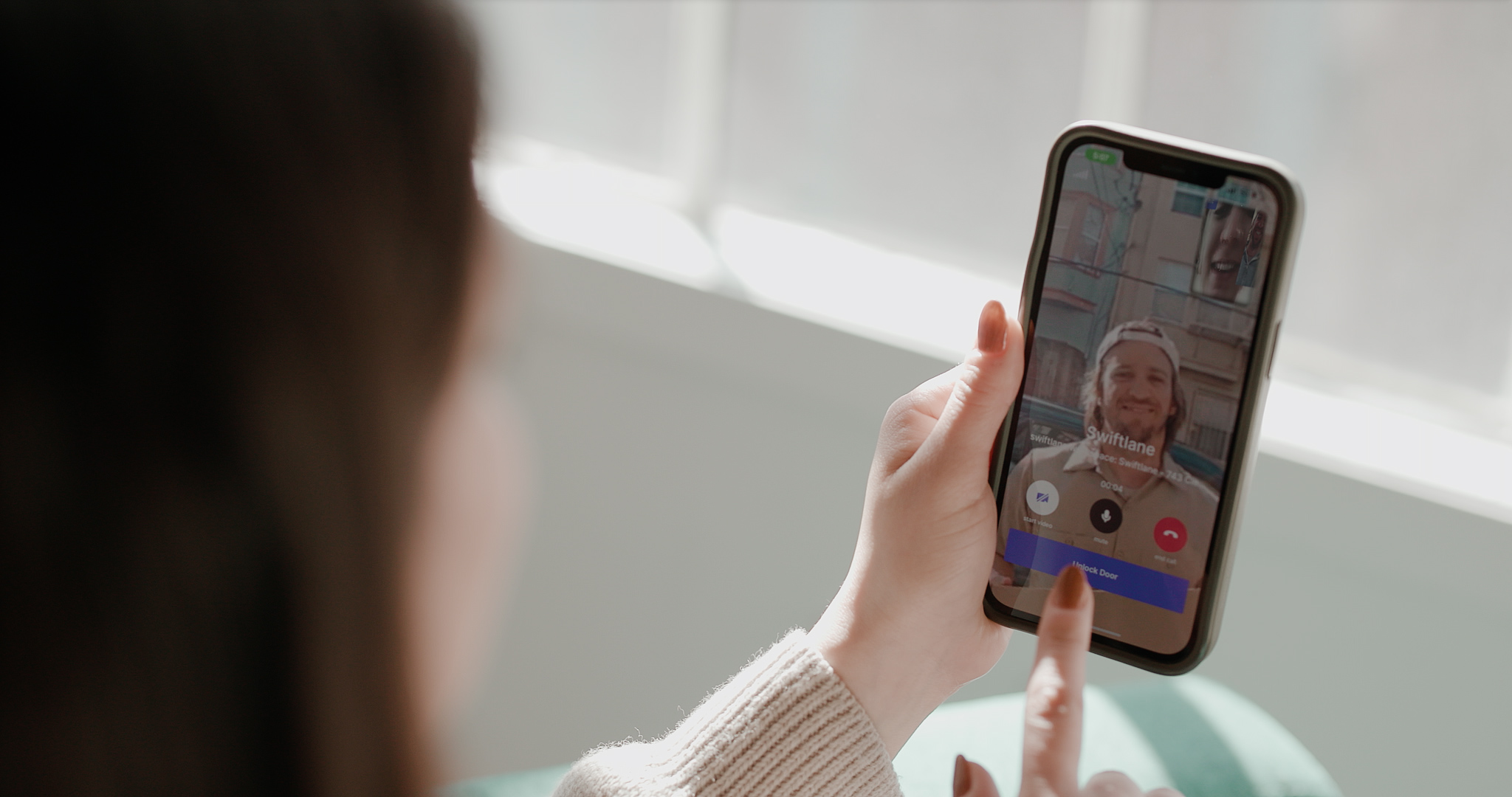
Residents increasingly expect to manage access from their phones. They want to grant entry to guests, handle deliveries remotely, and avoid sharing door codes. Video intercom systems are designed around these day-to-day access needs, while doorbell cameras remain focused on monitoring rather than active access management.
Where Swiftlane Fits
Multifamily apartment buildings need entry systems that go beyond basic monitoring. Managing shared entrances, multiple residents, frequent deliveries, and staff workflows requires a solution designed for multi-tenant environments.
Like other modern video intercom platforms designed for multifamily housing, Swiftlane fits this picture as a video intercom system built for apartments, where access control and communication need to work together.
For apartment operators replacing doorbell cameras or legacy (analog or on-premises) intercom systems, Swiftlane supports:
- Video-based visitor verification
- Mobile access for residents and staff
- Remote door and gate unlocking
- Centralized management across entrances
- Access logs that provide visibility into entry events and usage patterns
This makes Swiftlane well-suited for buildings that need to actively manage access throughout the day, rather than just monitor activity at the door.


Final Thoughts
Choosing between a doorbell camera vs doorbell video intercom comes down to how an apartment building handles entry on a daily basis.
Doorbell cameras can be useful for basic visibility and incident review, especially at smaller or less busy entrances. Video intercom systems, on the other hand, are designed to manage communication and access across shared spaces, making them a better fit for buildings that need to buzz visitors in, control entry remotely, and keep track of access activity.
Understanding how each option works and where its limitations show up helps apartment owners and property managers choose a system that meets while also supporting long-term scalability and future upgrades without creating friction later.
FAQs
Are there industry guidelines for apartment access control systems?
While requirements vary by jurisdiction, multifamily operators often look to general physical security best practices and local building codes when evaluating entry systems, especially for shared entrances.
What is the main difference between a doorbell camera and a video intercom?
A doorbell camera focuses on monitoring and recording activity at the door. A video intercom is designed for communication and access control, allowing residents or staff to speak with visitors and remotely release the door or gate.
Can apartment buildings use doorbell cameras?
Yes. Doorbell cameras can be used in apartment buildings for basic visibility, but they are limited when it comes to managing shared entrances, granting access to visitors, or controlling access across multiple units.
Are video intercom systems better for shared apartment entrances?
Video intercom systems are generally better suited for shared entrances because they support multiple residents, visitor calling, remote unlocking, and access logs, all of which are common needs in apartment buildings.
Do video intercoms require replacing existing doors or gates?
Not necessarily. Many video intercom systems integrate with existing door hardware and gate operators, allowing buildings to upgrade access control without replacing infrastructure.
How do residents interact with a video intercom system?
Residents typically receive visitor calls on their phones or other connected devices and can speak with visitors and grant access remotely.