Power-over-Ethernet (PoE) intercom systems can simplify installation at building entry points, but only when the existing infrastructure supports them. A single Ethernet cable that handles both power and data is a genuine advantage in new construction or small offices, less so in larger multifamily properties or retrofit scenarios, where network capacity and cable runs become limiting factors.
This guide breaks down where PoE intercom systems perform well, where they fall short, and what building and property teams should evaluate before committing to a deployment.
System specifications, installation requirements, and performance comparisons were drawn from vendor documentation, real-world deployment scenarios, and current practices for implementing access control systems in buildings.
Key Takeaways
- Retrofit scenarios might complicate PoE installations. The absence of existing Ethernet cabling often makes installation more complex, not less.
- Network stability and switch capacity determine system reliability. Both need to be evaluated before deployment, not after.
- PoE systems become harder to manage as buildings scale. The criteria for when to consider a cloud-based alternative are covered in the vendor selection section.
Table of Contents
- What is a PoE Intercom System?
- Where PoE Intercom Systems Work Best
- What Are the Limitations of PoE Intercoms?
- PoE Intercom vs Other Intercom Types
- Installation Requirements and Infrastructure
- When Should You Choose a PoE Intercom System
- Where PoE Intercom Systems Fit in Modern Building Access
- Final Thoughts
- FAQs
What is a PoE Intercom System?
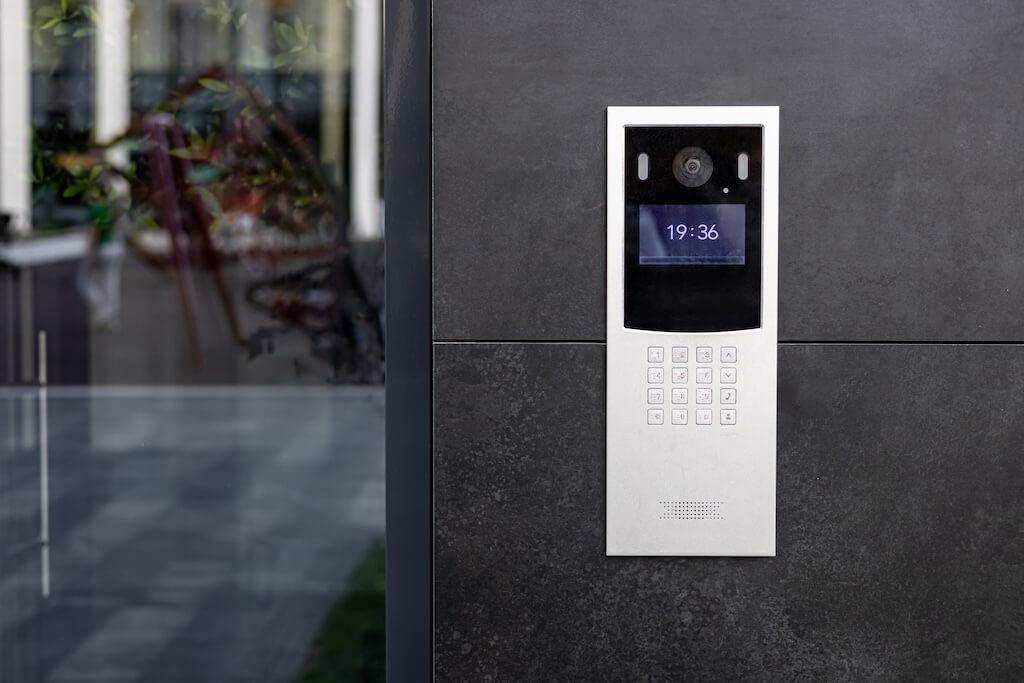
A PoE intercom system is a type of building entry system that uses a single Ethernet cable to deliver both power and data to the intercom device.
At the entry device, the intercom connects to the building’s network via this cable, allowing it to transmit audio and video while receiving power, without requiring a separate electrical connection.
The PoE intercom is part of a network-based system. It typically connects to a PoE-enabled switch, which supplies power and links the device to other endpoints such as indoor stations, access control systems, or mobile applications.
This setup makes PoE intercoms a common choice in environments where network infrastructure is already in place and where centralized connectivity is preferred over standalone or analog systems.
Where PoE Intercom Systems Work Best


PoE intercom systems tend to perform best in environments with well-structured, predictable network infrastructure. In these cases, the benefits of simplified cabling and centralized connectivity can be fully realized without adding unnecessary complexity.
In new construction projects, PoE systems are easier to plan and deploy. PoE runs are typically planned at the rough-in stage, before walls are closed, resulting in lower costs and complexity than in retrofit scenarios.
They also fit well in small to mid-sized buildings (5-50 units) with a limited number of entry points. With fewer doors and users to manage, network load remains manageable, and system configuration stays relatively straightforward.
In commercial office buildings, PoE intercoms align naturally with existing IT infrastructure. Many offices already operate on structured networks, making it easier to integrate intercom systems without introducing entirely new wiring or management layers.
What Are the Limitations of PoE Intercoms?
While PoE intercom systems simplify cabling, they introduce constraints that become more visible as building complexity increases.
Retrofit Limitations
In buildings without existing Ethernet infrastructure at entry points, PoE installation requires running new cable through walls, ceilings, or conduit. This often approaches or exceeds the cost of the intercom hardware itself. In these cases, alternative systems that use existing 2-wire wiring or cellular connectivity may offer a more cost-effective path.
Network Dependency
PoE intercom systems rely entirely on the building’s network to function. If the network is unstable, overloaded, or improperly configured, performance can degrade, affecting call quality, response time, and, in some cases, door access.
Power and Switch Capacity Constraints
As systems scale, power availability becomes a factor. PoE switches have a limited power budget that must be shared among all connected devices.
In larger deployments, this can require additional switches, careful load planning, or infrastructure upgrades to ensure consistent performance across all entry points.
Scalability and System Management
PoE systems work well at smaller scales, but as buildings grow or portfolios expand, managing multiple devices across networks can become more complex.
Without centralized or cloud-based management, tasks such as user provisioning, monitoring, and system updates will require manual effort, making scaling to larger portfolios more difficult.
PoE Intercom vs Other Intercom Types
Different intercom systems are built around different infrastructure models. Evaluate the table below to better understand how PoE compares to IP and cloud-based approaches, helping clarify where it fits and where alternatives may offer greater flexibility.
| Feature | PoE Intercom | IP Intercom (Non-PoE) | Cloud-Based Intercom |
| Power Source | Delivered via Ethernet | Separate power + data | Typically, local power + internet |
| Cabling | Single Ethernet cable | Ethernet + electrical wiring | Flexible (wired or wireless) |
| Installation Complexity | Moderate (depends on network setup) | Moderate to High | Flexible, often simpler in retrofits |
| Network Dependency | High | High | High (but optimized for remote access) |
| Remote Access | Limited to system setup | Moderate | Strong (mobile-first) |
| Scalability | Moderate (switch-dependent) | Moderate | High (multibuilding support) |
| Best Fit | New builds, small to mid-size buildings | Structured environments | Multifamily, multi-property portfolios that require remote management and mobile credentials |
Installation Requirements and Infrastructure
Installing a PoE is primarily a network task. The setup depends on how devices are connected, powered, and managed across the building’s infrastructure.
Below are key infrastructure requirements to consider when deploying a PoE intercom system.
Ethernet Cabling (Cat5e or Cat6)
Each intercom requires a dedicated Ethernet run to a network switch. In new construction, these runs can be planned alongside other systems. In existing buildings, installation may involve routing new cables through walls, ceilings, or conduits, depending on access points.
Cat5e (Category 5e) and Cat6 (Category 6) are standard Ethernet cables used in networked systems. Cat5e supports data speeds up to 1Gbps over 100 meters, which is sufficient for most basic intercom and networking needs. Cat6, on the other hand, supports higher bandwidth (up to 250 MHz) and speeds up to 10 Gbps over shorter distances, with improved resistance to signal interference.
Cat5e is often adequate for smaller deployments, while Cat6 is commonly used in newer or larger systems where higher performance and future scalability are considerations.
PoE Switch Capacity
PoE switches provide power to connected devices, but each switch has a fixed power budget. As more intercoms or networked devices are added, that capacity must be distributed carefully.
Larger systems often require additional switches or higher-capacity equipment to support multiple entry points without performance issues.
Network Configuration
Intercom devices operate within the building’s network, so configuration plays a key role in performance. This includes proper device setup, stable connectivity, and avoiding congestion that could affect call quality or responsiveness.
In more complex environments, intercom traffic may need to be prioritized to maintain consistent operation.
System Reliability and Backup Planning
Because both power and communication run through the network, outages can affect system availability. Backup measures, such as Uninterruptible Power Supplies (UPS) for switches or redundant network paths, help maintain access during disruptions.
Security and Access Control Alignment
Intercom devices and management platforms should support encrypted communication channels, role-based access, and auditable access logs. Confirming these capabilities during vendor evaluation helps ensure the intercom system aligns with broader security standards for networked entry systems.
When Should You Choose a PoE Intercom System
Choose a PoE intercom if:
- Your building already has structured Ethernet cabling and network equipment in place
- You have a limited number of entry points where power and network load stay manageable
- You’re working on new construction or a major renovation where cable runs can be planned from the start
- You prefer a wired, centralized system with stable network-based control
Choose an alternative if:
- Your building lacks existing Ethernet at entry points, making new cable runs costly
- You’re managing a large or multi-property portfolio where centralized, remote management is a priority
- Your network infrastructure is unstable or underpowered for additional device load
- You need a faster, lower-disruption retrofit using existing 2-wire wiring or cellular connectivity
Where PoE Intercom Systems Fit in Modern Building Access


PoE intercom systems provide a structured, wired approach to building entry, reliable for localized deployments where existing network infrastructure is already in place.
They become more capable when paired with a cloud-based management layer. Rather than operating as a standalone, on-site system, a PoE intercom connected to a cloud platform extends the capabilities of the hardware: remote access, mobile credentials, centralized user management, and multi-property scalability become possible without replacing the underlying wired infrastructure.
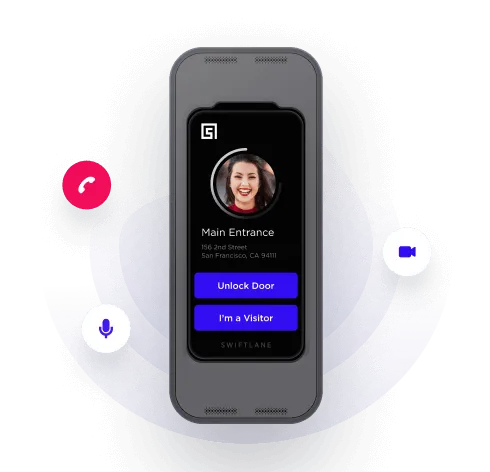
Swiftlane is built on this model. The system connects via PoE, keeping installation straightforward, while the cloud-based platform handles access management across buildings and users.
Property teams can provision users, monitor entry activity, and push updates remotely, without being tied to a single on-site network setup.
For smaller or single-property deployments, a standalone PoE system may be sufficient. For multifamily and commercial properties where operational demands scale, a PoE-plus-cloud approach covers both the infrastructure stability of a wired system and the flexibility that modern access control requires.
Explore how Swiftlane supports modern building access with cloud-based management, mobile credentials, and scalable deployment across properties, or connect with our team to see how it fits your setup.
Final Thoughts
PoE intercom systems work best in structured environments, new construction, buildings with existing Ethernet infrastructure, and deployments with a limited number of entry points. Outside of those conditions, the installation complexity and network dependency can offset the simplicity advantage.
For properties that need to scale, pairing PoE hardware with a cloud-based management platform addresses most of those constraints without abandoning the wired infrastructure entirely.
FAQs
Do PoE intercom systems require internet?
Not always. PoE intercoms can function on a local network without internet access for basic communication and door control. However, internet connectivity is typically required for remote access, mobile integration, and cloud-based features.
Is a PoE intercom system better than a cloud-based intercom?
Neither is inherently better. The right choice depends on your building’s infrastructure and operational requirements. PoE systems perform well in buildings with existing network infrastructure and limited entry points. Cloud-based systems are better suited where remote management, mobile credentials, or multi-property administration are priorities. The comparison table earlier in this guide details these trade-offs.
Can a PoE intercom work during a power outage?
It depends on how the system is set up. Since PoE intercoms receive power from network switches, they can continue operating during an outage if those switches are connected to backup power sources, such as uninterruptible power supplies (UPS). Without backup power, both the intercom and network components will go offline.