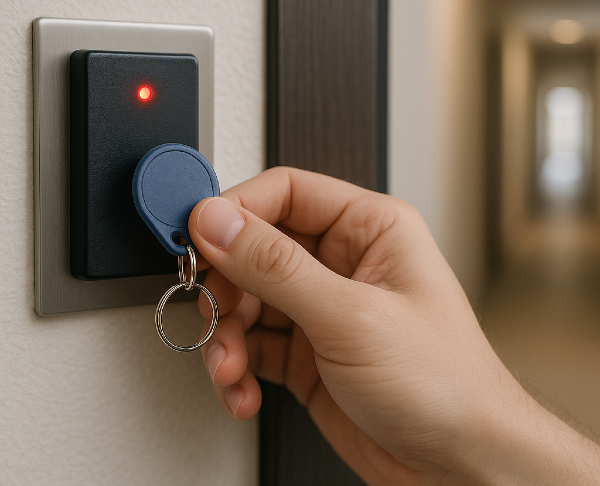
You’re standing outside your apartment building. You tap your key fob against the reader. Nothing happens.
No beep. No green light. Maybe a red flash. Maybe total silence.
A malfunctioning key fob is a huge inconvenience for residents and a recurring disruption to property managers’ everyday operations.
If you manage a multifamily property, you’ve likely heard this complaint more times than you can count: “My apartment key fob isn’t working.”
Sometimes the issue is simple. Other times, it’s a symptom of a deeper access control problem.
Based on experience installing thousands of key fob systems, the Swiftlane team knows how key fobs work and how to manage them. With this guide, we’ll break down:
- The most common reasons apartment key fobs stop working
- What residents should check first
- When the problem isn’t the fob, but the system behind it
- What recurring fob failures may be telling you about your property’s access control
Key Takeaways
- Causes of key fobs not working include deactivation, damage, and reader issues. Sometimes the fob is working fine, but the system is problematic.
- To troubleshoot, you can do a quick check of the reader light, the level of physical wear, or access permission changes.
- Credentials can be deactivated due to expiring leases, unpaid rent, or updates to the system.
- Recurring key fob issues may be a sign of an outdated system.
- With a cloud-based system, you can issue and track key fob credentials more smoothly.
Table of Contents
- Why Is My Key Fob Not Working?
- How to Troubleshoot and What to Check First
- When “Key Fob Not Working” Becomes a Pattern
- The Hidden Operational Costs of Fob Failures
- It’s Not the Fob, It’s the System
- Why Legacy Access Systems Create More Fob Complaints
- How Can Modern Access Control Prevent Fob Failures?
- Signs You Need to Evaluate an Access Control Upgrade
- A Smarter Approach to Apartment Access
- Swiftlane: A Centralized Solution to Managing Key Fobs
Related Posts
- Key Fob Entry Systems – A Complete Guide
- What Is a Fob System and How to Choose One
- Key Card Entry Systems
Why Is My Key Fob Not Working?
When a key fob fails, understanding the root cause can save time, reduce unnecessary replacements, and prevent repeat complaints.
Here are the most common reasons apartment key fobs stop working.
1. The Fob Was Deactivated
Deactivation is a common cause of key fobs not working. Unfortunately for residents, it’s often the least obvious.
Each key fob is assigned to a credential profile that’s listed in your access control system. It could be deactivated because:
- The lease is expiring, and the tenant hasn’t renewed yet
- The tenant is moving out
- The resident is transferring to another unit
- There was an administrative error
- The access permission was changed
In older or manual systems, deactivations sometimes happen accidentally during bulk updates. In properties without centralized credential tracking, it’s surprisingly easy to disable the wrong fob.
For residents, this feels like a random failure. For property managers, it’s often a system visibility issue.
2. The Fob Is Physically Damaged
Key fobs may be made of tough material. But they’re far from being indestructible.
They can fail due to:
- Cracks in the casing
- Water or moisture breaching its interior
- Being dropped repeatedly
- Damage to its internal chip
- Extreme heat (like being left too long inside a car during the day)
Unlike traditional metal keys, RFID fobs contain internal electronics. If the chip is damaged, the reader won’t detect the credential at all.
Remember that standard RFID key fobs typically don’t run on batteries. As a matter of fact, passive RFID credentials get their power from the reader. So if a resident claims that their key fob “died,” it might not be a battery issue at all.
3. The Door Reader Isn’t Working
Sometimes the fob is perfectly fine. The problem is the reader.
Access control readers can fail due to:
- Power interruptions
- Loose wiring
- Exposure to extreme weather conditions
- Network outages
- Firmware issues
- Aging hardware
One sign that it’s a reader issue is if more than one resident is complaining about their key fob not working at the same door.
This is where legacy systems start to show their age. Older access panels and readers are more likely to show inconsistency in performance, especially in busy doors or gates.
4. Database or Sync Delays
In some systems, credential changes must sync between local panels and central databases.
If there’s a sync delay, access permissions may not update properly. The same can be true for multifamily properties that employ disconnected systems.
Here are a few examples:
- The database shows a key fob was issued to a new resident, but it’s actually still not fully programmed.
- Access levels are changed but not implemented at every door.
- Syncing was incomplete because the network was down.
These problems are rarely visible to residents. They just experience a fob that “doesn’t work.”
But operationally, this often points to system architecture limitations.
5. Access Restrictions by Design
There are times when the key fob is actually working fine. The resident just doesn’t fully grasp that it comes with restrictions.
Examples of these restrictions are:
- Time-based limits (e.g., access to rear doors is restricted during nighttime)
- Limited access to specific amenities (e.g., gyms are open to paying members only)
- Parking garage entry (e.g., open only to registered car owners)
- Secondary building access (e.g., emergency exits)
If a resident tries to enter an amenity outside allowed hours, the fob may flash red even though nothing is technically broken.
Clear communication helps. But so does having an access control system where permissions are easy to track and adjust.
How to Troubleshoot Key Fobs and What to Check First


If an apartment key fob is not working, there are a few quick checks that can help isolate the issue before escalating.
Try Another Door
If the fob works at one entrance but not another, it may be a reader issue instead of a malfunctioning fob.
Check With a Roommate
If multiple fobs tied to the same unit fail, the problem may be account-level access rather than physical damage.
Look for Reader Feedback
Does the reader:
- Flash red?
- Stay dark?
- Make a clicking sound but not unlock?
Different responses can signal different causes.
Contact Management Before Assuming It’s Broken
The issue may be fixed with a simple permission update or reactivation. If the access control system comes with remote management, the fob could be restored within minutes after contacting management.
When “Key Fob Not Working” Becomes a Pattern
It’s expected for key fobs to occasionally fail. But if you get complaints on a weekly or daily basis, that’s no longer normal. That may be a sign of far bigger issues within your access control system, such as:
- Your access control panels are getting outdated
- Over-reliance on manual programming, which can cause errors
- A lack of proper credential tracking, which can lead to erroneously issued permissions
- A lack of remote management, which can speed up the process of addressing malfunctioning fobs
- No centralized visibility across multiple properties
- Your hardware is getting old
At that point, replacing another $8 fob isn’t solving the actual problem. It’s just masking it.
The Hidden Operational Costs of Fob Failures
1. Takes Up Staff Time
Every lockout or reprogramming request requires:
- Attention from your front desk staff
- Assistance from your maintenance personnel
- Quick emergency response during after-hours
When you’re managing a large residential property or overseeing multiple locations, those hours can add up fast.
2. Unhappy Residents
Access issues impact first impressions and daily convenience. In competitive multifamily markets, friction at the front door affects reviews and renewal decisions.
3. Potentially Compromising Security
Unreturned or improperly deactivated fobs create exposure. Without strong audit trails and credential visibility, it’s difficult to know:
- Who still has access
- When credentials were last used
- Whether a lost fob poses a risk
4. Portfolio Complexity
When you’re managing multiple locations, inconsistent systems across different properties can compound your headaches. You’re dealing with different panels that require different programming for each. If you’re using different credential types, it becomes a logistical nightmare. That fragmentation can lead to administrative errors.
When the phrase “My key fob is not working” becomes common across your portfolio, it may be time to look beyond the fob itself. Perhaps you should start considering if your access control infrastructure is built for how modern multifamily properties actually operate.
It’s Not the Fob, It’s the System


In many older multifamily properties, access control was installed years ago and hasn’t evolved with operational needs.
The hardware may still function, but the management layer behind it creates friction. In that environment, even small errors create outsized disruption.
From the resident’s perspective, it’s simple: “My apartment key fob isn’t working.” From your perspective, it’s a system limitation.
The real issue isn’t the plastic credential. It’s the infrastructure managing it.
Why Legacy Access Systems Create More Fob Complaints
Many multifamily properties still operate on legacy, on-premise access control systems. These systems were designed in an era where remote work and mobile-first user experience weren’t prevalent. Today, they tend to fall short in some key areas.
1. Onsite-Only Credential Management
If credentials can only be issued or modified at a physical access panel:
- Staff must be onsite to resolve issues.
- After-hours lockouts become emergencies.
- Simple access changes consume maintenance time.
Modern property operations require flexibility. When systems don’t support remote management, small access issues create big disruptions.
2. No Real-Time Sync Across Entry Points
It was common for door controllers before to be designed to work semi-independently. But because they work with systems that aren’t centralized, they’re prone to sync issues. Here are real-world examples:
- A key fob might work at the front door, but can’t open the garage.
- Access levels might function inconsistently.
- Database updates may get delayed.
It’s always easy to lay the blame on the key fob. But the reality is that the infrastructure may not be able to support real-time coordination.
3. Weak Audit Trails
When a resident claims their fob stopped working, can your team quickly answer:
- When was it last used?
- Was it deactivated?
- Were permissions modified?
- Did the reader log an error?
Without centralized audit logs, troubleshooting becomes guesswork. That increases replacement rates and reduces accountability.
4. Risk of Cloning
Not all key fobs are created equal. Older designs may use low-frequency formats that can be cloned. True, this doesn’t always lead to malfunctioning fobs, but they do introduce a security risk, especially if there are lost fobs that aren’t deactivated quickly enough.
But with newer key fob designs, there’s a lesser risk of cloning, thanks to stronger encryption standards.
How Can Modern Access Control Prevent Fob Failures?

When key fob complaints become routine, the issue is rarely the plastic credential itself. More often, it’s the system managing it.
Modern cloud-based access control platforms reduce recurring failures by improving visibility, control, and flexibility.
- Centralized credential management lets property teams activate or update permissions instantly, without visiting a panel room. Changes sync in real time across buildings, minimizing configuration errors.
- Real-time audit logs provide clear visibility into every access attempt. Teams can see whether a credential was denied or expired. This reduces unnecessary replacements and improves accountability.
- Mobile credentials add a practical layer of redundancy. Residents are less likely to forget their phones, and property teams can issue or adjust mobile access immediately. Download our guide now to explore more reasons to go for mobile access.
- Remote unlock capabilities let staff resolve issues without dispatching maintenance onsite.
The result isn’t just fewer “non-working fob” complaints. It’s a more controlled, responsive access system built to support modern multifamily operations.
Signs You Need to Evaluate an Access Control Upgrade
As a property administrator or manager, here are some clear signals it may be time to evaluate your system:
- You notice that your office is frequently replacing “broken” fobs
- You have to physically access the panel to program a credential
- You have no clear audit trails
- You’re dealing with different systems across multiple buildings
- You receive many after-hours lockout reports
- Your office always gets complaints about inconsistencies in access
If these signs are disturbingly familiar to you, it’s safe to say that your system right now is creating friction. It’s high time you consider a smarter solution to make property management more efficient.
A Smarter Approach to Apartment Access
When apartment key fob complaints become routine, the goal isn’t just troubleshooting. It’s prevention.
Modern multifamily operations require access control systems that are:
- Cloud-managed
- Centrally visible
- Secure and encrypted
- Scalable across portfolios
- Flexible enough to support both fobs and mobile credentials
The right platform allows you to:
- Support multiple credentials and issue them instantly
- Deactivate lost fobs immediately
- Monitor entry activity in real time
- Standardize access policies across properties
- Reduce lockout incidents
- Improve the resident experience
Instead of reacting to access failures, your team gains control and clarity.
If recurring “apartment key fob not working” complaints are draining staff time or frustrating residents, it may be worth stepping back and evaluating whether your current system supports how your property actually operates today.
Access control isn’t just about opening doors.
It’s about operational efficiency, security visibility, and delivering a seamless resident experience from the first interaction at the entry point.
Swiftlane: A Centralized Solution to Managing Key Fobs


Swiftlane’s cloud-based platform can support key fobs as well as other modern credential formats. With its centralized solution, you can:
- Issue or deactivate credentials quickly and remotely
- Track entry activity in real time
- Support encrypted key fobs and mobile access credentials
- Manage multiple properties from a single dashboard
- Remotely unlock doors immediately when there are access issues
The benefits aren’t limited to just fewer malfunctioning fob complaints. They also include:
- Faster troubleshooting
- Reduced lockouts
- Fewer maintenance dispatches
- Tighter security oversight
- Smoother resident experience
With the help of Swiftlane, you can reduce issues related to malfunctioning key fobs. At the same time, you get stronger visibility and control over all the locations you’re managing.
Schedule a consultation now to explore a more modern approach to multifamily access control.