For multifamily property managers, maintaining smooth operations goes beyond addressing maintenance requests. It requires managing apartment solutions and building access, ensuring packages are accounted for, keeping tenants satisfied, and overseeing every entry point without spending each day traveling between sites.
These challenges increase with a larger portfolio. Property managers overseeing five or ten buildings cannot efficiently use separate systems for every front door, parking gate, and amenity room. Properties with fewer complaints, lower turnover, and fewer emergency calls have underlying technology that integrates and works cohesively.
This guide reviews essential apartment solutions property managers are adopting in 2026: their functions, evaluation criteria, key questions for vendors, and how these systems integrate. Whether upgrading a single building or streamlining an entire portfolio, consider these starting points.
How We Evaluated These Apartment Solutions
This guide reflects hands-on evaluation criteria drawn from research in the property management industry, vendor documentation, and operational feedback from multifamily professionals.
Here is how we assessed each category:
| Evaluation Dimension | What We Looked For |
| Integration depth | Does the system share data with other building tools, or does it operate in isolation? |
| Remote management capability | Can managers issue, revoke, and audit credentials without an on-site visit? |
| Audit trail quality | Are logs timestamped, attributed to specific credentials, and exportable? |
| Tenant experience | Does the system reduce friction for residents — onboarding, daily use, and guest access? |
| Retrofit compatibility | Can the system be deployed in older buildings without full rewiring? |
| Vendor support SLA | Is 24/7 support included at the base price, and what is the response time guarantee? |
Solutions were evaluated against these dimensions across real-world property configurations, from small sub-50-unit buildings to mid-rise portfolios. We focused on platforms that address the full stack, not point solutions that solve one problem while creating integration gaps elsewhere.
Key Takeaways
- Modern apartment solutions, intercom, access control, package management, visitor management, and elevator control work best when integrated into a single system.
- Siloed systems create security gaps and management overhead. One platform, one dashboard, one audit trail.
- Cloud-based credential management cuts tenant move-in/move-out from days to under 2 minutes.
- Package theft and uncontrolled elevator access are building-level problems that require system-level fixes.
- For portfolio operators, the multi-property dashboard is the first feature to confirm; everything else is secondary.
Table of Contents
- What Are Apartment Solutions?
- How These Solutions Work Together
- Choosing the Right Apartment Solutions for Your Building
- FAQs
What Are Apartment Solutions?
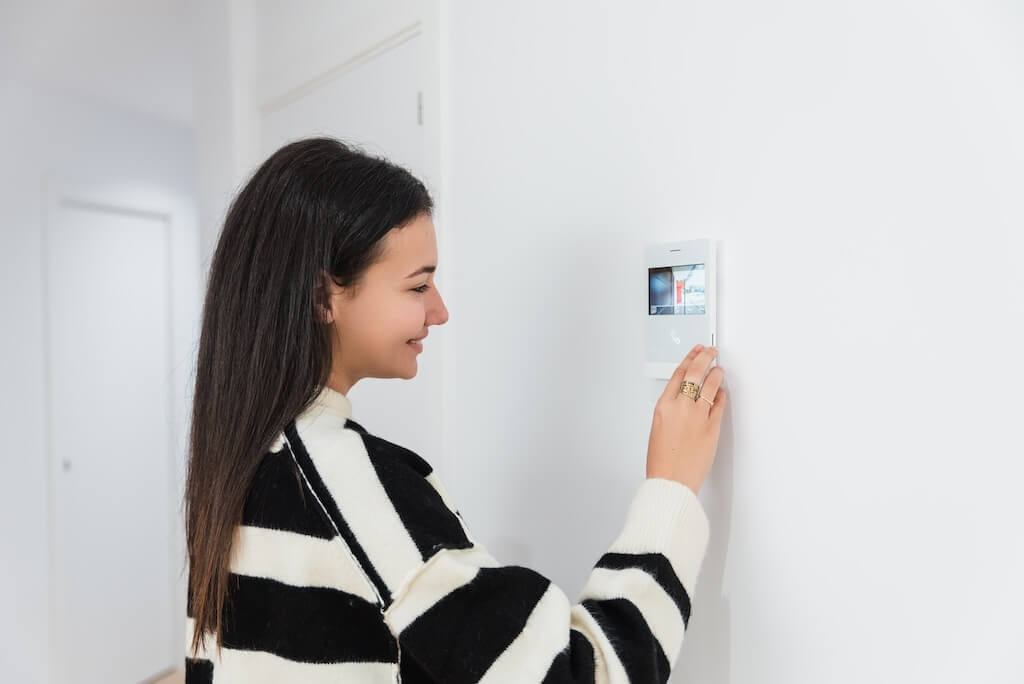
The term “apartment solutions” refers to the suite of technologies that support multifamily buildings, including resident entry, package delivery, and visitor management.
The core categories in 2026:
| Solution Category | What It Solves |
| Intercom and entry systems | Visitor access, remote door release, building entry |
| Access control | Resident credentials, fob/app/face-based entry, door locks |
| Package and delivery management | Secure delivery, package theft prevention |
| Visitor management | Guest access, one-time codes, delivery PINs |
| Elevator control | Floor-based access restrictions, integrated with credentials |
| Building-wide dashboard | Single login to manage all of the above across your portfolio |
A decade ago, each was a standalone product. Today, top platforms unify them. Otherwise, managers juggle five vendor relationships, support lines, billing cycles, and audit trails that do not communicate with each other.
As you consider your technology stack, it is important to recognize how your systems integrate or do not. The operational costs of siloed systems manifest in two ways: more time spent managing vendors rather than buildings, and more gaps in your building security because systems that do not share data cannot provide a complete picture of who is in your building and when.
1. Intercom and Entry Systems
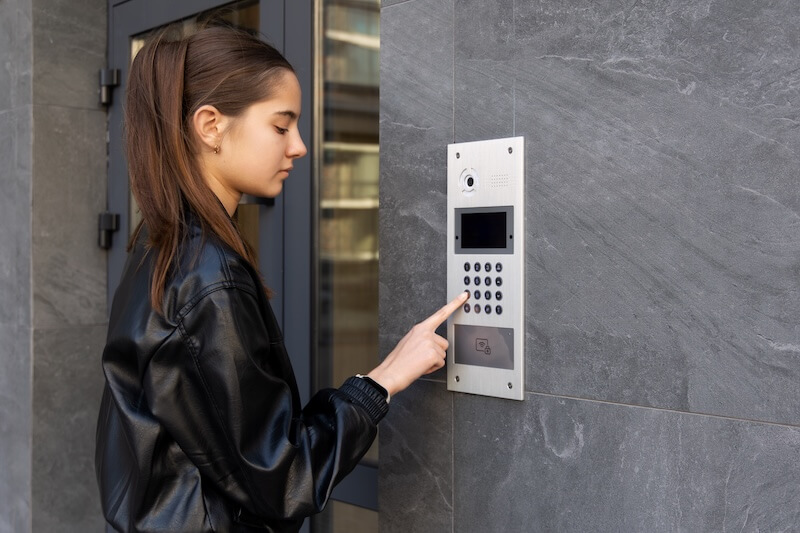
The building entry point is the most visible apartment solution and the most complained about when it fails. A visitor drops a call, a tenant cannot remotely buzz someone in, or a broken panel locks residents out. These are not just inconveniences; they are liability events.
How Modern Apartment Intercom Systems Work
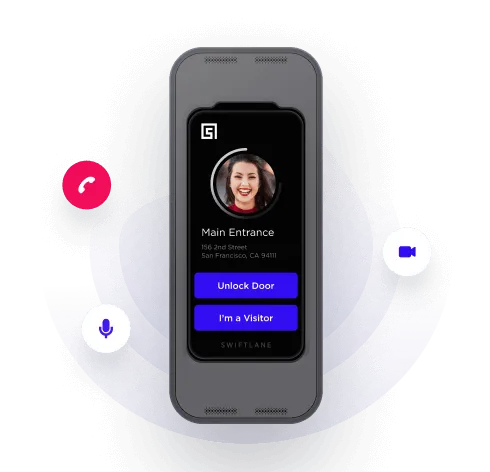
When a visitor arrives at the building entrance, they press the tenant’s unit button. The system routes a live HD video call to the tenant’s smartphone from anywhere in the world. The tenant sees who’s at the door, speaks with them, and unlocks the door with one tap.
For property managers, the shift from legacy to cloud-based intercom is primarily an operational one:
- No more driving to the building for access issues. Remote unlock and credential management mean most access problems are solved from a phone.
- No more service calls for panel faults. Cloud-managed systems push firmware updates automatically and alert managers to hardware issues before they cause outages.
- A full entry log for every visitor. Every buzzer interaction generates a timestamped record of who was called, when, and whether the door was opened. That log is your documentation in any incident investigation.
What to Look For in 2026
The baseline for any professionally managed property:
| Specs | Minimum Standard |
| Camera resolution | 1080p HD |
| Night vision | IR night vision included |
| Access logs | Timestamped, per-entry, per-door |
| Remote management | Cloud dashboard, no on-site server |
| Retrofit compatibility | 2-wire-to-IP or full IP |
| Smartphone app | iOS and Android for tenants and managers |
| Multi-property support | Single login across all buildings |
The Retrofit Question
Most older apartments have 2-wire copper from original intercoms. Modern 2-wire-to-IP systems carry power and data over these lines, supporting cloud video and mobile access without full rewiring. For buildings from the 1970s to the early 2000s, this is often the most cost-effective upgrade.
Buildings with poor wiring require a full IP installation. For new construction, specifying an IP cloud system from the start avoids future retrofit costs.
2. Access Control
A modern access control system replaces physical keys and legacy key fobs with digital credentials, issued via a smartphone app, tap card, or face recognition, and managed entirely from a cloud dashboard. The critical difference from legacy systems is that credentials can be issued and revoked instantly and remotely, with no hardware swap and no on-site visit.
According to industry data, tenant turnover in multifamily housing averages 45–60%, and each move requires revoking or provisioning credentials. With legacy systems, every event requires someone to reprogram or replace hardware, which can take days and create security gaps.
Cloud systems let managers revoke or issue credentials in under two minutes online.
Practical scenarios that matter for PMs:
- Tenant moves out on Friday: Access to the dashboard is revoked immediately. No fob to collect, no hardware to reprogram, no security gap.
- Maintenance tech needs access for one week: A time-limited credential issued from the dashboard that auto-expires at the end of the service window. No follow-up required.
- Contractor loses their access card: Credential deactivated in seconds, new one issued remotely. No locksmith, no site visit.
- Tenant moves to a different unit: Access permissions updated from the dashboard. Takes two minutes.
Role-Based Permissions
Strong access control systems support role-based permissions, providing different access levels for various users, such as property managers, leasing agents, maintenance staff, contractors, and tenants:
- Property managers: Full dashboard access, all buildings, all doors
- Leasing agents: Access to common areas and vacant units only
- Maintenance staff: Access to maintenance corridors and equipment rooms, specific floors
- Contractors: Time-limited, area-specific credentials that auto-expire
- Tenants: Their unit, common areas, and amenities
This separation ensures that a plumber does not have the same access as managers and that every use of credentials is logged precisely.
3. Package & Delivery Management
Apartment residents are 3.5 times more likely to experience package theft than those in single-family homes, according to Security.org’s 2025 Package Theft Report. For property managers, theft drives complaints, raises insurance questions, and can create liability when entry systems are involved.
Why This Is a Building-Level Problem
The root issue is access. Carriers must enter to deliver securely, but broad access creates security gaps. Workarounds like leaving packages in lobbies or using unsecured rooms introduce new problems.
Modern apartment solutions address this at the system level:
Delivery PINs: A one-time, single-use code generated by the building’s intercom system and issued directly to a carrier. The code opens the building entrance for that delivery only, then expires. No carrier gets a persistent credential, no package sits in an unsecured lobby.
Package room access control: A dedicated package room with an access-controlled entry point and a camera log. Carriers deposit packages inside; tenants retrieve them with their existing credentials. Every entry is logged.
Virtual concierge: Some systems allow carriers to reach a live or automated attendant via the intercom to complete a delivery, verifying the carrier’s identity before granting temporary access.
Tenant-initiated guest access: For expected deliveries, tenants can generate a one-time access link in advance and share it directly with the carrier. The link opens the front door once during a defined window, then expires.
The top platforms integrate delivery PIN management, intercom, and access control into a single dashboard, with a single vendor, a single login, and a single audit trail covering resident and carrier access.
4. Visitor Management
Tenants have guests, and property managers deal with contractors, inspectors, leasing prospects, and vendors. In the absence of a visitor management system, each visit requires the tenant or manager to grant on-site access.
What a Visitor Management System Does
Modern apartment visitor management replaces the “call the tenant and hope they answer” model with purpose-built tools for controlled, logged, time-limited visitor access:
One-time guest access links: A tenant generates a single-use link from their app. No fob or PIN is needed, and they send it to their guest. The link opens the front door once within a defined window and then expires automatically. The tenant does not need to be home. The property manager does not need to be involved.
Pre-registered visitor credentials: For recurring visitors, such as a cleaning service, a dog walker, or a home health aide, the tenant can register them in the system with a recurring schedule. Access is automatically granted during the scheduled window, and every use is logged.
Contractor and vendor management: Property managers issue time-limited credentials for contractors directly from the dashboard. The credential is active only during the service window, restricted to relevant areas, and auto-expires when the job is done. No key collection, no follow-up.
Complete visitor log: Every guest access event is timestamped, attributed to the tenant who authorized it, and stored alongside regular resident entries. If something goes wrong, you know who was in the building, when, and who let them in.
What this means for management overhead: The most common access-related call to a property management office is “my guest is outside, and I cannot buzz them in.” A visitor management system with one-time links eliminates most of those calls. Tenants handle their own guest access without manager involvement.
5. Elevator Control
In mid-rise and high-rise buildings, elevator access is the extension of your access control system that most buildings overlook, and it’s a significant security gap when it’s not integrated.
The Problem With Uncontrolled Elevator Access
Without elevator integration, the building entry point and the elevator are two separate systems. A visitor who passes through the front door, legitimately or not, can reach any floor in the building.
A contractor cleared for the lobby and basement can ride to the 12th floor. A former tenant whose front-door credential was revoked may still have unrestricted elevator access if the systems do not communicate.
How Integrated Elevator Control Works
With integrated elevator control, the credential that opens the front door also determines which floors that person can reach:
- Residents: Access to their own floor, common floors (lobby, amenity floor, rooftop)
- Maintenance staff: Access to their assigned service floors and mechanical areas
- Contractors: Access to specific floors during the service window only, auto-restricted outside those hours
- Delivery carriers: Access to the lobby and package room floor only
- Guests: Tenant-authorized temporary access to the tenant’s floor during the visit window
All of this is managed from the same dashboard as the rest of the access control system. When a tenant moves out, one action revokes their access to the front door and to the amenities.
Swiftlane’s platform includes elevator control as a native component of its unified access system, not a third-party integration or a separate product. The same credential, the same dashboard, the same audit log.
What to look for: Native integration with your existing intercom and access control, not a bolt-on from a separate vendor; floor-level permission settings; and credential-based control rather than button-based override.
How These Solutions Work Together
The difference between a building that runs smoothly and one that generates constant management overhead usually comes down to one question: are these systems unified or siloed?
Siloed Systems: Why Legacy Apartment Technology Falls Short
Traditional deployments, legacy intercoms, standalone key fob systems, and third-party package lockers were never designed to talk to each other:
- Separate intercom vendor, separate access control vendor, separate package locker vendor
- Three logins, three support lines, three billing relationships
- Entry logs that do not connect: the intercom knows who buzzed in, but the access control system does not; the package room camera has footage, but it is not linked to an access event
- When a security incident occurs, you pull records from three systems with three different formats
Research from Building Engines’ 2025 State of Commercial Property Management Technology report consistently identifies technology fragmentation as one of the top drivers of property management inefficiency, not the individual tools, but the gaps between them.
Unified Platforms: The Modern Standard for Apartment Solutions
- One platform covers intercom, door access, elevator control, and visitor management.
- One dashboard, one support contact, one audit trail that connects every entry event
- When a tenant moves in, one action provisions the front door, elevator, amenities, and smartphone credentials
- When a tenant moves out, one action revokes everything immediately, everywhere.
- When an incident occurs, a single timestamped log is created that includes video clips, credential identity, door location, and floor access.
At the portfolio scale, this difference compounds. A property manager running 10 buildings with unified systems has a single login and a single view of everything. A PM running 10 buildings with siloed systems has more than 30 logins and no way to see the full picture without logging into each one separately.
Swiftlane is built as a unified platform for apartment solutions. For property managers running multiple buildings, the single dashboard is not a nice-to-have. It is the operational requirement that makes the rest of the job manageable.
Request a free demo to see the platform in action
Choosing the Right Apartment Solutions for Your Building
Different buildings and portfolios have different starting points. Use this framework to match the right solution set to your situation:
| Building Situation | Priority Solutions | Where to Start |
| Small building, under 50 units | Intercom + basic access control | Cloud intercom with credential management |
| Older building, retrofit budget | 2-wire-to-IP intercom + cloud access control | Wiring assessment first, then intercom upgrade |
| Mid-rise or high-rise, 100+ units | Intercom + access control + elevator integration | Unified platform evaluation |
| High package theft complaints | Intercom with delivery PIN + package room access | Delivery PIN system as the first step |
| Portfolio of multiple buildings | Unified platform with multi-property dashboard | Dashboard capability is the first filter |
| New construction | Full IP: intercom + access + elevator + visitor management | Spec the full stack from day one |
| HOA or condo association | Cloud-based with board approval workflow | See Swiftlane HOA solutions |
4 Questions to Ask Every Vendor:
- Does it have a multi-property dashboard? If you manage more than one building, this is your first filter. Request a live demo before discussing anything else.
- How fast is tenant onboarding and offboarding? Request that the vendor walk through a move-in and a move-out. If it requires a technician or an on-site visit, it is not built for professional property management.
- What does the audit trail look like? Request a sample access log. It should show the timestamp, the credential identity, the door location, and ideally an attached video clip.
- What is the after-hours support SLA? Intercom and access failures happen on weekends and holidays. Confirm 24/7 support is in the base price, and get the response time in writing.
FAQs
What are apartment solutions?
Apartment solutions are a broad term for the technology systems that help property managers run multifamily buildings, including intercom and entry systems, access control, package and delivery management, visitor management, and elevator control. Modern platforms like Swiftlane unify these into a single dashboard and audit trail.
What is the best intercom system for apartment buildings?
For most professionally managed properties, a cloud-based video intercom is the right choice. It delivers HD video, smartphone access, remote management, and a full entry log. For a complete breakdown of types, costs, and how to choose: Apartment Intercom Systems: Ultimate Buyer’s Guide.
How do apartment access control systems work?
Access control systems issue digital credentials via a smartphone app, tap card, or face recognition that determine which doors a person can access. Cloud-based systems let property managers issue and revoke credentials remotely, with a timestamped log of every access event. No hardware swap or on-site visit is required for routine credential management.
Can apartment solutions integrate with each other?
Yes, if you choose a unified platform. Swiftlane connects intercom, door access, elevator control, and visitor management into a single system with a single dashboard and audit trail.
Siloed systems from separate vendors don’t share data, which means your entry logs, access logs, and visitor records exist in separate silos that cannot be cross-referenced.
How do I prevent package theft in my apartment building?
The most effective apartment solutions for package theft combine delivery PIN codes and one-time carrier codes with a dedicated package room featuring logged, access-controlled entry. The best systems include delivery PIN management in the same platform as your intercom, so carrier access is controlled and logged alongside resident access.
What’s the difference between an intercom system and an access control system?
An intercom system manages communication and access at the building’s entry points: the front door, lobby, and gate. An access control system manages credentials for every door, unit corridors, amenities, parking, and elevators. The strongest apartment solutions integrate both into a single platform, so credentials, logs, and permissions are managed in one place.
What apartment solutions do property managers need for multiple buildings?
A multi-property dashboard is the non-negotiable first requirement: one login across all buildings, all access events, and all credentials. Beyond that: unified intercom and access control (no siloed systems), cloud-based credential management for remote tenant provisioning, and a consistent audit trail format across the portfolio.
Cloud-based platforms like Swiftlane are built for this. Legacy systems require a separate login per building and do not support portfolio-level reporting.
How long does it take to install apartment access solutions?
Installation timelines vary by system and building size. A cloud-based intercom upgrade typically takes 3 to 7 days, depending on the number of entry points and wiring conditions.
Access control for a mid-size building typically adds 2 to 5 days to the schedule. A full unified platform installation for a large building, intercom, access, and elevator typically takes 1 to 3 weeks and causes minimal tenant disruption if planned correctly.