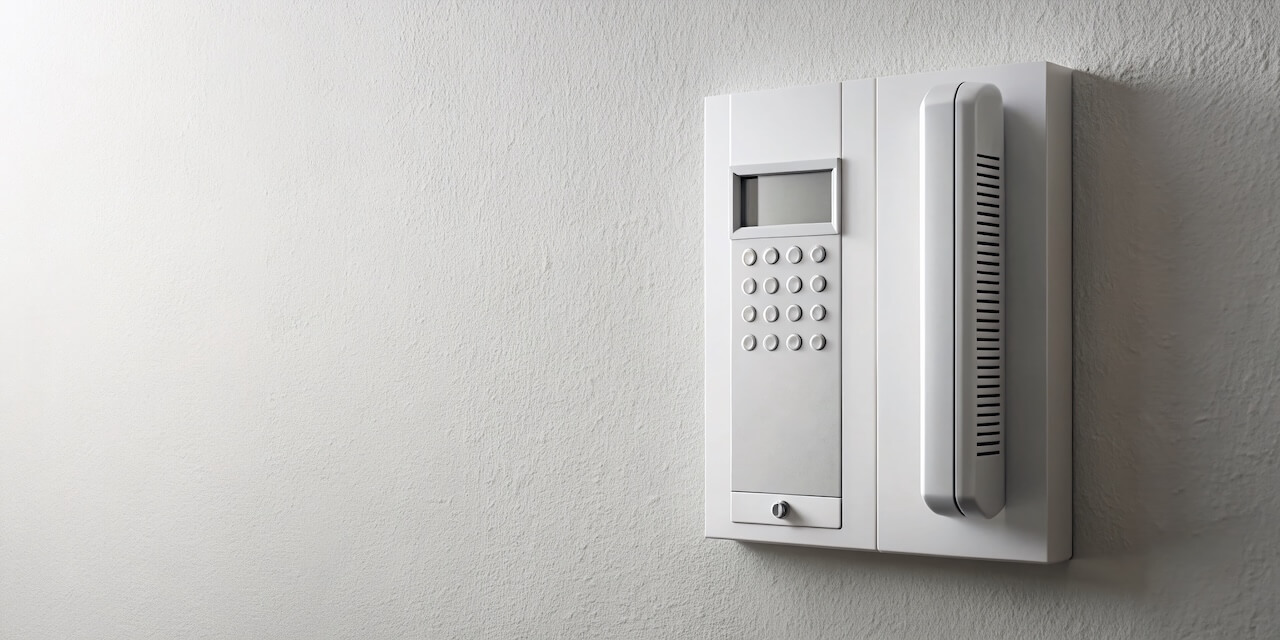
A wired intercom system connects entry panels and indoor stations using physical cabling, not Wi-Fi or a cellular signal. It is a reliable choice when a building already has usable wiring or is under new construction, since installing cable is far cheaper before walls are closed up.
Wired systems are not the right fit for every building. If you are retrofitting an existing property and adding new cable runs is expensive or disruptive, a wireless or cloud-based intercom can deliver similar reliability without the same cabling labor cost. The right choice depends on your building’s existing infrastructure, budget, and how much remote management your tenants or staff expect.
This guide covers wired intercom costs, wiring types, accessories, top manufacturers to evaluate, and how wired systems compare to modern wireless alternatives.
How We Researched This Guide
This guide was built by reviewing and verifying information directly against primary sources rather than relying on secondary summaries. Cost figures were checked against HomeAdvisor’s published intercom installation cost data. Wiring and video-capability claims were verified against manufacturer and vendor product documentation, including IntercomsOnline’s technical FAQs.
Compliance information on restricted equipment was confirmed directly against the FCC’s Covered List rather than third-party summaries.
Manufacturer availability was checked against each company’s current website at the time of publication. Where a cost range or claim could not be verified against a published source, that section says so explicitly rather than presenting an estimate as fact.
This guide is reviewed and updated periodically as pricing, equipment availability, and regulatory information change.
Key Takeaways
- Wired intercoms use physical cabling, more reliable but costlier to install without existing wiring.
- Home installations typically run $1,500 to $15,000; multifamily and commercial buildings require a site-specific quote.
- 2-wire vs. 4-wire affects power and duplex, but wire count alone does not determine video support.
- Reusing existing wiring can lower cost, but compatibility depends on the manufacturer.
- Repair if the wiring is sound; replace if parts are discontinued; modernize for mobile unlock or remote management.
- Hikvision and Dahua are subject to FCC Covered List restrictions in certain regulated contexts.
Table of Contents
- What Is a Wired Intercom System?
- How Much Does a Wired Intercom System Cost?
- Wired Intercom Cost Ranges by Scenario
- How Wired Door Entry Systems Work
- Common Wired Intercom Accessories and Components
- Intercom Wire and Wiring Requirements
- 2-Wire vs 4-Wire Intercom Systems
- Wired vs Wireless Intercom Systems
- Wired Intercom Options to Evaluate by Use Case
- When to Repair, Replace, or Modernize a Wired Intercom
- Swiftlane as a Modern Alternative to a Wired Intercom
- Frequently Asked Questions
What Is a Wired Intercom System?
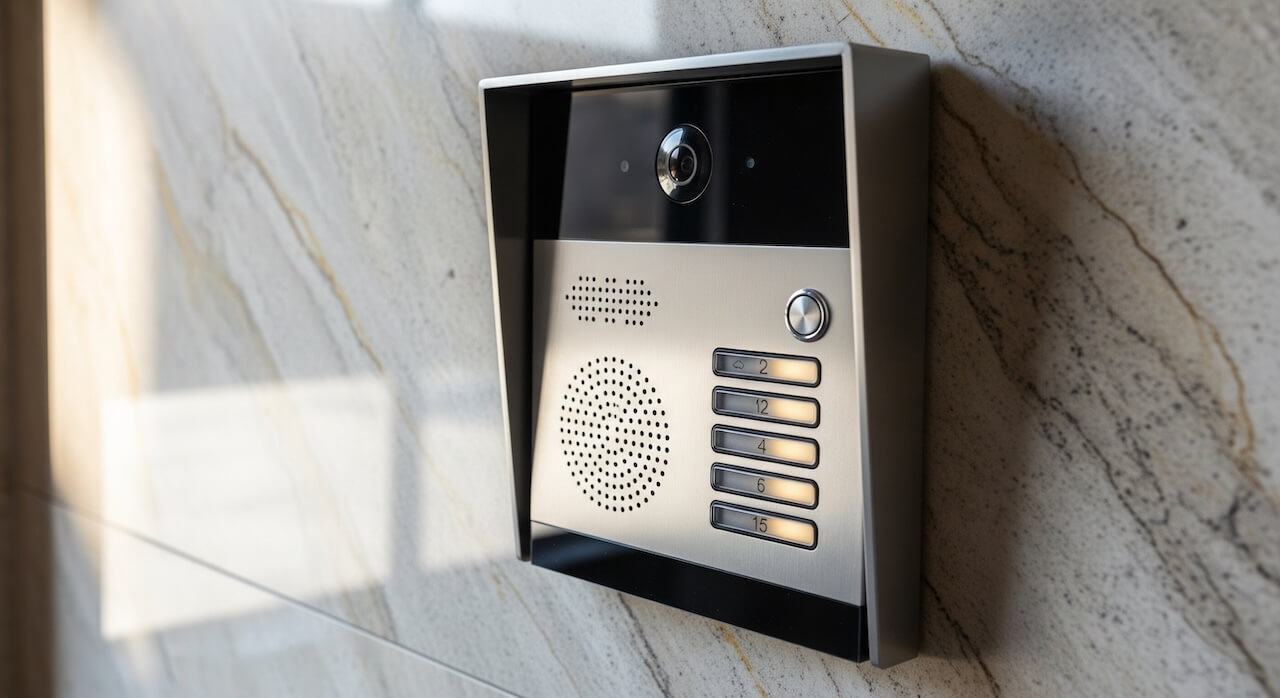
A wired intercom system is a communication device that uses physical wiring, such as copper wiring, cables, or fiber optics, to connect intercom stations within a building or across multiple locations. These systems are typically installed during construction or as part of a retrofit project, since the cabling runs behind walls.
Wired intercoms connect a main station, such as a front door entry panel, to substation units throughout the building. They monitor entrance spaces and provide access control. In commercial settings, they can also serve as public address systems.
A typical wired intercom system includes:
- Entrance panel. The main unit at the building entrance, used to call residents or staff.
- Indoor stations or monitors. Handsets or screens inside each unit or office that receive calls from the entrance panel.
- Door release mechanism. An electric strike or magnetic lock that opens the door when triggered.
- Power supply. Provides electricity to the panel, stations, and door release.
- Controller. Manages call routing and, in more advanced systems, access permissions.
- Cabling. Connects all components. Wire type and count depend on the system and are covered in the wiring section below.
- Optional camera or access control integration. Some systems add video capability or connect to a building’s broader access control platform.
Note: the terms “wired” and “wireless” describe the connection between the main intercom unit and its substations, not the power source. Most intercom systems, wireless ones included, still need the main station wired for power and, usually, to the door release mechanism. A fully wireless, battery-powered system is limited in its applications and suits single-family residences or small commercial spaces more than multifamily or larger buildings.
How Much Does a Wired Intercom System Cost?
Wired intercom costs vary widely depending on system type, building size, and whether you’re installing new wiring or reusing existing cable. According to HomeAdvisor, professional intercom system installation typically costs between $1,500 and $15,000, depending on whether you choose a wireless or hardwired system.
For hardwired systems specifically, HomeAdvisor puts the range at $1,000 to $15,000. Equipment alone, excluding labor, breaks down like this:
| System Type | Average Cost Range (Equipment Only) |
| Audio only | $50 to $450 |
| Audio and video | $600 to $15,000 |
These figures reflect residential baselines. They’re useful for understanding equipment cost tiers, but they don’t reflect what a multifamily or commercial building should expect to pay. Larger properties involve more stations, more entrances, and often more complex cable runs, all of which push installation costs well beyond those for a single-family home.
What drives the cost up?
- Number of units and entrances requiring their own indoor station or panel
- Condition of existing wiring: reusable cable lowers cost significantly, while new runs raise it
- Audio-only versus audio/video equipment
- Door strike or maglock hardware and installation
- Conduit and cable pulls, especially through masonry or finished walls
- Elevator or gate integration
- Monitoring or cloud management fees, if the system includes any connected features
- Compliance or security requirements specific to the property
Source: HomeAdvisor, “How Much Does an Intercom System Cost?”, updated June 17, 2026.
Wired Intercom Cost Ranges by Scenario
Home or simple system. For a single-family home or small standalone building, HomeAdvisor puts professional installation at $1,500 to $15,000, with hardwired systems specifically running $1,000 to $15,000. This range depends heavily on whether you choose audio-only or audio/video equipment and how many stations you need.
Small multifamily or building retrofit. Pricing here is quote-dependent and varies by installer, unit count, and number of entrances. If the building has existing, reusable wiring, that alone can meaningfully lower the total cost, since cable pulls and conduit work are often the largest expense. Get a site survey from a licensed installer before budgeting.
Large multifamily or commercial. These projects are quote-required. Properties with many units, multiple entrances, or long cable runs can exceed the residential ranges above. Get a site-specific quote rather than relying on a general estimate.
In all cases, ask installers for an itemized quote that separates equipment, labor, and any ongoing service fees so you can compare bids accurately.
How Wired Door Entry Systems Work

Wired intercom systems consist of master stations, such as the main entrance panel, and substations connected through dedicated wiring. The system transmits audio, and sometimes video, between these stations.
A typical call flow works like this: a visitor presses a button at the entrance panel; the signal travels through the wiring to the controller. The controller routes the call to the correct indoor station or phone, and the resident or staff member answers and can trigger the door release remotely from that station.
What to Check Before a Wired Intercom Retrofit
For retrofit projects, property teams should verify a few things before committing to a system or a budget:
- Existing wire count and gauge. A low-voltage installer should check whether current wiring matches the new manufacturer’s specifications; mismatches are a common source of unexpected costs.
- Conduit condition. Old conduit can lower install cost, but only if it’s accessible and not overfilled or damaged. Confirm this before assuming reusable wiring will save money.
- Door strike and maglock compatibility. This should be checked separately from intercom compatibility; the two aren’t guaranteed to match just because the intercom itself is compatible.
- Permits and access scheduling. In occupied multifamily buildings, these can affect project timelines more than the equipment itself.
- Proprietary indoor stations. Ask the installer to document whether the system uses proprietary parts, since that can make future repairs expensive if the manufacturer discontinues a product line.
Before replacing a wired intercom, confirm these details with a licensed installer rather than budgeting based on equipment costs alone.
Best Wired Intercom Options by Use Case
- New construction: Aiphone, Comelit, BTicino/Legrand, 2N
- Small building, single entrance: Aiphone, DoorBird, Akuvox
- Apartment or multifamily: Comelit, 2N, BTicino/Legrand
- Retrofit with expensive new wiring: Consider a wireless or cloud-based system instead
See the full breakdown by use case further down this guide.
Common Wired Intercom Accessories and Components
Beyond the core system components covered above, most wired intercom installations rely on a set of supporting accessories:
- Relays. Translate a signal from the intercom system into an action, such as triggering a door strike or maglock.
- Door strikes and maglocks. The hardware that physically releases the door. Strikes work with standard latch doors; maglocks work with glass or heavier commercial doors. On any required egress door, this isn’t just a preference. It’s a code requirement: maglocks must be fail-safe, releasing automatically on power loss or fire alarm activation, while electric strikes on fire-rated egress doors must be fail-secure and allow free mechanical egress at all times.
Confirm the correct configuration against the International Building Code and your local fire and building code before installation.
- Connectors and terminal blocks. Join cable runs to panels, stations, and power supplies without soldering.
- Mounting boxes and back boxes. House the entrance panel and protect wiring connections behind the wall.
- Rain hoods and weatherproof enclosures. Protect outdoor entrance panels from moisture and temperature swings.
- Network adapters. Convert signal formats for systems that bridge analog wiring with IP-based components.
- Replacement handsets and substations. Swap-in units for aging or damaged indoor stations, often the most common wired intercom repair.
One thing to watch for: many manufacturers use proprietary connectors, cable pinouts, or substation designs. That can make sourcing replacement accessories harder and more expensive once a system ages, especially if the original manufacturer discontinues a product line. Ask your installer whether a system uses standard or proprietary parts before you commit.
Intercom Wire and Wiring Requirements
The type of wire system needed depends on the manufacturer and system’s design, not a single industry standard. Common options include:
- 2-conductor cable. Used in basic 2-wire systems, carries both power and communication over the same pair.
- 4-conductor cable. Separates transmit and receive signals; often used for full-duplex audio and many video systems.
- Cat5e or Cat6 cable. Used by IP-based intercoms that route audio, video, and data over network cable rather than dedicated intercom wire.
- Shielded cable. Reduces interference in buildings with heavy electrical noise, such as those near elevators or industrial equipment.
- Legacy cabling. Older buildings may already have intercom wiring in place. Whether it’s reusable depends on its condition and the new system’s compatibility with the existing wire count and gauge.
Before purchasing a system or planning a retrofit, verify the manufacturer’s specific wiring requirements. Systems from different manufacturers are rarely interchangeable, even when they use the same wire count. A qualified low-voltage electrician can confirm compatibility with existing cable and ensure the installation meets local electrical code.
2-Wire vs 4-Wire Intercom Systems
The core difference between 2-wire and 4-wire systems is how they handle power and signal transmission, which affects duplex communication and, in some cases, video support.
A 2-wire system uses the same pair of wires for power and communication. Older or basic 2-wire systems are typically half-duplex, meaning only one party can talk at a time, and audio-only. However, modern 2-wire systems exist that support video.
For example, multi-tenant 2-wire video intercom kits are sold today for buildings up to 12 units and more with a custom quote, so 2-wire does not automatically mean audio-only or no video. Check the specific product’s specifications rather than assuming based on wire count alone.
A 4-wire system separates transmitting and receiving signals, enabling full-duplex communication (both parties can talk at once) and generally supporting higher audio and video quality with fewer compatibility constraints.
| 2-Wire | 4-Wire | |
| Power and signal | Same pair of wires | Separate pairs for transmit and receive |
| Duplex | Often half-duplex on older systems; some modern systems support full-duplex | Full-duplex |
| Video support | Depends on the specific system, not guaranteed by wire count alone | Generally well-supported |
| Retrofit fit | Can work with existing 2-wire buildings | May require new cable runs if building has 2-wire wiring |
| Cost | Lower installation cost | Higher installation cost due to more wiring |
Source: IntercomsOnline, Apartment Intercom FAQs
Wired vs Wireless Intercom Systems
Wired and wireless intercoms each have real advantages, and the better choice depends on your building’s condition, budget, and how your tenants or staff expect to manage access.
| Wired | Wireless | |
| Connectivity | Cables or fiber optics | Wi-Fi, cellular, or IP-based systems with limited cabling |
| Reliability | High, minimal interference with quality wiring | Can be affected by internet or signal disruptions |
| Installation | Professional install required, more invasive, harder to upgrade later | Easier to install, still often needs a professional for electrical connections |
| Portability | Fixed in place | Can be moved or reconfigured more easily |
| Cost | Higher upfront cost, often lower recurring platform fees for traditional wired systems | Lower upfront cost, may include subscription fees |
| Security | Depends on physical access to cabling and panels, network design, encryption, and access control policies | Depends on signal and network strength, encryption, and device configuration |
| Remote access | Answering calls or opening doors requires being at a substation in the building | Many systems allow tenants to answer and unlock remotely from a mobile device |
| Management | Typically managed on premises | Many systems offer cloud-based management, useful for tenants overseeing multiple buildings |
| Maintenance | Minimal, durable setup | May require software updates; some systems use batteries |
Wired Intercom Options to Evaluate by Use Case
The right wired intercom depends more on your building type and feature needs than on any single “best” brand. Here’s how the major options tend to fit different scenarios.
| Use Case | Options to Evaluate | Why These Fit |
| New construction | Aiphone, Comelit, BTicino/Legrand, 2N | Full 4-wire and IP product lines, no legacy wiring constraints |
| Existing wired building, reusing cable | Aiphone, Comelit, matched to existing wire count | Backward-compatible lines that can match older wire counts |
| Small building or single entrance | Aiphone, DoorBird, Akuvox | Sell single-entrance kits, no full multi-station system needed |
| Apartment or multifamily | Comelit, 2N, BTicino/Legrand | Multi-tenant panels that route calls to specific units at scale |
| Office or commercial | 2N, Comelit, Aiphone | Integrate with broader access control and PA systems |
| Budget, audio-only | Aiphone, Akuvox | Sell audio-only lines at a lower price point than video |
| Retrofit, where new wiring is expensive | Consider a wireless or cloud-based system instead | See the wired vs. wireless comparison above |
Confirm current model availability and specifications directly with each manufacturer before purchasing, since product lines change.
A Note on Hikvision and Dahua Equipment
Video surveillance and telecommunications equipment produced by Hangzhou Hikvision Digital Technology Company and Dahua Technology Company appears on the FCC’s Covered List, which identifies communications equipment the FCC has determined poses a national security risk. Equipment on this list is subject to U.S. procurement and authorization restrictions in certain use cases, including government and critical infrastructure contexts.
This does not necessarily prohibit all commercial or residential use, but it does mean these manufacturers carry compliance considerations that don’t apply to the other options in this guide. If your project involves government funding, a regulated facility, or any procurement process with federal ties, confirm current requirements before selecting equipment from either manufacturer.
Source: FCC Covered List.
When to Repair, Replace, or Modernize a Wired Intercom
If your building already has a wired intercom, the next decision is usually whether to fix it, replace it, or upgrade to something more capable. A simple framework:
Repair, if:
- The wiring is in good condition and testing clean
- The issue is isolated to one component, such as a single substation or the door strike
- Your feature needs are basic, audio-only calling and door release
Replace, if:
- Replacement parts are discontinued or hard to source, common with older proprietary systems
- Repairs are becoming frequent, or the system is failing intermittently
- The existing wiring no longer matches what current systems require
Modernize, if:
- Tenants or staff want to answer calls and unlock doors remotely from a phone
- You need visitor video, not just audio
- You want centralized management across multiple buildings or entrances
- You need audit logs, delivery or vendor access, or integration with a broader access control system
A qualified installer can test the existing wiring and advise on which path best fits your building and budget.
Swiftlane as a Modern Alternative to a Wired Intercom
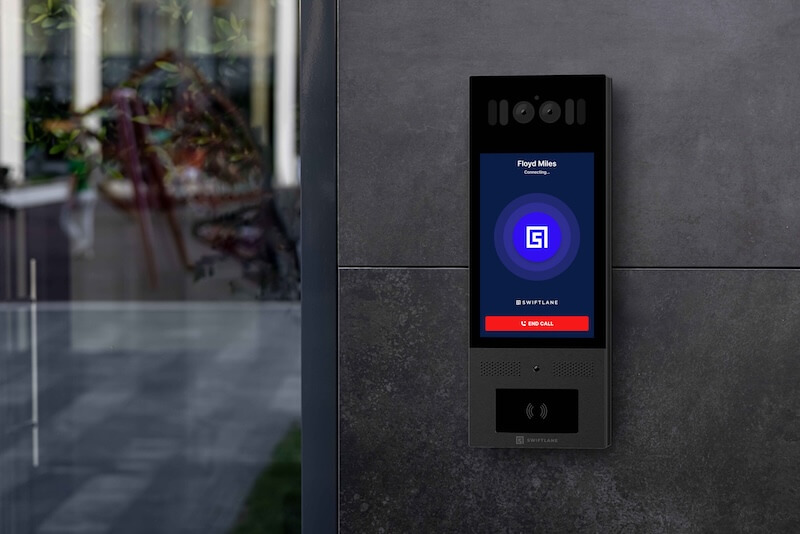
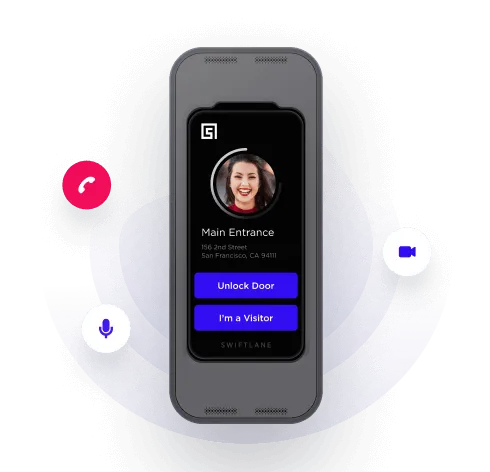
For multifamily and commercial buildings weighing a full intercom replacement rather than a repair, cloud-based video intercom systems are worth comparing before pulling new cable. Swiftlane is one option in this category. It offers video calling between visitors and residents, mobile app door unlock, and facial recognition access for residents who opt in.
Because it’s cloud-managed, property staff can administer access remotely across one building or a portfolio, view visitor and entry activity logs, and grant or revoke access without reprogramming a physical panel. It also supports PIN codes and key fobs as additional entry methods alongside the mobile app and video features.
If facial recognition is part of your evaluation, check your state’s biometric privacy requirements first. States including Illinois, Texas, and Washington have specific statutes governing biometric data collection and consent:
- Illinois: Biometric Information Privacy Act (BIPA)
- Texas: Capture or Use of Biometric Identifier Act (CUBI)
- Washington: RCW 19.375
A cloud-based system like this is not a fit for every building. It typically involves a subscription rather than a one-time hardware cost and relies on internet connectivity rather than a self-contained wired connection. For buildings that already have solid wiring and only need basic audio calling and door release, a wired system may remain the simpler and more cost-effective choice.
Frequently Asked Questions
How much does a wired intercom system cost?
Professional installation typically runs $1,500 to $15,000 for a home or small building, according to HomeAdvisor. Multifamily and commercial buildings usually require a site-specific quote, since costs depend on the unit count, number of entrances, and existing wiring.
What is the difference between a 2-wire and 4-wire intercom system?
A 2-wire system uses the same pair of wires for power and communication and is often half-duplex on older systems. A 4-wire system separates transmit and receive signals for full-duplex communication. Video support depends on the specific product, not the wire count alone.
Can I use existing intercom wiring for a new system?
Sometimes. It depends on the wire count, cable condition, and whether the new system’s manufacturer supports that configuration. A low-voltage electrician or installer can confirm compatibility before you buy.
What wire is used for intercom systems?
Common options include 2-conductor and 4-conductor cable, Cat5e or Cat6 for IP-based systems, and shielded cable for buildings with electrical interference. The right choice depends on the manufacturer’s specifications.
What accessories does a wired intercom system need?
Beyond the entrance panel and indoor stations, most systems use relays, door strikes or maglocks, connectors, mounting boxes, and weatherproof enclosures for outdoor panels.
Should I repair or replace my wired intercom system?
Repair if the wiring is sound and your needs are basic. Replace if parts are discontinued or repairs are becoming frequent. Consider modernizing if you want mobile unlock, video, or remote management.
Is a wired or wireless intercom system better?
Neither is universally better. Wired systems are reliable, often carry lower recurring platform fees, and work well with existing wiring or new construction. Wireless and cloud-based systems suit retrofits where new cable runs are expensive, or buildings that want remote management.
Are Hikvision intercom systems safe to use?
Hikvision and Dahua equipment appears on the FCC’s Covered List due to national security concerns, which brings procurement and authorization restrictions in certain contexts, including government and critical infrastructure use. Confirm current requirements if your project has federal ties.
What’s a modern alternative to a wired intercom system?
Cloud-based video intercoms, such as Swiftlane, offer mobile app unlock, video calling, and facial recognition. They typically require a subscription and depend on internet connectivity, so they suit buildings that prioritize remote management over hardware ownership.
Get a Quote!
Reach out for live product demonstrations and pricing.