Which is better for your property—smart or traditional intercoms? For property managers and owners, choosing between the two can be a difficult decision to make.
Both smart and traditional intercom systems support security verification, access control management, and two-way communication. However, they differ widely in how they verify visitors, handle remote management, and scale across multiple buildings.
Drawing on nearly a decade of experience supporting thousands of multifamily buildings, commercial spaces, and communities, Swiftlane has seen how these differences play out in real situations.
The comprehensive comparison below breaks down the core differences between smart and traditional intercom systems to streamline the evaluation process for property managers and owners.
Key Takeaways
- The most appropriate intercom option depends on the number of properties, building size, traffic volume, and operational variations your property has.
- Smart intercoms feature technologically advanced components and capabilities that include remote access control, multiple verification methods, and centralized management. These functionalities work appropriately for medium to large buildings and multi-property portfolios.
- Traditional intercoms rely on manual and on-site management, audio-only verification, and hardwired connections between the entry panel and in-unit devices. Their limited functionality is more suitable for smaller apartment buildings or single-family properties.
Table of Contents: Quick Navigation
- What is an Intercom?
- Smart Intercoms vs Traditional Intercoms: A Side-by-Side Comparison
- 1. Technology & Connectivity
- 2. Access Control & Visitor Management
- 3. Security & Identity Verification
- 4. User Experience
- 5. Installation & Infrastructure Requirements
- 6. Prices & Costing (Upfront vs Long-Term)
- 7. Management & Administrative Control
- 8. Reliability & Failure Scenarios
- 9. Best Use Cases
- Quick Overview: Key Differences
- Smart vs Traditional Intercom Systems: What Are Your Needs?
- Swiftlane: A Smart Intercom Solution for Your Property
What is an Intercom?
Building intercom systems let people inside a building communicate with visitors at the entrance, check who they are, and unlock doors remotely.
Scenario: How Building Intercoms Work
- When a visitor arrives at an apartment building, they approach the intercom panel at the entrance.
- They initiate an audio or video call by clicking on the resident’s entry in the directory.
- The resident receives the call and verifies who is requesting access through audio or video feedback.
- The resident then unlocks the door using an in-unit device or a mobile application.
What Are Traditional Intercoms?


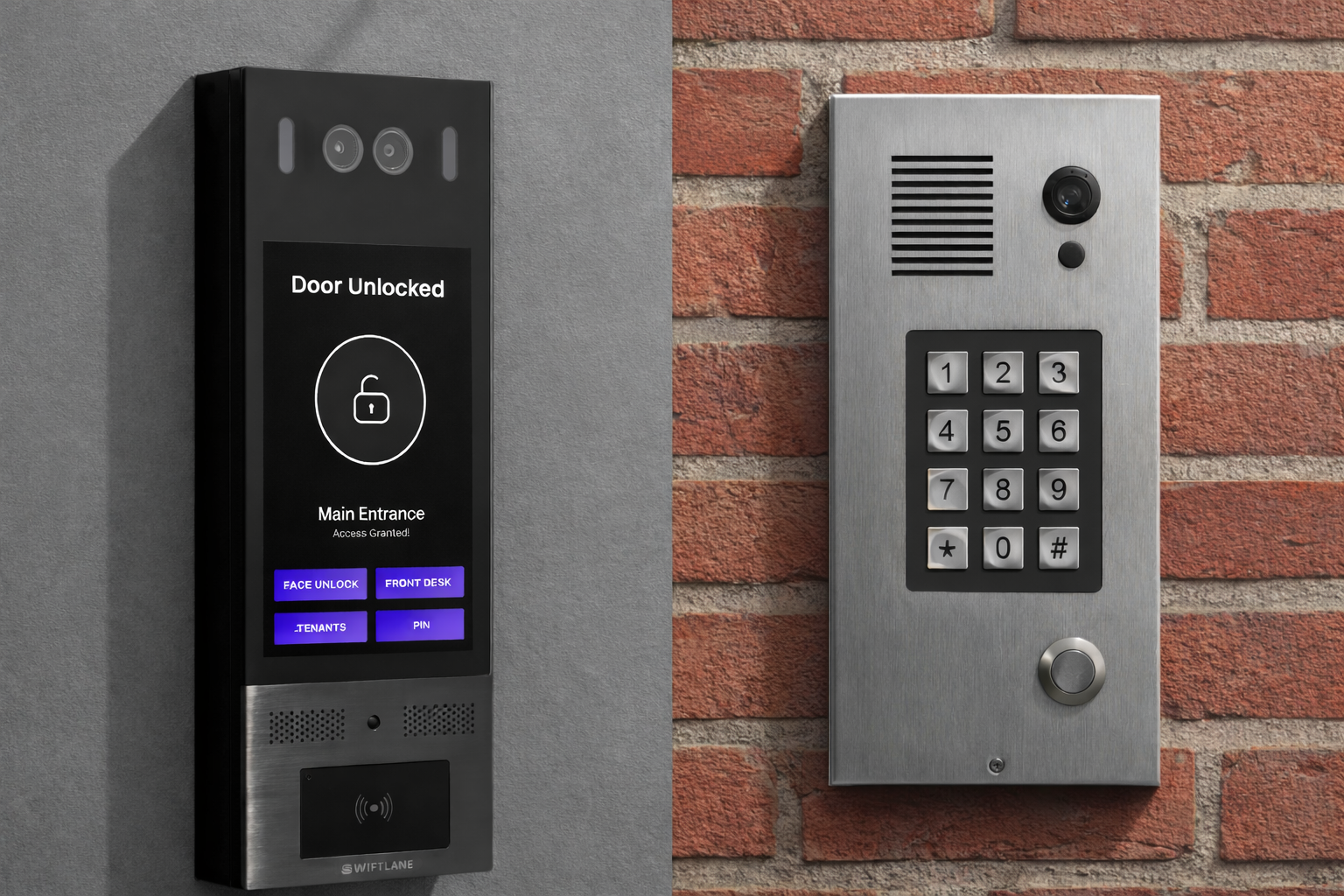
Traditional intercoms are legacy systems—older, hardwired solutions that rely on in-unit stations to connect tenants with visitors at building entrances.
These systems offer a limited set of features (e.g., two-way voice-only communication, limited tenant directories, and access control), controlled through entry panels and in-unit devices. In smaller apartment buildings with low visitor traffic, traditional intercoms function sufficiently to meet basic access needs.
What Makes an Intercom Smart?


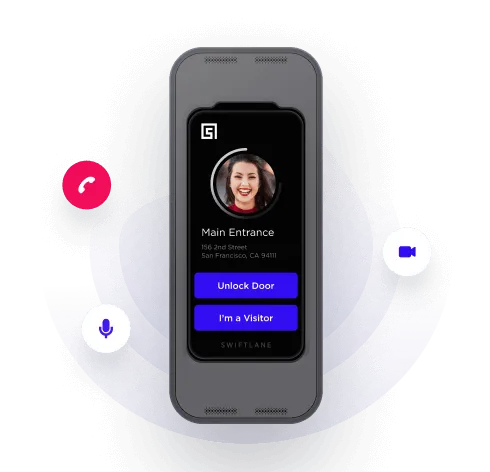
Smart intercoms are cloud-connected intercom systems that use software to manage more advanced access control and video communication features.
These modern intercom systems are increasingly being adopted in high-traffic or high-occupancy environments because they provide stronger visitor verification and more flexible access controls.
For example, smart intercoms can integrate with other access control devices (e.g., elevator controls, parking access, and package room access), and allow authorized users to unlock doors with mobile credentials.
Smart Intercoms vs Traditional Intercoms: A Side-by-Side Comparison
The right intercom system depends on your building’s scale, layout, and operations. Use the comprehensive comparison below to quickly see which system best supports your goals by category.
1. Technology & Connectivity
Smart intercoms typically use modern connectivity like Wi-Fi or Ethernet (often Power over Ethernet), supporting both wired and wireless setups. Wired and wireless intercom systems feature two-way audio or video communication using minimal wiring, eliminating long physical lines to in-unit answering stations, and allowing faster deployment.
These setups also enable centralized access control and visitor verification through web-based dashboards or mobile applications. Property managers or owners can change user directories, update access permissions, and monitor activity across one or multiple buildings from a single management interface.
In contrast, traditional intercom systems, such as telephone entry systems, rely on physical wiring between the main entry panel and in-unit devices. While newer traditional models may use cellular networks or Voice over Internet Protocol (VoIP) to place calls to residents, management remains largely decentralized.
For property managers and owners, this decentralized system creates challenges when managing multiple doors, large unit counts, or multi-property portfolios because updates and changes often require on-site, manual intervention.
At a glance:
- Smart intercoms: Wired (PoE) or wireless (Wi-Fi), centralized management, remote updates, scalable across multiple doors and properties
- Traditional intercoms: Hardwired telephone, cellular, or VoIP lines, manual unit-by-unit management
2. Access Control & Visitor Management


Both smart and traditional intercom systems generally support electronic door release and tenant directories, yet differ in the details of these features.
Smart intercoms are driven by centralized, cloud-based platforms to manage directories and access credentials through web-based dashboards or mobile applications. Using a laptop from any location, property managers and owners can update tenant information or review visitor logs for compliance and safety needs.
In contrast, traditional intercom systems rely on in-unit devices and limited entry panel directories. These systems do not have centralized management and cannot usually record or track visitor activity. These limits make traditional intercoms impractical and less efficient for larger properties or multi-building portfolios.
At a glance:
- Smart intercoms: Centralized software platforms, data storage for extensive directories and visitor logs, remote access control, door release.
- Traditional intercoms: In-unit devices for access control, no data storage, limited physical directory panels, no visitor access logs.
3. Security & Identity Verification
Most smart intercom systems support at least video access, PIN codes, and mobile applications, and legacy intercom systems only have voice-only or simple PIN access.
Depending on the smart intercom manufacturer, residents can use video verification, PIN codes, Radio Frequency Identification (RFID), mobile access through NFC (Near Field Communications) or BLE (Bluetooth Low Energy) and multi-factor authentication.
In large applications, the 2025 State of Security and Identity by HID saw an uptick in the use of mobile credentials and biometrics. In particular, biometric verification is increasingly being used for multi-factor authentication for tighter access management.
Meanwhile, traditional intercoms only provide audio verification, PINs, and physical keys. While functional, these limited verification methods increase security risk. With audio-only communication, it’s easier to “buzz in” the wrong person. This danger grows the larger the building and the more tenants move in.
At a glance:
- Smart intercoms: Keyless verification methods, including mobile credentials, biometrics, and multi-factor authentication.
- Traditional intercoms: Audio-only verification, PIN codes, physical keys, mistake-prone access control
4. User Experience
Resident / Tenant Experience
Many smart intercoms are designed with intuitive touchscreen interfaces by mirroring familiar smartphone-based interactions. With this, smart intercoms allow mobile answering, which traditional intercoms can’t do.
Mobile applications for smart intercoms also show visual cues like live video or caller IDs for easier operability of smart intercoms. Residents or tenants can clearly see who is at the main building door and what action to take next.
For older residents or tenants, many smart intercoms provide accessibility features such as large on-screen buttons, clear audio instructions, and the option to include physical buttons. Smart intercoms with access control also support old-school verification methods such as keycards, landlines, and PIN codes.
You can check out this video demonstration of how a smart intercom system works:
In contrast, traditional intercoms have physical buttons to ring, buzz, or call specific tenants. This familiar setup is straightforward for most residents or tenants to use.
Property Manager / Owner Experience
Smart intercoms offer a streamlined experience for property management. Web dashboards and mobile apps allow managers or owners to centralize control of multiple intercoms across one or more locations.
From a single interface, managers or owners can manage directories, adding or removing tenants and credentials. They can also adjust access permissions, such as restricting entry through certain doors while allowing access through others. This centralized control reduces the need for on-site updates or manual changes.
With traditional intercom systems, property managers and owners will have to make on-site, manual adjustments for every intercom panel. This task may be manageable for smaller properties. However, it increasingly becomes inefficient and wasteful as resident occupancy grows and multi-property portfolios expand.
At a glance:
- Smart intercoms:
- User-friendly touchscreen interfaces, accessibility features for older tenants, optional physical buttons, low to moderate learning curve
- Web dashboards, mobile applications, off-site centralized management from a single device
- Traditional intercoms:
- Physical buttons, low learning curve
- On-prem, manual intercom management
- Inefficient one-by-one handling for each intercom panel
5. Installation & Infrastructure Requirements
Both smart and traditional intercoms require professional installation, yet installation timelines and complexity differ.
Smart intercom installations are usually faster, even for wired intercoms that require minimal PoE wiring. Many buildings can also be retrofitted, depending on how much existing wiring smart intercoms can reuse.
In turn, traditional intercom systems require extensive hardwiring, increasing installation times and complexity, particularly in larger buildings with many units or entry points.
At a glance:
- Smart intercoms: Quick professional installation, retrofit-ready
- Traditional intercoms: Time-consuming hardwiring from each intercom panel to each in-unit device
6. Prices & Costing (Upfront vs Long-Term)
Upfront prices for smart intercom systems are usually between $1,200 and $8,500, with monthly fees for cloud services, based on Home Advisor estimates. Traditional intercoms have lower upfront prices but higher long-term maintenance and repair costs.
Smart intercom system upfront prices depend on hardware, installation requirements, connectivity type, and, for some vendors, optional in-unit devices. Long-term costs are generally low due to foreseeable subscription fees and minimal on-site maintenance.
For more concrete prices, Swiftlane provides a video intercom estimate generator to help property managers or owners visualize and plan for smart intercom installations.
On the other hand, traditional intercom systems have simpler hardware designs and basic functionality, resulting in low upfront prices. Yet periodic wiring repairs, on-site service calls, and telephone line fees pile up over one another the longer time flies.
At a glance:
- Smart intercoms: Moderate to high upfront prices based on configuration, model type, and additional options, low to moderate long-term fees
- Traditional intercoms: Low to medium intercom device prices, high installation fees the larger the building, high long-term expenses for on-site service calls, repair materials, and landline fees
7. Management & Administrative Control
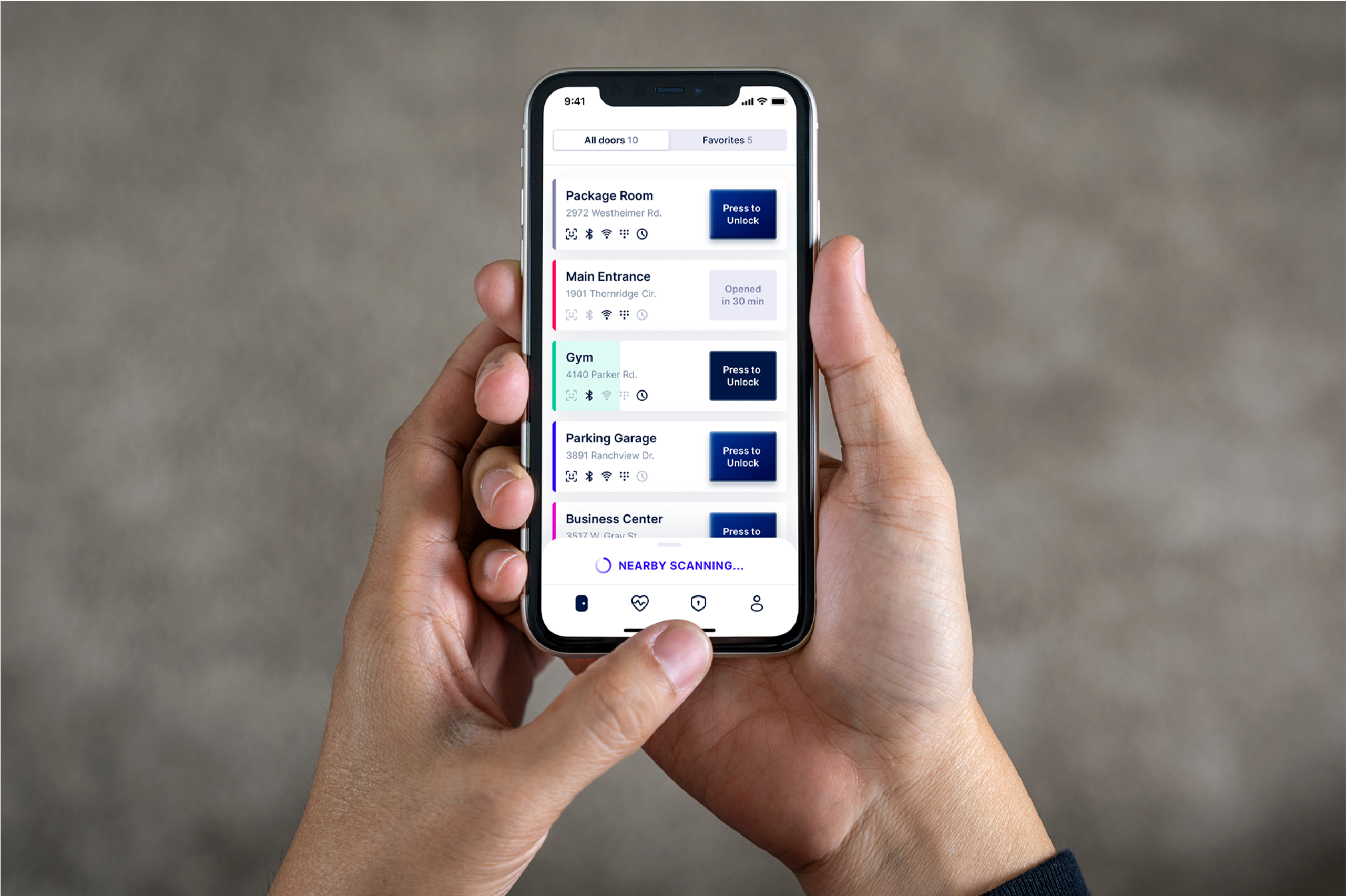
Smart intercoms simplify property management because of their web-based dashboards and mobile applications, saving precious time for multi-property managers or owners.
These administrators gain remote access control for entry points, whether within a single building or across an entire property portfolio. With a laptop or smartphone, they can remotely update tenant directories and issue or revoke credentials from the comfort of their offices.
This centralized management gives space to prioritize more important building concerns. Managers and owners can focus on major repairs, renovations, or tenant support. Meanwhile, even when they are out of the office, they can still stay on top of routine tasks like updating intercom software and checking visitor logs.
In comparison, traditional intercoms require manual, on-site management for each intercom panel. As a result, managing one or multiple properties can be very inefficient, especially when changes must be repeated across locations.
At a glance:
- Smart intercoms: Remote access management through web-based dashboards and mobile applications
- Traditional intercoms: Inefficient manual, on-site management for every intercom panel
8. Reliability & Failure Scenarios
Smart intercom systems depend on power and internet connectivity, but many vendors mitigate outages with battery backups or cellular failover. These systems are also commonly rated for IP (weather resistance) and IK (impact resistance) protection standards.
Smart intercoms can also be alternately configured for fail-safe or fail-secure, depending on manager or owner preferences and local safety codes. Fail-safe unlocks doors during outages for safe exiting, while fail-secure keeps doors locked to protect valuable assets.
In contrast, traditional intercom systems can operate during internet outages but are vulnerable to power losses, causing loss of intercom service for entire communities.
The physical lines can also be damaged by vandalism, accidents, or wear and tear. Lastly, the configuration for fail-safe or fail-secure is fixed during installation and cannot be adjusted through software.
At a glance:
- Smart intercoms: Power and internet backups, IP ratings, IK ratings, flexible fail-safe or fail-secure operations
- Traditional intercoms: Continuous operation during internet losses but not to power outages, vulnerable hardwired lines, fixed configuration for either fail-safe or fail-secure only
9. Best Use Cases
Because of their advanced capabilities, easily scalable configurations, and better cost-effectiveness over time, smart intercom systems are more appropriate for high-traffic or high-occupancy properties, including:
- Medium to large apartment buildings
- Condominiums
- Offices and commercial buildings
- Hospitality properties and casinos
- Senior living facilities and student housing
- Gated communities
- Multi-property portfolios
Although having limited capabilities and physical wiring, traditional intercom systems can still be used for:
- Single-family homes
- Small apartment buildings
- Small office or commercial spaces
- Properties with existing compatible wiring set up
Quick Overview: Key Differences
Smart vs Traditional Intercom Systems: What Are Your Needs?
Smart intercom systems offer mobile access control, better scalability, and intuitive interfaces, so they are more suited for large buildings or portfolios with multiple properties. As occupancy increases, these systems streamline the operational flow of onboarding, credential management, and access control without on-site interventions from management.
Meanwhile, traditional intercom systems are practical options for smaller buildings with pre-existing wiring. However, their dependence on outdated physical hardware, manual management, and long-term telephone expenses challenges evolving operational patterns.
By carefully evaluating the differences outlined above, including building sizes, visitor activity, and long-term operational goals, managers and owners will find a clearer path to the right intercom system.
For many growing and multi-property operations, smart intercoms provide a future-ready path to efficiency, ease of use, and tenant satisfaction.
Swiftlane: A Smart Intercom Solution for Your Property


Swiftlane offers smart intercom systems and access control readers designed to support a modern, flexible approach to property access management for managers and owners.
The SwiftReader X is an IP-based video intercom that allows visitors to initiate video calls to tenants. Tenants receive these calls through the mobile app, where they can visually verify visitors and remotely grant access to the building.
For added access control, Swiftlane provides integrated proximity device readers, vehicle access systems, and elevator access control. With these tools and the SwiftReader X, all entry points, tenants, and credentials can be managed centrally in the web dashboard and mobile app.
If you’re evaluating whether a smart intercom is the right fit for your building or multi-property portfolio, schedule a live demo now and see how the SwiftReader X works in real-world scenarios.
In the meantime, check out a 522-unit apartment community in Grandville, Michigan—the Grand Castle Apartments—and how they replaced their outdated legacy access system with a video intercom system covering more than 60 access points. Your property may be one just like this.