What Is an Apartment Security System?
An apartment security system is the set of tools a multifamily building uses to control access, verify visitors, monitor common areas, protect packages, and log entry events. For a renter, that might mean a self-monitored alarm on one unit door. For a property manager, it means coordinated infrastructure across the entrance, amenity spaces, parking gates, elevators, and package rooms, managed from a single dashboard rather than device by device. This guide is written for that second buyer, with renter options covered as a supporting comparison.
A full apartment building security system typically includes:
- Access control for doors, gates, and amenity spaces
- Video intercom for visitor and vendor verification
- Cameras for common areas, entrances, and parking
- Visitor management to issue and track guest access
- Package and delivery access to reduce theft in package rooms
- Elevator access control to restrict floor access by credential
- Gate and parking access for vehicle entry points
- Alarms and sensors for unit-level and perimeter protection
- Cloud dashboards and audit logs for remote management and accountability
How We Researched This
This guide was developed using Google Search Console query data, Swiftlane product documentation, a Swiftlane case study, and cited third-party sources on access control, security incidents, and multifamily property management. Where cost or performance figures are included, they’re sourced directly or framed as ranges requiring a vendor quote, rather than presented as fixed pricing..
Key Takeaways
- An apartment security system means different things for renters and property managers; this guide focuses on building-wide systems, not single-unit alarms.
- Apartment security operates across multiple components working together: access control, video intercom, cameras, visitor management, package access, elevator and gate access, and audit logs.
- For property managers evaluating a building-wide platform, access control paired with video intercom, such as Swiftlane, is the strongest fit; DIY alarms and camera-only setups serve narrower, individual-unit needs.
Table of Contents
- What Is an Apartment Security System?
- Apartment Renter Alarm System vs. Apartment Building Security System
- Core Components of an Apartment Building Security System
- Best Apartment Security Systems by Use Case
- How Property Managers Should Choose an Apartment Security System
- Apartment Security System Costs
- Security Risks Apartment Buildings Should Solve First
- Why Access Control Is the Backbone of Apartment Security
- Apartment Security System Checklist
- FAQs
The Bottom Line
Apartment security isn’t a single device. It’s a coordinated system built around how a building actually operates: who enters, who’s verified, what’s protected, and what gets logged. For property managers and building owners, the strongest starting point is access control paired with video intercom, since together they cover entry points, visitor verification, and the audit trail a building-wide system depends on.
Renter-focused alarms and camera-only setups have their place, but they solve a narrower problem than the one most multifamily properties are actually facing.
Whether you’re upgrading an aging telephone-entry system or building out security for a new property, the right system is the one that scales with your building’s doors, gates, and resident turnover, not just the one with the most features.
Apartment Renter Alarm System vs. Apartment Building Security System


“Apartment security system” refers to two different purchases: a renter alarm protecting one unit, chosen by the tenant, and a building security system protecting the whole property, chosen and managed by the property manager or owner. Here’s how the main options compare.
| System Type | Best For | Managed By | What It Protects | Swiftlane Relevance |
| DIY renter alarm | Individual renter units | Tenant | In-unit doors, windows, motion | Low; included only to satisfy broad intent |
| Camera-only setup | Visibility and recording | Tenant or property manager | Common areas, lobbies, parking | Medium; complementary, not enough alone |
| Access control platform | Building entry and amenity control | Property manager | Doors, gates, elevators, amenity rooms | High; core Swiftlane fit |
| Video intercom + visitor management | Guest and vendor entry | Property manager and residents | Front entrance, deliveries, vendors | High; core Swiftlane fit |
| Full building security system | Multifamily-wide security operations | Owner, manager, or security team | Residents, visitors, packages, doors, logs | Highest; target positioning |
A DIY alarm covers what a single lease can control, but it stops at the tenant’s door, with no visibility into building-wide access, visitor activity, or shared audit trails.
A property manager needs answers a unit alarm can’t give: who has building access and when, how visitors and vendors are verified, how lost fobs or terminated credentials get revoked, and how any of it gets reported to ownership or insurance. That gap is what the rest of this guide addresses.
Before choosing either option, it helps to know what renters can install versus what requires property management approval, covered next.
Core Components of an Apartment Building Security System


A complete apartment building security system is made up of several components working together. Here’s what each one protects, who manages it, and when it matters most.
Access Control
Access control is the component the rest of this guide keeps returning to: it’s the only system that decides who gets through a door, rather than just recording or announcing them. A property manager assigns each resident a credential (mobile, PIN, fob, or facial recognition), sets which doors, gates, and amenity spaces it opens, and revokes it the moment someone moves out or a fob is lost something a physical key can’t do without a hardware change.
Buying decisions usually come down to how access control is delivered: whether credentials sync with property management software, whether a lost fob takes a truck roll or a few clicks, and whether one set of permissions covers elevators, gates, and amenity rooms too. That gap shows up hardest during high-turnover onboarding and offboarding.
Facial recognition and other biometric access methods are subject to state biometric privacy laws, including Illinois BIPA, Texas CUBI, and Washington RCW 19.375, so buildings evaluating biometric access should confirm state compliance requirements before deployment.
Video Intercom
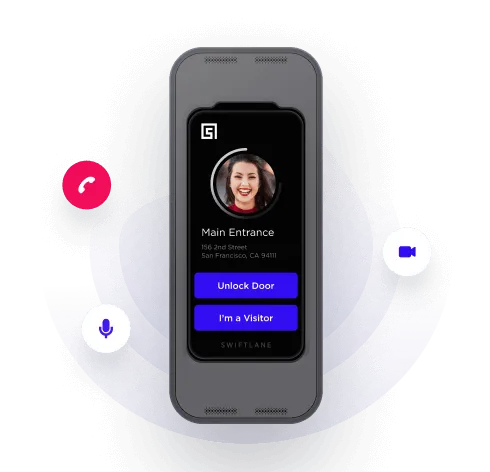
A video intercom’s job is verification. A traditional buzzer tells a resident someone’s at the door. A video intercom lets them actually see who it is before deciding to let them in, and lets remote or off-site staff do the same when no one’s at a front desk. That distinction matters most for the visitor types a building can’t fully predict: delivery drivers, guests arriving outside business hours, and vendors or contractors who weren’t given a credential in advance.
The stronger systems in this category tie directly into access control rather than operating as a separate device, so a resident approving a guest at the door can also grant that guest a specific, time-limited path, say, the lobby and their own floor, rather than a blanket unlock. Buildings relying on audio-only intercoms or shared entry codes typically only discover the gap after an unauthorized entry, since there’s no video record of who was let in or who let them in.
Visitor Management
Visitor management is what turns “who’s allowed in” from a static resident list into something that can flex for guests, vendors, and contractors without creating a standing security gap. In practice, this means issuing a credential, PIN, or QR code that expires after a set window rather than handing out a permanent one.
A moving crew booked for a Saturday, a dog walker who comes twice a week, or a contractor on a two-week job all need different levels of access, and a visitor management system is what lets a property manager or resident set that without involving front-desk staff for every request.
The failure mode this solves for is specific: buildings without it tend to default to either over-provisioning (a permanent fob for anyone who visits regularly) or under-provisioning (manually buzzing in every guest), and both create friction, either a security gap or a staffing burden. Buildings with high visitor or vendor turnover, larger amenity-heavy properties in particular, feel this most acutely.
Remaining Components at a Glance
| Component | What It Protects | Managed By | Matters Most When |
| Cameras | Common areas, entrances, parking | Property management or security team | Areas without staffed oversight |
| Package and Delivery Access | Package rooms and lockers | Property staff | Buildings with centralized package storage |
| Elevator Access Control | Floor-level access | Property management | Multi-story buildings with restricted floors |
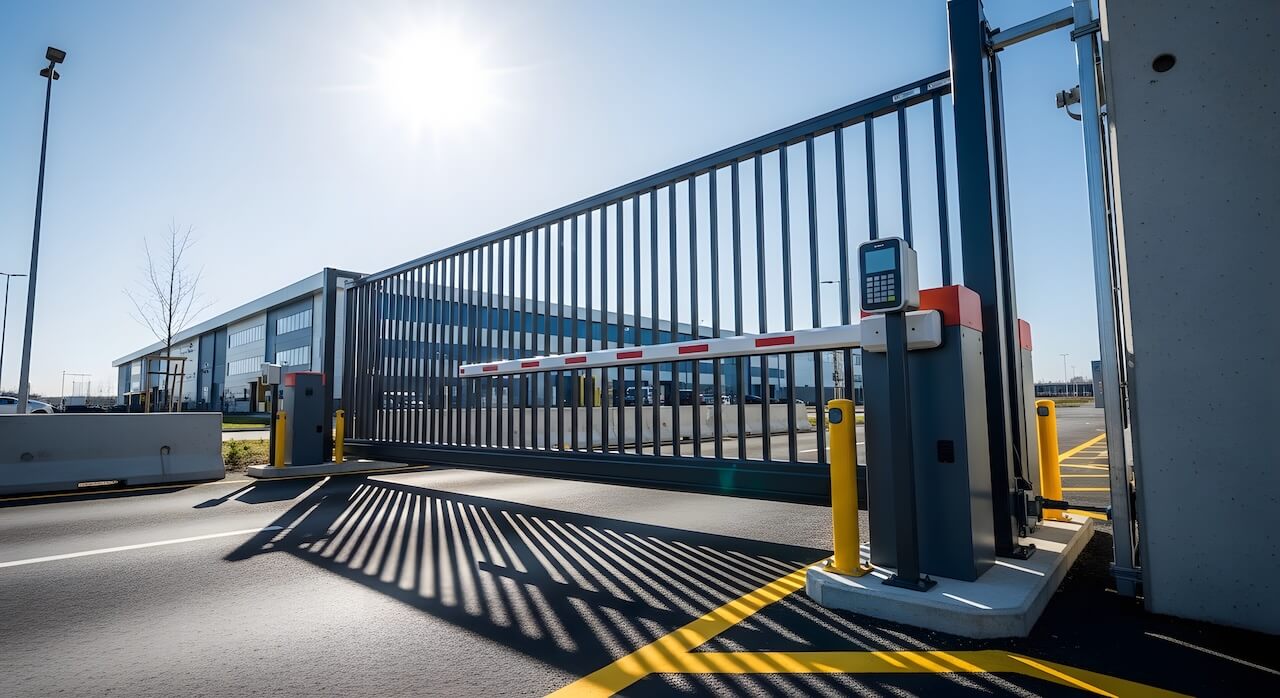
| Gate and Parking Access | Vehicle entry points | Property staff | Gated communities and parking structures |
| Alarms and Sensors | Unit and perimeter break-in detection | Tenant (unit) / property management (perimeter) | As a layer beneath access control, not a replacement |
| Cloud Dashboard and Audit Logs | Remote management and accountability | Property management | Incident review and compliance reporting |
Best Apartment Security Systems by Use Case


The right system depends on who’s buying and what they’re responsible for.
Best for Individual Renters: DIY Alarm Systems
A self-installed alarm like SimpliSafe or Ring covers the basics: door and window sensors, motion detection, and mobile alerts, with no property management involvement or long-term contract required. It protects one unit, not building-wide access or visitor activity.
Best for Camera-Only Monitoring: Camera-Focused Systems
Camera-focused systems add visibility and deterrence to lobbies, parking areas, and entrances without a full access control rollout. They’re lighter to deploy, but they only observe; they don’t control who gets in.
Best for Multifamily Building Access and Visitor Entry: Swiftlane
Swiftlane combines access control and video intercom in one cloud-managed platform, covering doors, gates, elevators, and amenity spaces while verifying visitors and vendors. It supports mobile credentials, PIN codes, key fobs, and facial recognition, and logs all activity for audit purposes.
Most property managers evaluating a building-wide system land here. More detail follows in the access control section below.
Best for Legacy Telephone Entry: Legacy Access and Intercom Vendors
Some older buildings still run on telephone-line intercom systems from providers like DoorKing, which has since expanded into video entry, cloud account management, and mobile app connectivity on its newer product lines. Whether an existing legacy system needs a full replacement or a lighter upgrade depends on the hardware generation installed and the building’s cloud and reporting requirements, so confirm with a vendor before assuming a rip-and-replace is necessary.
How Property Managers Should Choose an Apartment Security System
Choosing the right system starts with a clear picture of the building. The following criteria help you find the right fit.
Decision Criteria
- Building size and unit count – determines how many credentials and access points need to be managed
- Number of doors, gates, and elevators – each access point is a separate control decision
- Resident turnover – high turnover means credentials need to be issued and revoked often, which favors mobile or cloud-based systems over physical keys
- Package volume – buildings with heavy delivery traffic benefit from dedicated package room access
- Visitor traffic – buildings with frequent guests, vendors, or contractors need reliable visitor verification
- Remote management needs – whether staff need to grant access, view logs, or unlock doors from off-site
- Existing wiring and infrastructure – older buildings may have telephone-line intercom systems that affect retrofit cost and complexity
- Integrations – whether the system needs to connect with property management software or other building systems
- Reporting – whether ownership, insurance, or compliance needs require audit logs and access reports
- Budget – upfront hardware and installation cost versus ongoing software and support fees
Choose This If….
- Small buildings (under 50 units): a simpler access control and video intercom combination is usually enough; full elevator and gate integration may not be necessary.
- Mid-size multifamily (50–200 units): a cloud-based access control platform with visitor management and audit logs becomes worthwhile, especially with staff turnover or multiple access points.
- Large apartment complexes (200+ units): a full building security system, covering doors, gates, elevators, package rooms, and centralized reporting, is typically necessary to manage volume and liability.
- Gated communities: prioritize gate and parking access alongside building entry, since vehicle access is a separate control point from the front door.
- Mixed-use buildings: look for a system that can separate access permissions between residential, commercial, and shared spaces.
Apartment Security System Costs

Cost varies widely by system type and building size, and most vendors, including Swiftlane, price based on the number of doors, units, and devices rather than a flat rate. Below are typical ranges based on real-world deployments; exact pricing still requires a quote for your building’s specific door count and requirements.
DIY Renter Alarm
Self-installed alarm kits are the lowest upfront cost, typically covering hardware only, with optional monthly monitoring. Cost scales with the number of sensors and whether you add professional monitoring.
Camera-Only Setup
Camera costs scale with the number of cameras, resolution, and whether storage is local or cloud-based. Cloud storage typically adds a recurring monthly cost; local storage avoids that fee but requires on-site hardware and maintenance. (No reconciled per-camera or per-door range is currently published elsewhere on the Swiftlane site, so no number is included here, flagged below.)
Intercom / Access Control
Access control systems typically run $3,000–$5,000 per door installed, with cloud-based platforms adding $5–$10 per door, per month in ongoing software fees.
Video intercom systems range more widely by building size: $1,000–$5,000 for small buildings, $5,000–$30,000 for mid-size multifamily properties, and $30,000–$50,000+ for large or mixed-use buildings, or roughly $1,000–$7,000+ per door depending on system type, plus $5–$15 per unit per month (or $30–$100 per door per month) in ongoing software fees.
Full Building Security Platform
A full platform combines access control, video intercom, cameras, and visitor management, so total project cost typically ranges from $5,000 to $50,000+, depending on building size, number of entry points, and installation complexity. Larger buildings have higher upfront costs but often lower per-door costs at scale than piecing together separate systems.
What Drives Cost Overall
- Number of doors, gates, and elevators
- Number of units and residents needing credentials
- Type of credentials supported
- Installation complexity and existing infrastructure
- Cloud software and ongoing support fees
- Integrations with other building systems
Because pricing still depends heavily on these building-specific factors, the most reliable way to budget precisely is to request a quote based on your building’s door count and requirements.
Security Risks Apartment Buildings Should Solve First


Before evaluating vendors, it helps to know which risks actually drive most building security failures. Here are the ones property managers should prioritize.
Lost or Stolen Keys and Fobs
Physical keys and fobs can’t be revoked immediately. A lost fob means a building either lives with the risk or pays to rekey affected doors, and neither option scales well across a large resident base. Mobile credentials and cloud-based access control solve this by letting staff revoke access instantly from a dashboard.
Tailgating
Tailgating, when an unauthorized person follows a resident through a door before it closes, bypasses access control entirely regardless of how strong the credential system is. Video intercom and camera coverage at entry points help identify tailgating after the fact, though the strongest mitigation is a system residents actually use consistently rather than propping doors open.
Package Theft
Package theft disproportionately affects apartment and condo residents. According to Security.org’s 2025 Package Theft Report, people living in apartments and condos are more than three times as likely to have packages stolen as people in single-family homes, and apartment residents were victimized 3.5 times more often than homeowners in the most recent three-month period, driven in part by apartment buildings without a staffed mailroom or doorman offering thieves more packages to target in a single visit.
Dedicated package room access, paired with delivery notifications, limits exposure to residents and authorized carriers only.
Unauthorized Visitors
Buzzer systems without video verification let residents grant access based on voice alone, which is easy to spoof. Video intercom lets residents see who’s requesting entry before unlocking the door, closing that gap.
Poor Lobby and Common Area Visibility
Areas without camera coverage or staffed oversight are harder to monitor for both everyday safety and incident review. Camera placement in lobbies, mailrooms, and parking areas addresses this directly.
No Audit Logs
Without a record of who entered and when, buildings have no way to investigate incidents or demonstrate compliance to ownership or insurance. Cloud-based access control systems log every entry event automatically, which legacy telephone-entry systems typically can’t do.
Slow Resident Onboarding and Offboarding
Manually issuing or collecting physical keys for every move-in and move-out is slow and creates windows where former residents retain access. Mobile credentials that can be issued or revoked remotely close that gap.
Vendor Access Gaps
Vendors and contractors often need temporary, limited access, but many buildings either give them a permanent credential or rely on staff to let them in manually. Time-limited visitor credentials solve this without creating a standing security gap.
Why Access Control Is the Backbone of Apartment Security
Every component covered so far- cameras, intercoms, package access, alarms- depends on access control to actually function. It connects the front door, amenity rooms, elevators, gates, and package rooms into one manageable system instead of separate devices, each needing its own management.
A camera can record a break-in but can’t prevent one. An intercom can verify a visitor, but without access control behind it, there’s no way to restrict what that visitor can reach once inside. Access control decides who gets through which door, when, and it’s the only component that produces a usable audit trail across the whole building.
This is also why it’s the hardest component to bolt on piecemeal. A camera system in one app, an intercom in another, and fobs on a spreadsheet leaves no single source of truth for who has access to what. A unified access control system puts doors, gates, elevators, and amenity spaces under one dashboard with one credential per resident.
Swiftlane as a Building-Wide Platform
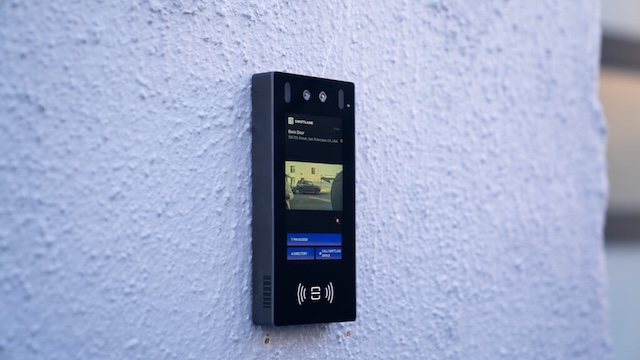
Swiftlane’s apartment access control system covers entry doors, gates, elevators, and amenity rooms from one cloud-managed platform, deployed in 3,000+ buildings, with support for mobile credentials, PIN codes, key fobs, and facial recognition, all logged to a single audit trail. The SwiftReader X video intercom adds visitor and vendor verification at the front entrance, so guests are seen and approved before entry.
For property managers, this means:
- Granting or revoking resident access remotely, without rekeying doors
- Issuing time-limited visitor credentials for guests, vendors, and contractors
- Managing elevator floor access by credential
- Reviewing a single audit log across every door, gate, and amenity space
Real-World Example: A 200-Unit Community Replacing a Legacy System
Aviara Apartments, a 204-unit multifamily community managed by Sares Regis Group, previously ran on a legacy DoorKing system built around shared entry codes, with no audit visibility into who entered or when. After moving to Swiftlane’s cloud-based video intercom and vehicle gate access, the property eliminated unmanaged, unrevoked credentials, introduced event-level access tracking across doors and gates, and streamlined entry for both residents and visitors.
Apartment Security System Checklist
Use this checklist when evaluating vendors for a building-wide security system.
- Cloud admin dashboard: manage every door, gate, and amenity space from one place
- Mobile credentials: let residents unlock doors from a phone, without physical keys or fobs
- Visitor access: issue time-limited credentials for guests, vendors, and contractors
- Video verification: see and speak with visitors before granting entry
- Audit logs: a record of every entry event, by door and by credential
- Remote unlock: grant access to a door from off-site, without being on property
- Package room, gate, and elevator support: access control that extends beyond the front door
- Retrofit-friendly installation: works with existing wiring and infrastructure where possible, without a full rebuild
- Resident onboarding and offboarding: issue and revoke credentials quickly as residents move in and out
- Support and maintenance: vendor support for troubleshooting, updates, and hardware issues
FAQs
What is the best security system for an apartment building?
For most multifamily properties, the strongest option is a unified access control and video intercom platform, like Swiftlane, that covers doors, gates, elevators, and amenity spaces from one dashboard. Camera-only or alarm-only systems can complement it, but neither replaces the access control and audit trail a building-wide platform provides.
Can renters install apartment security systems?
Renters can typically install their own in-unit alarm or camera system, but they usually need property management approval first, especially for anything involving drilling or adhesives that could affect the property. Property management, not individual tenants, manages building-wide systems like access control, gates, and elevator restrictions.
How much does an apartment security system cost?
Cost depends on the number of doors, units, and credential types, so most vendors, including Swiftlane, price based on a building’s specific requirements rather than a flat rate. The most reliable way to budget is requesting a quote based on door count and needed features rather than relying on a general price range.
What security devices do apartments need?
At minimum, most buildings need access control at entry points, a video intercom for visitor verification, and cameras in common areas. Larger or higher-traffic buildings typically add visitor management, package room access, elevator restrictions, and gate access.
Are alarms enough for apartment buildings?
No. Alarms detect a break-in after it starts, but they don’t control who enters the building or verify visitors before granting access. Access control and video intercom address that gap, with alarms serving as a supporting layer rather than the primary system.
Do apartment buildings need access control?
Yes, for any building with shared entrances, amenity spaces, or multiple access points, access control limits entry to authorized residents and verified visitors and creates an audit trail if an incident occurs. Without it, buildings rely on physical keys or buzzer systems that are harder to manage and can’t be revoked remotely.
What is the difference between home security and multifamily security?
Home security protects a single unit and is typically chosen and managed by the resident. Multifamily security protects the entire property, including shared entrances, amenities, and access points, and is chosen and managed by the property manager or owner across all residents.
Suggested Posts:
- Commercial Key Fob Door Entry Systems: 2026 Buyer’s Guide
- Building Intercom System: Buyer’s Guide
- Face Recognition Door Lock System for Apartment Buildings and Offices
- Yale Smart Locks for Unit Doors – Offered by Swiftlane
- The Best Apartment Intercom Systems (2026)
Need More Info?
Still have questions about the best security system for your facility? Contact a Swiftlane expert to navigate your options and the best solution.