Finding the right access control installer in Indiana means researching beyond local handymen on Google. Between older buildings running on legacy wiring, growing tenant expectations around mobile access, and the compliance details that come with electrifying doors, the installer you choose shapes how well your system works day to day.
This article tells you what to look for when you’re narrowing down an installation partner, plus a rundown of the providers we recommend in Indiana.
Table of Contents
- What Should You Look for in an Indiana Access Control Installer?
- Signs of a Good Installer
- Top Access Control Installers in Indiana
- Final Thoughts
- FAQ
What Should You Look for in an Indiana Access Control Installer?
Before you compare brand names, nail down a few things, since they’ll shape the whole project regardless of which installer you pick.
Licensing and Registration
Indiana doesn’t have a statewide low-voltage contractor license. Registration requirements are set at the city or county level instead, so ask directly whether the installer is registered in the municipality where your property sits. Don’t assume a license valid in one Indiana city carries over to another.
Permits
Commercial electrical wiring typically requires a permit under Indiana Electrical Code – 675 IAC 17, and requirements vary by jurisdiction. If your property is in Indianapolis or Marion County, confirm directly with the local Building Department before work starts, and have your installer walk you through the process rather than assuming it’s handled.
Fire Code
Electrified doors, delayed egress hardware, and maglock releases all fall under the Indiana Fire Code (675 IAC 22). An installer who fails to clarify egress requirements is a liability risk.
Building and Code Accessibility
675 IAC 13 governs Indiana’s building code, and accessibility requirements affect where you can mount readers and intercoms (ADA and ANSI A117.1 both apply). This is easy to get wrong on a retrofit.
Fire Alarm Tie-ins
If you’re integrating access control with your fire alarm system, that work falls under NFPA 72 via 675 IAC 28 and may require a licensed fire alarm contractor plus a plan review, separate from the access control installation itself.
Bottom line: none of this is meant to slow you down. It’s meant to catch installers who treat compliance as an afterthought before you find out the hard way. For anything specific to your property, confirm with your local AHJ or fire marshal since requirements can vary by jurisdiction.
Signs of a Good Installer
Once compliance is off the list, here’s what separates a solid installer from one that simply installs hardware and moves on:
- Retrofit–friendly: can reuse existing wiring or panel where it makes sense, instead of pushing a full rip-and-replace by default
- Genuinely integrated: connects access control with video, intercoms, and your property management system, not a standalone panel bolted onto the door
- Real support model: 24/7 monitoring, remote troubleshooting, and clear response-time commitments, spelled out before you sign
- Audit-ready reporting: exportable access logs and incident history you can actually hand to an inspector or insurer
- Transparent pricing: service agreements priced and explained up front, with coverage spelled out before you sign, and no surprise change orders mid-project
Top Access Control Installers in Indiana


We selected the installers below from Swiftlane’s network of vetted access control partners, verified against each company’s own site to confirm they perform access control installation specifically (not just general security or IT work). Where coverage gaps existed in certain regions, we’ve also included additional independently researched installers, noted below.
Here’s a closer look at our recommended installers serving Indiana properties today.
Hoosier Security
Hoosier Security is an Indianapolis-based commercial integrator that operates as an outsourced security department. They offer a security stack beyond intercom panels: access control, video, intrusion, fire monitoring, and weapons detection under one relationship and one bill.
Markets: Indianapolis and the surrounding counties, with additional operations in Detroit and national reach for larger clients. Their focus sits squarely in commercial and industrial properties, including OEM manufacturing, warehousing, and distribution. They also run a dedicated multifamily practice for apartments and HOAs, separate from single-family residential, which they do not service.
New installations carry a three-year parts and labor warranty backed by a required annual inspection. Their “Just Fix It” agreement commits to a next-day fix rather than a next-day response, at a fixed fee. Crews are all employees, not rotating subcontractors.
At their Experience Center, prospects can see access control, video, and intercom platforms running side by side and test their own credentials on live readers before buying.
For multifamily properties, Hoosier Security lists Swiftlane as its recommended cloud access control and video intercom platform, alongside Paxton, HID, and other access control lines they’re trained on.
Top Services
- Access control design, installation, and retrofit (Brivo, PDK, Swiftlane, Verkada, Avigilon Alta, HID, Paxton)
- Video surveillance with AI video search and license plate recognition
- Intrusion, alarm, fire monitoring and service
- Mobile surveillance trailers and GPS asset tracking
- Just Fix It service agreements with a three-year parts and labor warranty
Best for: commercial, industrial, and multi-site properties in Central Indiana and Southeast Michigan that want one partner across every connected system, and a licensed integrator who will showcase working technology before purchase. Learn more about Hoosier Security’s access control installation in Indianapolis.
OnGuard Security Solutions
OnGuard is a full-service security provider based in northeast Indianapolis, covering Central Indiana, including Carmel, Fishers, Greenwood, Bloomington, Terre Haute, Lafayette, and Kokomo. They handle alarms, cameras, fire alarms, access control card readers, and intercoms under one roof, backed by 24-hour monitoring.
Markets: apartment complexes, offices, schools, and HOAs, with experience across retrofit, remodel, and new construction. As a smaller, locally run shop, they lean on relationship-driven service, backing installs with a 30-day money-back guarantee and 24/7 on-call techs. Very large, multi-site portfolios may be more than a shop this size can comfortably support.
OnGuard’s multifamily offering includes Swiftlane alongside Zentra and DoorVi; their commercial access control is built primarily on Alarm.com. Ask which platform they’d propose for your property type and why.
Top Services:
- Access control card readers and intercom systems
- Alarm and fire alarm systems, 24-hour monitoring
- Retrofit, remodel, and new construction installs
Best for: small-to-mid commercial and multifamily properties wanting a local, relationship-driven provider. Learn more about OnGuard’s services.
Fairchild Communication Systems
Fairchild Communication Systems is a Fort Wayne-based security integrator with over 25 years in the industry.
Markets: commercial properties across Fort Wayne and Northeast Indiana, with an additional office in Osceola serving the Michiana/ South Bend region. Access control is a core specialty. Their team includes certified installers for Avigilon, Brivo, and HID.
Top Services:
- Access control system design and installation
- Certified installation for Avigilon, Brivo, and HID platforms
- Video surveillance systems
Best for: Fort Wayne and Michiana-area commercial properties wanting an access control-focused integrator with certified platform experience. Learn more about Fairchild’s services.
NexGen Digital Solutions
NexGen Digital Solutions is a Plymouth-based technology provider serving South Bend, Elkhart, and Northern Indiana. They’re a broader surveillance, home automation, and managed-IT shop, so access control is one service line among several rather than their sole focus, but it’s an explicit, dedicated offering with named platform certifications.
Top Services:
- Access control installation (certified dealer for PDK and Uniview)
- Video surveillance systems
- Managed IT and home automation
Best for: South Bend and Northern Indiana properties wanting access control bundled with broader IT and surveillance support. Learn more about NexGen’s services.
Final Thoughts
The best installers understand how commercial and multifamily properties run day to day, not just how to mount a reader on a door. Cloud-based, mobile-first platforms give you visibility that legacy panel systems can’t match, from real-time activity logs to instant credential deactivation. Whoever you choose, ask for measurable outcomes, not just a features list, and don’t skip the compliance questions from earlier in this guide.
A good installer will walk you through licensing, permits, and code requirements before quoting a system, not after.
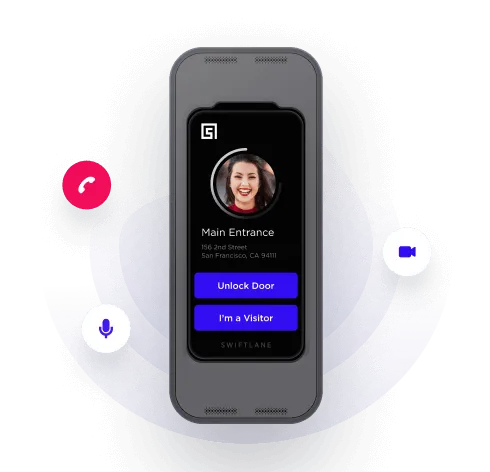
Evaluating access control platforms? Whichever installer you choose, the platform decision drives your ongoing costs and day-to-day workload more than the install does. Swiftlane is a cloud access control and video intercom system built for multifamily and commercial properties with mobile credentials, video intercom, and remote credential management from one dashboard.
FAQ
How much does access control installation cost in Indiana?
Costs vary by property size and system complexity. Based on Swiftlane’s deployment data, typical ranges run $300 to $2,500 per door for hardware and $200 to $800 per door for installation, plus $5 to $40 per door per month for cloud-based systems. Commercial-grade openings, retrofits in older buildings, and fire alarm tie-ins routinely land above the high end, which is why a site walk should come before any real number.
How long does a retrofit installation take?
Anywhere from a few days to several weeks, depending on how much existing wiring can be reused and how many doors are involved.
Should I choose key fobs or mobile access for multi-tenant access control?
Fobs are simpler and cheaper upfront but harder to manage at scale, since lost fobs mean rekeying. Mobile access lets you deactivate credentials instantly and skip physical hardware handoffs entirely, which matters more as tenant or staff turnover increases. It also cuts the ongoing cost of replacing lost or unreturned fobs, since deprovisioning a phone credential takes seconds and doesn’t require reissuing hardware.
What should I prepare for a site walk?
A map of your entry points, plus notes on delivery, visitor, and amenity access patterns. The more your installer understands about daily traffic through each door, the better they can design around it instead of just installing hardware.