Every access exception becomes your problem at 9 pm.
A resident is locked out. A contractor says they were told they could come in. Someone reports a stranger in a restricted area, and suddenly, you are the one trying to figure out what happened.
These moments are not rare. They are the predictable result of property management access controls that were never set up to run themselves. Every manual gap in your access setup eventually becomes an after-hours call, a liability question, or a dispute you cannot resolve because there is no record.
This guide is grounded in how access control actually fails in day-to-day property operations, not in theory. It covers the workflows, policies, and system decisions that reduce manual work, close operational gaps, and protect you when something goes wrong.
Quick answer: What “property management access control” actually means
Property management access control is the set of policies, workflows, and system rules that determine who can enter which doors/spaces, when they can enter, and how access is granted and revoked, with an audit trail that records what happened.
In practice, it’s less about readers and locks and more about move-ins, move-outs, vendors, and after-hours exceptions, because that’s where liability and workload pile up.
Key Takeaways
- Property management access control is an operations problem first, not a hardware decision.
- The costliest access failures happen at predictable moments: tenant move-outs, vendor offboarding, and after-hours incidents.
- A written access policy, covering roles, zones, time rules, and revocation timelines, is the foundation on which everything else depends.
- Consistent workflows eliminate reliance on memory and manual follow-up, where most gaps occur.
- An audit trail is your legal protection when something goes wrong.
- The right system reduces your team’s workload, automatically enforces policy, and integrates with the way you already operate, including your property management software.
Table of Contents
- Why Access Control Is an Operations Problem, Not Just Tech
- Where Access Control Breaks in Daily Property Operations
- Building Your Access Control Policy
- What Should Your Access Control Process Look Like Day-to-Day?
- Which Credential Type Is Right for Your Property?
- Choosing the Right Access Control System
- What to Look for in Any Access Control System
- How to Evaluate Access Control Vendors (Property Management Scorecard)
- Access Control and Legal Liability
- Real-World Scenarios: Before and After
- Getting Started: Your First 30 Days
- Conclusion
- How We Researched This
- FAQs
Why Access Control Is an Operations Problem, Not Just Tech


Most access control decisions start with hardware – locks, fobs, readers. But that’s not where the real impact shows up.
Access control touches everything: move-ins, move-outs, vendor access, lockouts, and incident handling. When it’s not set up properly, your team ends up filling the gaps manually, like chasing keys, coordinating access, and dealing with issues after the fact.
The Real Cost of Getting it Wrong
The problems don’t usually look like “system failure.” They show up in small, repeatable breakdowns:
- Rekeying adds up fast. Standard lock rekeying runs $50–$150 per lock with service fees on top, and most units have multiple entry points.
- A credential not revoked after move-out becomes a security risk
- One “who let them in?” incident without logs can turn into a legal issue
- Resident expectations have shifted. National research from the National Multifamily Housing Council shows a growing share of renters now expect controlled access to buildings and amenities as a standard feature, not an upgrade.
Individually, these feel manageable. Together, they drain time, money, and trust.
What Modern Access Control Actually Solves
Done right, access control reduces the amount of manual work your team has to handle:
- Physical key management is largely eliminated for day-to-day use. Most properties retain some physical backup, but daily reliance on keys drops dramatically.
- Every entry is logged with a timestamp, and you always have a record
- Access can be managed remotely
- Policies are enforced automatically (time limits, zones, roles)
- Fewer after-hours calls and emergency lockouts
Where Access Control Breaks in Daily Property Operations
The 5 Most Common Access Control Failures in Property Operations
- Move-outs where access isn’t fully revoked on time
- Vendor access that outlives the work order
- Shared PINs or shared credentials (no accountability)
- After-hours “one-off” exceptions with no documentation
- Incidents where there’s no usable audit trail to answer who/when/where/why
Tenant Move-In and Move-Out
Turnover is where small gaps become real exposure.
When a tenant leaves, access is not always fully closed out; revocation depends on someone remembering to act manually. A more reliable approach ties access directly to lease timelines so credentials activate and expire automatically, removing the need for manual follow-up and reducing the risk of overlap between tenants.
Vendor, Contractor, and Maintenance Access
A contractor comes in for a one-day job but keeps access indefinitely.
Teams share PINs or pass around key sets. Weeks later, there is no record of who entered, when, or why. Access should match the scope of work. If a job is scheduled for two days, credentials should reflect that.
Common Areas, Amenities, and Restricted Spaces
Each shared area, gym, pool, rooftop, parking, and package room has different rules about who can enter and when. Without clear controls, credentials get shared, and access extends beyond intended users. Without entry logs, disputes are nearly impossible to resolve.
Emergency and After-Hours Access
Without clear guidelines, after-hours responses depend on whoever is available, leading to inconsistent decisions and gaps in the record. There should be a defined process for who can grant access, how it is approved, and how it is recorded.
What We See Most Often
Most access failures are not dramatic break-ins. They’re process gaps that repeat: credentials that never get revoked, vendor access that lasts longer than the job, and “temporary” exceptions that become permanent because nobody owns cleanup.
Building Your Access Control Policy
Most access control issues don’t come from the system. They come from unclear rules. If you do not first define how access should work, even the best platform will end up reflecting inconsistent decisions.
A clear policy gives you structure. It ensures access is handled consistently across tenants, vendors, and staff, regardless of who manages it.
Define Your Access Roles
Start by mapping everyone who interacts with your property.
Residents, guests, staff, vendors, contractors, emergency services, and owners all have different needs. Instead of handling each case individually, define roles upfront and assign a default access level to each.
That includes where they can go, when they can enter, and for how long they should have access. The goal is simple: people should have access only to what they actually need, with nothing extra that could create risk or confusion later.
Set Time and Zone Rules
Once roles are defined, translate them into clear boundaries.
Residents typically need full access to their unit and shared spaces, but not to back-of-house areas. Staff access should reflect working and assigned responsibilities. Vendor access should align with scheduled work and end when the job does.
Emergency access is different. It needs to be available, but controlled. Any override should be limited to specific roles and always recorded.
These rules don’t need to be complicated, but they need to be consistent. That’s what prevents exceptions from turning into patterns.
Governance – Who Can Grant Access?
Access control breaks down quickly when too many people can issue credentials.
Decide early who has the authority to grant access, and under what conditions. Not every team member should be able to create or modify credentials, especially for vendors or external parties.
It also helps to define response expectations. For example, how quickly should access be revoked after a tenant moves out or a contract ends? Setting a clear standard (like within 24 hours) removes ambiguity and keeps your team aligned.
Document Everything
If the policy lives in conversations or habits, it won’t hold up.
Write it down. Make it part of onboarding so new team members follow the same process from day one. Review it regularly as your property or operations evolve.
Where relevant, reflect these rules in your lease agreements or vendor contracts. That way, expectations are clear not just internally but also for anyone interacting with your property.
What Should Your Access Control Process Look Like Day-to-Day?
A policy sets expectations. Workflows ensure those expectations are met every time, regardless of who’s on shift.
The goal here isn’t complexity. It’s consistency. When access control is tied to repeatable workflows, you remove guesswork and reduce reliance on memory.
Move-In Workflow
Access should be ready before the resident arrives, not figured out during handover.
Assign the appropriate credential type, activate zones associated with the unit and shared spaces, and onboard the resident to the mobile app, if applicable. Tie everything issued back to the tenant record in your property management system so access is documented and traceable.
Move-Out Workflow
Move-outs should close access cleanly, without relying on manual follow-up.
Set access to expire automatically at the agreed lease end time. Physical credentials should still be collected and deactivated, but they should not be your only safeguard. Review recent activity for anything unusual before the unit transitions, and only then prepare access for the new tenant.
Move-Out Access Checklist
Use this to prevent lingering credentials and reduce disputes.
(T = the lease end / move-out effective time.)
T-7 days (before lease end)
- Confirm lease end date/time and whether there’s any approved extension
- Audit active credentials tied to the resident (mobile, fob/card, PINs, guest passes)
- Confirm any shared users (roommates, authorized occupants) and their end dates
Lease end (effective timestamp)
- Auto-expire resident credentials at the agreed time (do not rely on manual follow-up)
- Disable any resident-created guest access (PINs, links, virtual keys)
- Log a confirmation note: who triggered revocation, when, and under what policy
T+1 business day
- Run an exceptions check: any credentials still active for that unit/resident name
- Review denied-entry events after the revocation timestamp (attempted access after move-out)
T+7 days
- Spot-check 5–10 recent move-outs for complete credential cleanup
- If exceptions repeat, fix the workflow (not the person) and tighten the policy
Vendor and Contractor Access Workflow
Vendor access should follow the job, not outlast it.
Issue credentials tied to specific dates and limited to the areas actually needed. Entry and exit should be recorded automatically. When the job is complete, access ends automatically, no chasing vendors to return keys. If access is used outside approved zones or times, that should trigger a follow-up.
Monthly Audit Cadence
A monthly check catches active credentials that should have been removed, duplicate entries, and patterns that do not align with your policy. Document that the audit was completed. If an issue arises later, a record of regular reviews shows access is being actively managed, not just assumed.
Which Credential Type Is Right for Your Property?
Not every access method fits every property. Here is how the main options compare and when each makes sense.
| Credential Type | Best For | Key Tradeoff |
| Mobile (smartphone) | Tech-forward, larger multifamily properties | Requires a smartphone and a charged battery |
| Face recognition | High-traffic entrances, premium communities | Higher hardware cost; enrollment required per resident |
| Key card/fob | Mixed demographics or retrofit properties | Can be lost, copied, or left active after move-out |
| PIN code | Vendor access, package rooms, guest entry | Codes can be shared; they should always be time-limited |
| Vehicle tag reader | Gated communities, parking garages | Access-point specific; does not cover building interiors |
| Voice/hands-free | Accessibility-focused or convenience-driven properties | Dependent on app and network connectivity |
Most modern platforms support multiple credential types simultaneously. Residents on mobile, vendors on time-limited PINs, staff on key cards. This layered approach is more practical than committing to a single method for all users.
Choosing the Right Access Control System
Most property management access-control decisions are framed as product comparisons. That’s not really helpful. What matters most is whether a system fits your property, your team, and how you actually manage access day to day.
Instead of focusing solely on features, use a consistent approach to evaluate how a system performs in real operations.
New Build vs Retrofit: Know Your Constraints First
Your starting point shapes everything.
In new developments, you have more flexibility. You can design building access management from the ground up, wiring, hardware, and system standardization across units or properties.
Retrofits are different. You’re working with what already exists: door hardware, wiring conditions, and network availability. Some properties may support wired setups, while others require wireless solutions. Resident expectations also matter. Not every demographic is equally comfortable with mobile-based access.
If you manage multiple properties, consistency becomes a priority. Standardizing on a single platform across your portfolio reduces training time, simplifies vendor coordination, and makes tenant access control easier to manage at scale.
What to Look for in Any Access Control System
Instead of comparing brands, evaluate how each system performs across these areas:
| Criteria | What to Ask |
| Reliability/ Uptime | What uptime is guaranteed? If the internet goes down, do doors still function? |
| Audit Trail Quality | How detailed are the logs? Can they be exported? How long are they stored? |
| Staff Time to Manage | How much time do comparable properties spend maintaining this system each week? |
| Resident Support Burden | How often do residents need help? Does the vendor support them directly? |
| Integration | Does it connect with your PMS, intercom, or visitor management tools? |
| Total Cost of Ownership | What’s the full cost – hardware installation, software, and ongoing labor per unit? |
This is where the systems start to separate. Not on features, but on how much work they can create or remove for your team.
Questions to Ask in Every Vendor Demo
Demos often focus on features rather than real scenarios. Push for specifics:
- What happens when a tenant moves out? How quickly can access be revoked?
- What exactly does the audit log capture, and how do you export it?
- If your system goes offline, what happens to door access?
- How do you handle temporary access for vendors or contractors?
- On average, how much time does a property manager spend maintaining this system each week?
- Which PMS platforms do you integrate with, and to what depth?
These questions shift the conversation from features to outcomes, which is what actually matters when managing property access control across real buildings.
How to Evaluate Access Control Vendors (Property Management Scorecard)
The platforms most commonly evaluated for property management access control each take a different approach. Here is how they line up across the criteria that matter most for day-to-day operations.
| Category | What to look for | Questions to ask on the demo |
| Best fit | Works for your property type + portfolio scale | “Show multi-site reporting and bulk changes across properties.” |
| Credentials | Mobile + fallback options, time-bound access | “How do you issue and auto-expire vendor access?” |
| PMS integration | Real automation (move-in/move-out), not just “integrates” | “What fields sync, and what triggers revocation?” |
| Reliability | Offline mode/cellular backup, clear failover behavior | “What happens during an internet outage?” |
| Visitor flows | Deliveries, tours, guests, contractors | “How are one-time links/PINs created and audited?” |
| Audit trail | Usable logs + export + retention | “Export an incident report for a door event.” |
| Admin workflow | Fast onboarding/offboarding + approvals | “Demo a move-out end-to-end with audit record.” |
Every platform listed has strengths for specific property types. The right choice depends on your building configuration, resident demographics, and operational priorities.
Why Property Managers Choose Swiftlane
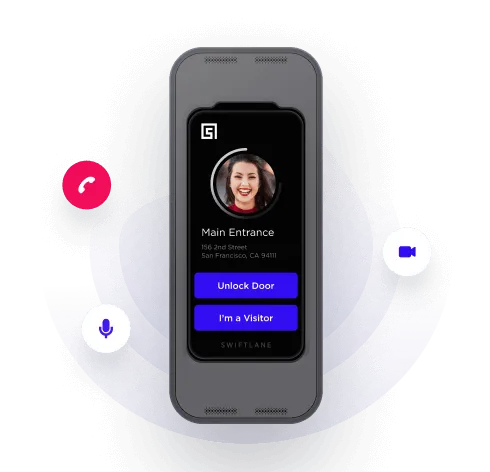
- Unified platform. Swiftlane combines video intercom, access control, smart locks, and visitor management into a single system, managed from a single dashboard. No switching between apps for different access scenarios.
- PMS integration that closes the loop. Swiftlane integrates directly with Yardi, RealPage, and Entrata to automate resident data syncing. Move-ins and move-outs update access permissions in real time, eliminating manual entry and the risk of credentials lingering after a lease ends.
- Offline and cellular backup. If your network goes down, access often continues to run. Residents can still get in.
- SOC 2 compliant. Resident data is protected and never sold or shared.
Access Control and Legal Liability
Access control shapes how well you can protect yourself when something goes wrong. Without clear records and consistent practices, even minor incidents can turn into disputes.
The Audit Trail as Your Paper Trail
When issues come up, the first question is usually the same: who had access, and when?
Access logs answer that. It provides a timestamped record of entry events to support tenant disputes, insurance claims, or internal investigations. Without it, you’re relying on assumptions.
This works in your favor beyond documentation for its own sake. As the Insurance Information Institute notes, a business is far less likely to be found liable when it can show it took its responsibilities seriously and made reasonable, documented efforts to prevent harm. Courts and insurers look not just for policies on paper, but for evidence that they are being followed consistently.
Credential Revocation as Risk Management
Access that isn’t removed on time creates unnecessary exposure.
If a former tenant, staff member, or vendor still has access after they shouldn’t, that risk sits with you. The longer it stays active, the harder it is to explain or defend.
Setting a clear revocation timeline and consistently following it turns this into a controlled process rather than a liability.
Vendor Access Accountability
Vendor access needs the same level of structure.
If a contractor enters a restricted area or an issue occurs, and there’s no record of access, responsibility becomes unclear. That’s where problems escalate.
When vendor access is time-bound and logged, you have a clear record of who entered and when. Including these requirements in vendor agreements reinforces expectations and protects your position if something goes wrong.
Real-World Scenarios: Before and After
It’s easier to see the value of property management access control when you look at how it plays out in real situations. The difference is in how quickly issues are contained and resolved.
| Scenario | Before | After |
| Move-out gap | Tenant moves out on Friday; returns keys on Monday. Over the weekend, they re-enter the unit. No record, no resolution. | Access automatically expires at the end of the lease. Any attempt to enter after move-out is denied and logged. |
| Ghost vendor | HVAC contractor keeps a master fob after a short-term job. Months later, someone is seen in a restricted area with no explanation. | Vendor access is issued for a defined window and expires automatically. No follow-up needed once the job is done. |
| Amenity dispute | Resident denies entering the package room when an item goes missing. No visibility into who accessed the space. | Access logs show exactly when the room was entered and which credential was used. Resolved quickly, without guesswork. |
Scenario: A “one-time” vendor exception becomes a security incident
A property team approved a contractor for a two-day job, but access was granted informally (via a shared PIN with no end date). Three weeks later, a resident reported that an unfamiliar person had entered a restricted area after hours. The onsite team could not answer the two questions that matter in the moment: who entered, and why.
With a policy-based setup, the contractor would have received a unique, time-bound credential tied to the work order (for example, 9 am to 5 pm for two days, limited to specific doors). When the job ended, access would auto-expire without anyone needing to remember to clean up. If an incident still happened, the audit trail would show the credential used, the exact door, timestamp, and whether access was granted or denied. Instead of a “we’re not sure,” the team could resolve it quickly, tighten the vendor policy, and prevent the same failure from repeating.
Getting Started: Your First 30 Days
You don’t need to overhaul everything all at once. Start with a structured approach so property access control improvements are manageable and measurable.
Week 1: Audit Your Current Setup
List every access point on your property, including doors, common areas, and restricted spaces. Then map who currently has access to each. This gives you a clear baseline and surfaces gaps immediately.
Week 2: Define Your Access Policy
Outline how access should work moving forward. Set roles, zones, time rules, and clear revocation timelines. This becomes the foundation for consistent building access management.
Week 3: Evaluate Systems
Shortlist 2–3 access control platforms. Use a structured scorecard and ask scenario-based questions during demos to see how each system performs in real workflows.
Week 4: Plan Your Rollout
Start small. Focus on one property or a few key access points. Test your workflows, refine your setup, and scale once the process is working smoothly.
Conclusion


Most access control problems are not technology failures. They are process gaps, credentials that linger too long, policies that exist only in someone’s head, and workflows that depend on the right person remembering the right thing at the right time.
Access control done right does not add to your workload. It removes the manual exceptions, the after-hours calls, and the “we have no record of that” moments that quietly drain your team’s time and your property’s credibility.
If you are ready to reduce manual work, close credential gaps, and put a system in place that automatically enforces your policy, Swiftlane can show you exactly how it works across your properties. Schedule a demo or speak with our team to get started
How We Researched This
We built this guide from real property operations scenarios, not just product theory. Here’s what we used:
- Day-to-day failure patterns we see most often in multifamily and mixed-use operations (move-outs, vendor access, after-hours lockouts, and “who let them in?” incidents).
- The policies that prevent those failures (roles, zones, time windows, approvals, and revocation SLAs), and how those policies map to what modern access control systems can actually enforce automatically.
- The operational requirements property teams need in practice (remote credential management, time-bound access, portfolio-level controls, and an audit trail that can resolve disputes quickly).
- A sanity check on any specific claims (cost ranges, phone-line dependencies, audit/log concepts) against current vendor documentation and industry references, updated for 2026.
If your property has frequent turnover or heavy vendor traffic, you’ll get the most value by treating access control as a repeatable workflow with built-in automation and auditability.
FAQs
Can access control systems integrate with property management software?
Yes, and it’s one of the most underused features available. Modern cloud-based access control systems connect with most property management platforms via APIs, enabling move-in and move-out dates to automatically trigger credential issuance and revocation.
Access logs, audit trails, and incident reports also sync alongside lease data and maintenance records in one place. When evaluating any system, ask the vendor which platforms it integrates with and how deeply those integrations go.
Do I need a different access control system for each property in my portfolio?
No. Modern cloud-based platforms let you manage multiple properties from a single dashboard, issue credentials, monitor access logs, and respond to incidents across your entire portfolio without switching between systems.
Not every platform handles this equally well, so ask vendors specifically how their dashboard manages multiple sites, whether policies can be customized per property, and whether reporting can be filtered by location. Standardizing on a single platform portfolio-wide also reduces training time and vendor complexity.
What happens to a tenant’s access when they move out?
With traditional keys, it depends entirely on whether the tenant returns them, and that’s not guaranteed. With a modern access control system, revocation is scheduled in advance and triggers automatically at the agreed lease end time. The tenant’s credentials are deactivated, any subsequent entry attempts are denied and logged, and no rekeying is required.
Best practice: set revocation for the agreed lease end time, typically end of business on the final day, with an automatic confirmation sent to the property manager.
What credential type is best for multifamily properties?
There is no single answer. It depends on your property type and resident demographics. Mobile access eliminates key management entirely and works well for tech-forward communities. Key cards are practical for retrofits or mixed demographics.
Most modern platforms support multiple credential types simultaneously, so you can match the method to the user – mobile for residents, time-limited PINs for vendors, and key cards for staff.
How much does property management access control typically cost?
Cloud-based systems generally run $1,000–$3,000 per door for hardware and installation, plus a monthly software fee of roughly $50–$200 per door. The more useful calculation is the total cost of ownership compared to what you are currently spending on rekeying, lockout calls, and staff coordination.
Properties that move to digital credentials typically offset a meaningful portion of the system cost within the first year through reduced operational overhead.