Choosing the right access control system brands for your property is no longer straightforward.
Today’s market includes legacy enterprise security providers, cloud-native platforms, and property-specific systems built for multifamily, commercial, industrial, and mixed-use environments. While many brands claim broad capabilities, the right choice depends heavily on how your property actually operates.
A system that works well in a hospital or corporate campus may be unnecessarily complex for a 200-unit apartment building. Likewise, a residential-first platform may not meet the compliance or integration needs of a high-security commercial facility.
This guide compares leading access control system brands based on property type and operational fit.
Instead of a single universal ranking, we’ll identify the best-fit brands for each property type:
- Multifamily apartments and condos
- Student housing
- Commercial office buildings
- Mixed-use developments
- Industrial facilities
- Hospitality and other specialized environments
For each property type, we’ll examine:
- Which system category tends to perform best
- Brands commonly evaluated in that segment
- Where each brand typically excels
- Where limitations may appear
The goal is simple: help you evaluate access control system platforms based on real-world use cases, long-term scalability, and operational practicality.
Top Brands by Property Type (Quick Reference)
Not ready to read the full guide? Here’s a quick reference summary of brands that commonly appear on each property type’s evaluation shortlist.
| Property Type | Commonly Evaluated Brands | Primary Decision Maker |
| Multifamily / Condos | Aiphone, Swiftlane, Mircom, Akuvox, Brivo, Avigilon Alta, SALTO KS | Property Manager |
| Student Housing | Aiphone, Swiftlane, Brivo, LenelS2, Genetec, SALTO KS | Property Manager / Facilities |
| Commercial Office | Brivo, Kisi, Genetec, Honeywell, HID Global, Verkada, Gallagher, Axis | IT / Security Director |
| Mixed-Use | Brivo, Swiftlane, Avigilon Alta, Genetec | Property Manager / IT |
| Industrial / Warehouse | Genetec, Honeywell, Brivo, Gallagher | Facilities / Security |
| Hospitality | Onity, Honeywell, dormakaba, Assa Abloy | Hospitality Operations |
How We Researched This
This guide was developed using a combination of primary vendor documentation, industry standards publications, and hands-on evaluation criteria drawn from real-world access control deployments across property types.
Brand selections for each vertical were based on three criteria: frequency of appearance in buyer shortlists, availability of verifiable product documentation, and relevance to the operational needs of that property type. Brands were not included based on commercial relationships or advertising.
Technical definitions and standards references were drawn from the following sources:
- Bluetooth Special Interest Group, “Bluetooth Technology Overview,”
- NFC Forum, “What is NFC?”
- NIST CSRC Glossary, “Fail Safe
- Security Industry Association, “2024 Security Megatrends Report“
Industry context and market positioning claims were informed by publicly available vendor documentation, product datasheets, and deployment case studies from each brand’s official website. Pricing ranges referenced in the FAQs are illustrative estimates based on publicly available market data and are not a substitute for vendor quotes.
Key Takeaways
- There is no universal “best” access control brand. The right choice depends on your property type and operational workflows.
- Start by identifying your system category (legacy enterprise, cloud-native, or multifamily-first) before comparing vendors.
- Multifamily and student housing prioritize turnover efficiency and resident experience.
- Commercial and industrial properties typically prioritize compliance, integrations, and security governance.
- Mixed-use developments require role-based access control (RBAC) and segmented access logic.
- Always evaluate long-term scalability and total cost of ownership, not just upfront hardware pricing.
Table of Contents
- How to Use This Guide
- Multifamily Apartments and Condos
- Student Housing
- Commercial Office Buildings
- Mixed-Use Developments
- Warehouses and Light Industrial
- Hospitality
- 6 Evaluation Questions That Matter Most
- The Right Brand Depends on the Right Context
- FAQs
How to Use This Guide
Choosing between access control system brands can quickly become overwhelming. Many providers serve multiple verticals, use similar language, and claim to “do it all.”
Instead of starting with brand names, start with context. This guide is structured to help you narrow options based on how your property actually operates.
Start With Your Property Type
The biggest mistake buyers make is searching for “best access control brand” without defining what they actually need.
An enterprise hospital and a 200-unit apartment building have completely different requirements. So do:
- A Class A office building with multiple tenants
- A garden-style multifamily community
- A gated HOA
- A mixed-use development
- A student housing property with high turnover
Each property type has unique pressure points:
- Multifamily prioritizes resident self-service, visitor management, and ease of turnover.
- Commercial office prioritizes identity management, tenant permissions, and integration with IT systems.
- Industrial environments prioritize reliability, zone partitioning, and shift management.
- Hospitality focuses on room-level access and the guest credential lifecycle.
Before comparing brands, clearly define:
- Who manages the system day-to-day?
- How often do credentials change?
- How many entry points need control?
- Whether you’re managing one property or a portfolio?
Once the property context is clear, brand comparisons become far more meaningful.
Decide Your “System Category” First
Not all access control brands are built on the same architectural philosophy. Understanding system categories helps you compare apples to apples.
1. Legacy Enterprise Systems
Typically on-premise or server-based, often deployed in large commercial or institutional environments.
Common characteristics:
- Deep customization
- Strong compliance and audit capabilities
- Integrates with broader security systems (video, alarms)
- Often integrator-installed and hardware-heavy
Best suited for:
- Healthcare
- Large corporate campuses
- High-compliance facilities
- Complex industrial sites
Tradeoff:
- Higher upfront cost
- Longer deployment timelines
- IT involvement is often required
2. Cloud-Native Access Control Platforms
Built for remote management and distributed portfolios.
Common characteristics:
- Web-based dashboards
- Mobile credentials (smartphone-based credentials that typically use Bluetooth Low Energy (BLE) and/or Near Field Communication (NFC))
- Easier multi-site management
- Automatic updates
Best suited for:
- Multi-location operators
- Modern office environments
- Retail chains
- Mixed-use portfolios
Tradeoff:
- May have fewer deep customization options than legacy enterprise systems
- Integration depth varies by provider
3. Multifamily-First Platforms
Designed around residential workflows rather than enterprise security operations.
Common characteristics:
- Integrated video intercom and access control
- Resident self-service tools
- Visitor and delivery access via video intercom + temporary PINs (single-use/multi-use)
- Designed for property managers, not IT teams
Best suited for:
- Apartments
- Condos
- Student housing
- Gated communities
Tradeoff:
- May not be ideal for high-compliance enterprise use cases
- Some platforms prioritize resident experience over complex security configurations
Understanding which category fits your operational reality prevents mismatched comparisons.
Multifamily Apartments and Condos


Multifamily access control is fundamentally different from enterprise office security. The priorities typically include:
- Resident self-service (adding roommates, managing guests)
- High turnover management
- Delivery and visitor access
- Property staff simplicity
- Minimal IT involvement
- Intercom integration
A system designed primarily for corporate security teams may technically “work,” but often creates operational friction for leasing and property managers.
Below are brands that frequently appear in multifamily evaluations, grouped by system philosophy.
| Brand | System Category | Best Fit | Operational Strength | Watch For |
| Aiphone (IP Systems) | Intercom-led | Multifamily and multi-tenant buildings of any size | Durable hardware, strong intercom functionality; includes AC Nio access control with mobile credentials, QR/PIN visitor access, and cloud management | Some features, such as mobile app access, may incur additional fees; Installation can be complex |
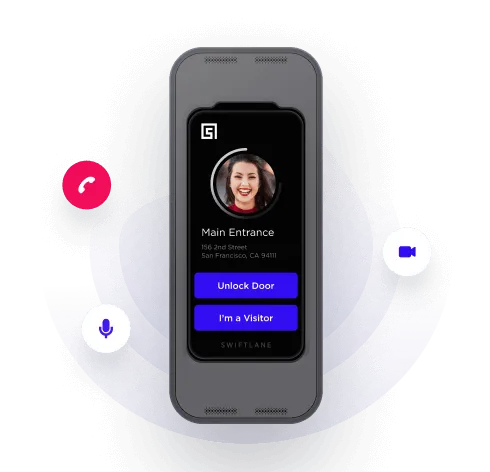
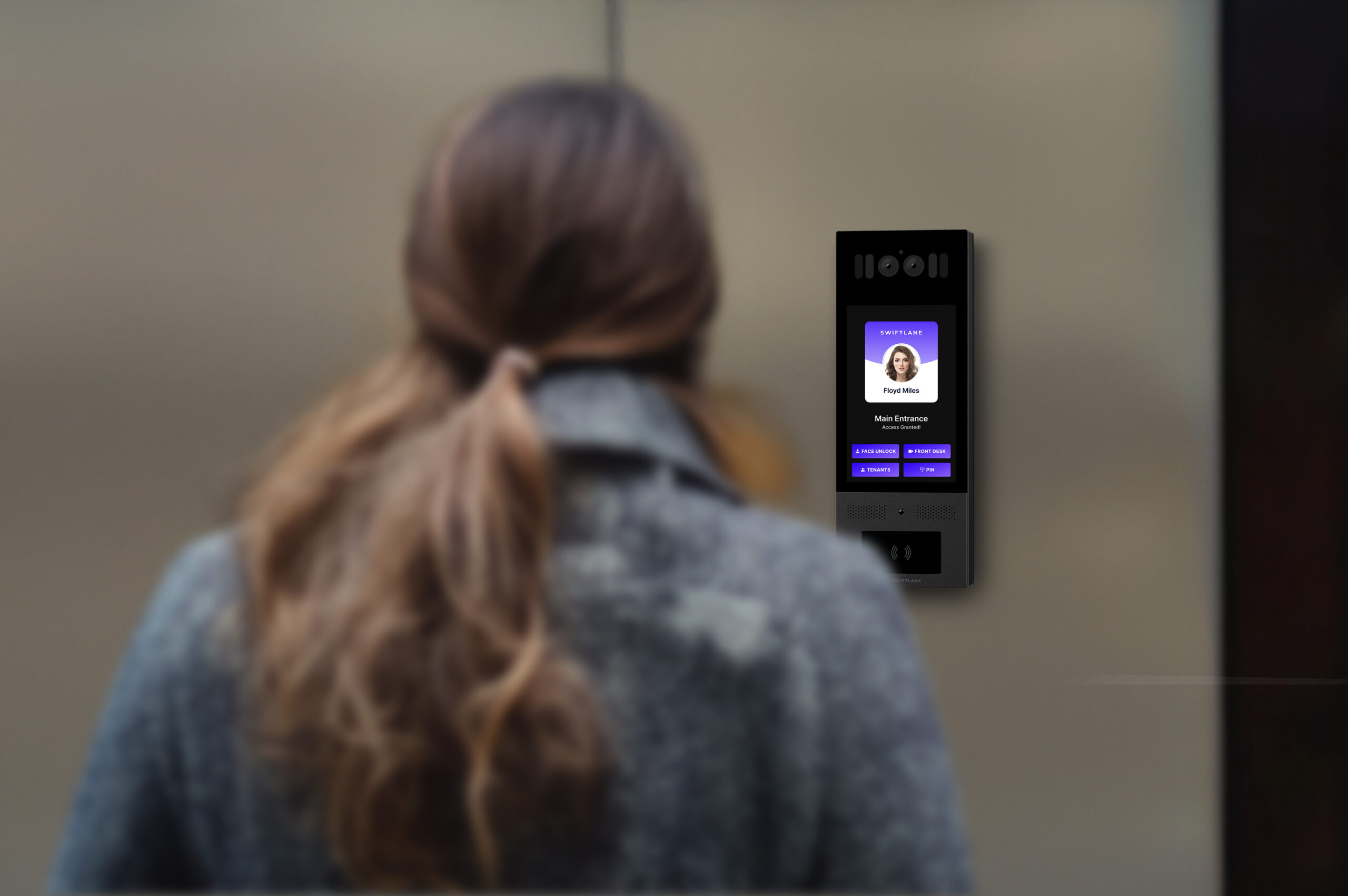
| Swiftlane | Cloud-managed access control + video intercom platform designed for multifamily workflows | Multifamily residential properties; residential-led mixed-use | Unified video intercom + access control; supports mobile unlock (BLE), PINs, key cards/fobs, and optional face recognition | If you require deep enterprise compliance workflows or heavily customized security governance, validate fit during evaluation |
| Mircom | Intercom-focused | Large residential buildings upgrading entry systems | Established presence in multifamily, hardware reliability | May not provide a full cloud-native experience |
| Akuvox | IP intercom | Budget-conscious residential deployments | Modern IP-based intercom solutions | Platform depth varies by integrator deployment |
| Brivo | Cloud-native access control | Large multifamily portfolios | Centralized management, scalable across properties | Intercom typically separate |
| Avigilon Alta (Openpath) | Cloud-native, mobile-first | Mixed-use or premium residential | Mobile credentials, clean UI, scalable | Intercom is not a native feature; visitor tools may require add-ons; video surveillance integration is not included in the base package |
| SALTO KS | Cloud-native, lock-focused | Multifamily and student housing where smart lock integration is a priority | Flexible cloud-based lock access with mobile credentials, PINs, and key cards; strong for high-turnover environments | Primarily a lock platform; video intercom requires separate integration |
When Multifamily Should Avoid Legacy Enterprise Platforms
Enterprise systems built for complex security environments are powerful platforms designed for large-scale, compliance-driven deployments. However, they often require integrator configuration, on-prem infrastructure, and IT oversight.
Unless the building includes enterprise tenants or requires strict compliance, these platforms may be operationally heavier than necessary for residential workflows.
For most apartment communities, cloud-managed, property-focused systems reduce administrative burden and speed up onboarding and turnover cycles.
Student Housing

Student housing amplifies every multifamily challenge. Turnover happens in waves. Credentials change rapidly. Propping and tailgating are common. Parents and guests need temporary access. Operational simplicity becomes critical.
Unlike traditional apartments, student housing often behaves more like a hybrid between residential and campus security.
Best Brands for Student Housing
| Brand | System Category | Best Fit | Operational Strength | Watch For |
| Aiphone | Intercom-led | Properties primarily upgrading entry communication | Reliable intercom hardware | Requires a layered access system for scale |
| Swiftlane | Cloud-managed, multifamily-focused platform with mobile unlock and multi-tenant video intercom | Modern student housing developments | Mobile-first credentials, simplified turnover management | Less suited for campus-wide enterprise integration |
| Brivo | Cloud-native | Portfolio student operators | Centralized control, scalable permissions | Visitor management depth varies |
| LenelS2 | Enterprise | Campus-style deployments | Deep role-based access control | Higher complexity and cost |
| Genetec Synergis | Enterprise unified security | University-integrated properties | Integration with unified security platform (access control + VMS) and campus systems | More than most private student housing requires |
| SALTO KS | Cloud-native, lock-focused | Student housing with high turnover and shared amenity spaces | Fast credential issuance and revocation via mobile app; well-suited to move-in season cycles | Intercom and video access require separate integration |
Student housing operators should carefully assess how quickly credentials can be issued and revoked. Administrative friction becomes costly during move-in season.
Commercial Office Buildings

Office buildings typically prioritize security governance, identity management, and tenant separation.
Unlike multifamily, commercial office systems often integrate with:
- Identity Provider (IdP) integrations
- Visitor management platforms
- Elevator control systems
- Surveillance system
Here, security directors or IT teams are often primary decision-makers.
Best Brands for Commercial Office Buildings
| Brand | System Category | Best Fit | Operational Strength | Watch For |
| Brivo | Cloud-native | Multi-tenant office portfolios | Portfolio visibility, integration ecosystem | May require layered visitor tools |
| Kisi | Cloud-native | Tech-forward offices, coworking spaces, and SMBs | Clean software experience | Enterprise depth varies |
| Genetec Synergis | Unified enterprise security | High-security commercial | Integrates access + video seamlessly | Higher upfront investment |
| Honeywell | Enterprise portfolio | Large corporate buildings | Longstanding enterprise footprint | May require certified integrator support |
| HID Global (OSDP / Mercury) | Credential ecosystem/reader infrastructure | Enterprise offices requiring interoperable RFID/BLE credential infrastructure compatible with multiple ACS platforms | Widely recognized as the longstanding leader in access control reader technology, having shaped proximity and smart contactless credential adoption industry-wide; broadly compatible via OSDP with major ACS platforms | HID is a credential and reader ecosystem, not a standalone ACS; typically paired with a separate management platform |
| Verkada | Cloud-native, camera-first unified security | Commercial offices want access control and video surveillance on one cloud platform | Unified dashboard for access and cameras; clean cloud management; AI-assisted alerts | Proprietary hardware ecosystem; deep enterprise compliance depth varies by use case |
| Gallagher Security | Enterprise, high-security | High-security commercial, government, and critical infrastructure sites | Deep perimeter control, zone-based access, and multi-site architecture with strong compliance reporting | Complexity and cost suited for a high-security enterprise; less common in a standard Class A office |
| Axis Communications | Network video + access control (A1001 controller) | Mid-size commercial offices integrating video and access on a unified network architecture | Strong camera lineage; ACAP open platform; OSDP-compatible readers | Access control is a secondary line; video-first orientation; ACS depth varies vs. dedicated ACS providers |
In office environments, integration and audit capability typically outweigh resident-style convenience features.
Mixed-Use Developments


Mixed-use properties combine residential, retail, and commercial under one roof. Access policies become layered:
- Residents need amenity and garage access
- Office tenants require secure floor separation
- Retail staff require scheduled access
- Deliveries must be segmented
The biggest mistake in mixed-use projects is forcing a single workflow on incompatible user types.
Best Brands for Mixed-Use Developments
| Brand | System Category | Best Fit | Operational Strength | Watch For |
| Brivo | Cloud-native | Balanced mixed-use portfolios | Scalable permissions and integrations | Intercom separate |
| Swiftlane | Multifamily-first | Residential-led mixed-use | Integrated resident + intercom workflows | Commercial tenant identity management and deep IT integrations may require additional configuration or a separate platform |
| Avigilon Alta | Cloud-native | Modern mixed-use towers | Mobile-first access across user types | Visitor features may require add-ons |
| Genetec Synergis | Enterprise | Security-driven developments | Unified security platform | Complexity for smaller projects |
Warehouses and Light Industrial

Industrial facilities prioritize durability, shift-based access, perimeter control, and controller-level offline operation. These environments often involve large staff counts, varying schedules, and restricted zones.
Cloud-native systems can work well, but many operators still favor enterprise-grade reliability.
Best Brands for Industrial Facilities
| Brand | System Category | Best Fit | Operational Strength | Watch For |
| Genetec Synergis | Enterprise unified | Integrated security facilities | Strong access + video integration | Complexity |
| Honeywell | Enterprise | Corporate industrial sites | Established security ecosystem | Integrator dependence |
| Brivo | Cloud-native | Multi-site light industrial | Remote portfolio control | Advanced configuration capabilities may vary |
| Gallagher | Enterprise, high-security | Industrial and critical infrastructure facilities require strict zone control and perimeter security | Strong perimeter access control, anti-passback, multi-site zone partitioning; built for complex credential and shift-based workflows | Higher cost and complexity; typically requires a dedicated security integrator |
Hospitality

Hospitality environments often blur the line between traditional access control and electronic hotel locking systems.
Hotels prioritize:
- Mobile key credentials
- Short-term credential lifecycle
- Staff back-of-house segmentation
- Integration with property management systems
Best Brands for Hospitality
| Brand | System Category | Best Fit | Operational Strength | Watch For |
| Onity | Hospitality lock ecosystem | Hotels and extended stay | Deep PMS integration | Not a full commercial ACS |
| Honeywell (Global Access Solutions) | Enterprise hospitality | Large hotel groups | Integrated security portfolio | Complexity outside hospitality |
| dormakaba | Hospitality lock ecosystem | Mid-to-large hotels requiring PMS-integrated room locks and back-of-house access | Wide hotel lock portfolio (RFID, mobile key); PMS integrations including Opera; established global service network | Primarily a lock and door hardware provider, broader ACS requires integration with a separate platform |
| Assa Abloy (VingCard / Elsafe) | Hospitality lock ecosystem | Hotels of all sizes; common in branded full-service properties | Widely used across the hotel lock industry, with Visionline and Vostio platforms supporting mobile key and PMS integration | Lock-centric platform; perimeter ACS is typically handled separately |
Hospitality operators should ensure clarity between room lock systems and broader perimeter access control.
Evaluating Access Control for a Multifamily or Mixed-Use Property?
Swiftlane offers cloud-based video intercom and access control built for residential and mixed-use properties. See Swiftlane specs →
6 Evaluation Questions That Matter Most
Instead of asking “Which brand is best?” ask these:
1. Who will manage this system daily?
- If it’s property staff, simplicity matters.
- If it’s security professionals or IT, configurability and audit depth may matter more.
2. How often do credentials change?
- High-turnover environments (student housing, hospitality, large offices) need frictionless onboarding and revocation.
- Manual badge programming becomes unsustainable quickly.
3. Do you need deep integrations, or just door control?
Some properties need:
- Video Management System (VMS)
- Elevator control
- Visitor management
- PMS (Property Management System) or identity provider integrations
Others just need reliable entry control. Don’t overbuy.
4. Are you managing one building or a portfolio?
Single-site systems may not scale well across multiple properties. Portfolio operators should prioritize:
- Centralized dashboards
- Role-based admin controls
- Cross-property reporting
5. What happens during internet outages or power failures?
Evaluate:
- Offline functionality
- Controller-level failover
- Battery backups
- Fail-safe locks release when power is cut (doors open); fail-secure locks remain locked when power is cut (doors stay locked). Egress doors are generally required to fail-safe under fire and life-safety codes, so this isn’t a free either/or choice. Confirm requirements with your local AHJ before specifying lock type.
Reliability often matters more than feature lists.
6. What’s the 5-year total cost of ownership?
Look beyond hardware pricing and evaluate:
- Licensing fees
- Credential costs
- Integration fees
- Upgrade requirements
- Ongoing support
A lower upfront quote may end up costing significantly more over time.
By answering these six questions first, you can evaluate access control brands based on operational fit rather than marketing claims.
The Right Brand Depends on the Right Context
The best access control system brand is the one that aligns with how your property actually operates, and that answer differs by property type.
Legacy enterprise systems continue to dominate in highly regulated, compliance-driven, or campus-style environments. Cloud-native platforms have become the standard for distributed portfolios and modern commercial buildings. Multifamily-first systems prioritize resident experience and operational simplicity in ways enterprise tools often do not.
Before shortlisting vendors, property owners and operators should be clear on:
- Who manages the system daily
- How often do credentials change
- Whether the intercom is core to the workflow
- How much integration depth is truly required
- Whether the property will scale into a portfolio
When those answers are clear, brand comparisons become straightforward.
Access control is no longer just hardware on a door. It’s infrastructure that shapes resident experience, tenant management, operational efficiency, and long-term scalability.
Choose the system architecture first. Then choose the brand that best suits your property type.
Ready to find the right access control system for your property? Request a demo today.
FAQs
Can an access control system work across different property types in a mixed-use building?
Yes, if the platform supports segmented permissions and layered access rules. Mixed-use properties need different workflows for residents, office tenants, retail staff, and visitors. A system that forces one user model across all groups can create security gaps and operational friction.
How important is mobile credential support when comparing access control system brands?
Very important in high-turnover environments. Mobile credentials can simplify onboarding, revocation, and guest access, especially in multifamily, student housing, and modern offices.
How do I know if a system will scale as my portfolio grows?
Look for centralized dashboards, role-based admin controls (RBAC), cross-property reporting, and remote management. Systems designed only for single-site deployment often become difficult to manage at a portfolio scale.
What access control brands work with property management software (PMS) or identity providers?
Many cloud-managed platforms offer integrations with popular property management systems (multifamily) and identity providers, such as Okta and Microsoft Entra ID (commercial). Integration depth varies widely by vendor and property type, so confirm (1) the specific PMS/IdP, (2) what data syncs (users, units, move-ins/outs, access groups), and (3) whether it’s native or via a middleware partner.
How do I choose between a cloud-based and an on-premise access control system?
Cloud-based systems offer remote management and automatic updates, which can reduce admin overhead. On-premises systems offer greater local control and may be preferred for high-security or compliance-heavy environments. Many deployments use a hybrid approach: cloud software with local controllers that keep doors operating during internet outages.
What should I budget for an access control system?
Budget depends on property type, door count, credential type (cards, mobile, PIN), and installation complexity. Expect separate line items for hardware, installation, software/licensing, and ongoing support. The best way to compare vendors is to use itemized quotes with a 3- to 5-year total cost of ownership (TCO) view.