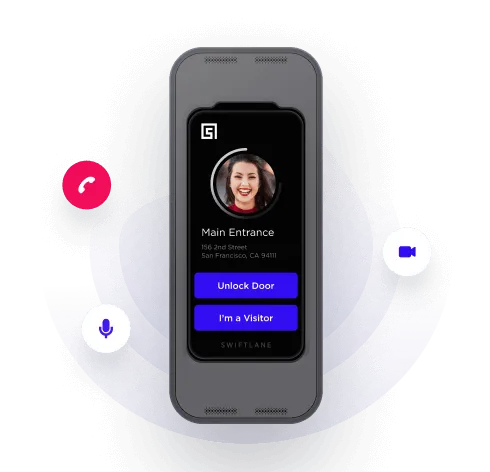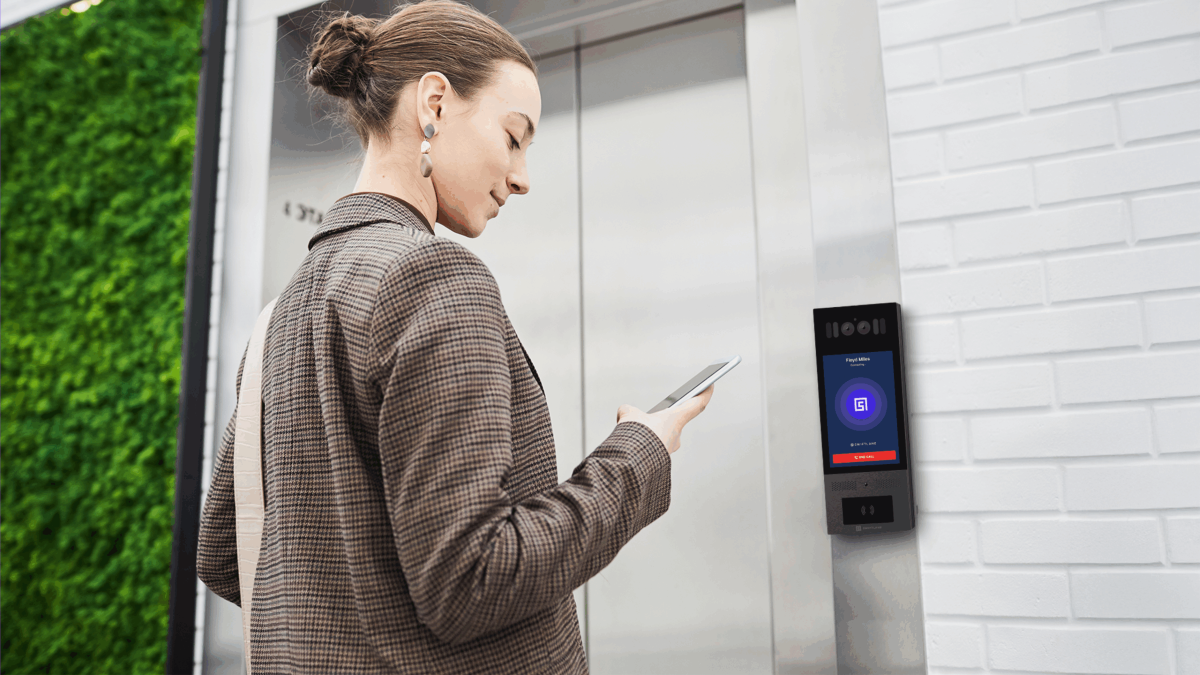
An apartment intercom system with mobile access lets residents answer visitors and unlock doors from a smartphone instead of a wall handset. Calls route to the resident’s phone, and the door releases remotely, so no in-unit hardware is required. For multifamily properties, the core benefits are fewer missed deliveries, faster visitor entry, remote access management for staff, and a better resident experience without adding front-desk workload.
Property managers are under more pressure than ever to handle high delivery volume, rising resident expectations for self-service, and remote or distributed leasing teams, all while keeping staffing costs flat. Package volume has climbed sharply in recent years.
The share of renters receiving just 1–2 packages a month fell to 21%, down from 39% in 2020 (NMHC/Grace Hill Renter Preferences Survey), and older call box systems that rely on landlines or in-unit stations were not built for this. That pressure is showing up directly in upgrade plans: a 2025 Parks Associates study, developed with Kwikset, found that nearly 72% of multifamily owners and operators plan to upgrade smart building solutions — including access control — on at least one property within the next 12 months.
A mobile access intercom shifts day-to-day visitor and delivery handling to the resident’s phone and cloud-based tools that staff can manage from anywhere, which is why more multifamily properties are evaluating a switch.
How We Researched this Guide
This guide was created by reviewing publicly available vendor documentation on mobile unlocking, video calling, and cloud administration, as well as Swiftlane’s own product capabilities for multifamily access control and video intercom.
Systems were evaluated based on resident experience, property manager workload, delivery access, remote administration, and integration with building access control. When a vendor’s current feature set cannot be confirmed, this guide notes that it should be verified directly with the vendor.
Key Takeaways
- Mobile-enabled intercom systems let residents receive intercom calls and release doors through a mobile app, even when they’re not home.
- By extending intercom access beyond in-unit hardware, they help reduce missed visitors, delivery delays, and routine access management work for staff.
- Mobile access is most effective in buildings with frequent visitor activity, regular access changes, and reliable internet connectivity.
Table of Contents
- What Is an Apartment Intercom with Mobile Access
- How Mobile Apartment Intercoms Work
- When Mobile Access Makes Sense for Multifamily Buildings
- Key Benefits for Property Managers and Residents
- Mobile Access vs Traditional Apartment Intercom Systems
- Must-Have Features to Compare
- How Much Does an Apartment Intercom With Mobile Access Cost?
- Comparing Apartment Intercom Systems With Mobile Access
- How to Choose the Right System for Your Building
- Common Mistakes to Avoid
- Why Swiftlane for Mobile-Access Apartment Intercoms
- FAQs
What Is an Apartment Intercom with Mobile Access
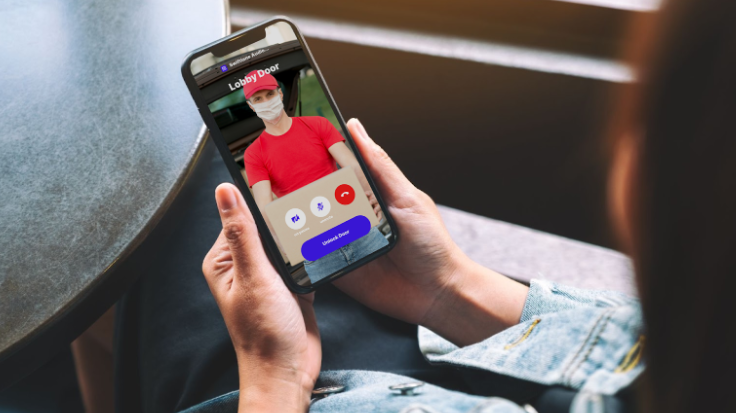
An apartment intercom with mobile access combines a traditional intercom’s video or audio calling with a smartphone app, so residents and staff can manage entry without being tied to an in-unit station. Most systems include:
- Video or audio calling to residents’ phones: visitor calls ring the resident’s smartphone instead of (or in addition to) an in-unit panel
- Mobile app unlock: residents can open building or unit doors remotely from the app, similar to how apartment intercom with door release systems work.
- PIN, QR, or temporary guest access: for visitors, vendors, or short-term guests who don’t need the full resident app.
- Admin dashboard for staff: property managers add, remove, or update access permissions without touching the hardware
- Cloud-based updates: changes to directories, access rules, or permissions sync across doors without a technician visit
- Phone-call fallback: residents without the app, or with an older phone, can still receive a standard phone call to verify and unlock
Not every system includes all of these. Coverage varies by vendor, which is why comparing feature by feature (later in this guide) matters more than comparing by brand name alone.
How Mobile Apartment Intercoms Work
Most mobile-access intercom systems follow a similar sequence, whether the visitor is a guest, a delivery courier, or a vendor:
- Visitor selects a resident or scans a QR code at the building entrance panel
- Resident receives a call or notification through the app, a video call, or a standard phone call for those without the app
- Resident verifies the visitor using live video, audio, or a photo captured at the panel
- Resident unlocks the door by tapping the app, pressing a key on a phone call, or using a temporary access code
- The system logs the entry event, recording who was let in, when, and by whom
- Property staff can review logs or update access permissions remotely from the admin dashboard, without visiting the panel in person
This flow is largely the same across vendors, though the details, app design, video quality, and fallback options vary. Those differences are covered in the provider comparison later in this guide.
When Mobile Access Makes Sense for Multifamily Buildings
Mobile-access intercoms aren’t a fit for every property, and the right setup depends heavily on building size, resident turnover, and the amount of staff time currently spent on visitor and delivery access. This shift is already underway industry-wide.
A separate Parks Associates white paper, developed with LiftMaster, found that more than three-fourths of key multifamily decision makers plan to upgrade or replace their electronic access control systems.
| Building type | Mobile access fit | Why |
| 20-50 unit walk-up | Medium | Helps with visitor access, but budget may be tighter relative to the benefit |
| 50-200 unit apartment | High | Reduces package and guest access friction as visitor volume grows |
| 200+ unit high-rise | Very high | Remote unlock and cloud admin reduce staff workload at scale |
| Student housing | High | Supports frequent turnover, temporary access needs, and mobile-first residents |
| Mixed-use building | High | Helps separate resident, visitor, vendor, and office access |
| Gated multifamily | High | Useful for vehicle gates, deliveries, and visitor verification at a distance |
As a general rule, the more entrances, the higher the visitor and delivery volume, and the more distributed the property management team is, the more a mobile-access system pays for itself through reduced staff interruptions.
Key Benefits for Property Managers and Residents
Mobile access changes the day-to-day experience for both sides of the door, not just the resident’s convenience.
For Property Managers and Staff
Mobile access means fewer missed deliveries, since residents can verify and let in couriers remotely, rather than packages piling up at a front desk or being left with a neighbor. It also means fewer staff interruptions, because vendor and visitor access can be handled by the resident or via temporary codes, without a manager manually buzzing every visitor in.
Onboarding and offboarding get faster, too: new move-ins gain access within minutes via the cloud dashboard, and move-outs can be revoked remotely rather than waiting for a keycard to be returned. For teams overseeing multiple buildings, remote administration lets managers update access permissions from anywhere, without a site visit.
Most systems also keep audit logs for entry events, a record of who was let in, when, and by whom, which is useful for resolving disputes or investigating incidents. And because fewer components rely on aging phone lines or wall-mounted units, there’s less dependency on landlines and in-unit stations that are expensive to service.
For Residents
Visitors and vendors become easier to manage since guests and delivery drivers can be let in from anywhere, not just when the resident is standing at a wall panel. Demand for this kind of access is measurable: in NMHC’s Renter Preferences Survey, 59% of tenants said they’d be interested in keyless smart locks and would pay an average of $36.72 more per month for the amenity, while 48% expressed interest in a video intercom system at the property entrance.
This aligns with broader renter expectations: Rently’s 2025 Smart Apartment Trends Report found that 65% of renters find apartments more appealing when they offer smart home technology, and 54% now expect modern rental properties to include smart locks as standard.
More broadly, a smartphone-based system aligns with how residents already expect to interact with most of their daily lives, rather than relying on decades-old call box technology.
Mobile Access vs Traditional Apartment Intercom Systems
At a basic level, both systems let residents grant building access to visitors, but they differ in how that access is managed, updated, and scaled across a property.
| Feature | Traditional intercom | Mobile-access intercom |
| Resident answering | In-unit station or phone line | Smartphone app, video call, or phone fallback |
| Remote unlock | Limited or unavailable | Usually supported |
| Delivery access | Staff often get interrupted | Resident/vendor workflows can be managed remotely |
| Access updates | Manual or vendor-managed | Cloud dashboard updates |
| Visitor verification | Audio only, or limited video | Video, logs, and app-based controls |
| Resident turnover | Manual directory updates | Faster cloud-based updates |
| Scalability | Harder across multiple doors | Better suited to multi-door, multi-building properties |
Traditional systems still work, and some smaller properties may not need the added features. But as buildings grow in size or add more entrances, gates, or amenities, the manual upkeep of a traditional system tends to become the bottleneck that mobile access is built to remove.
Must-Have Features to Compare
Not every mobile-access intercom system includes the same capabilities. Before comparing vendors by name, it helps to know which features actually matter for a multifamily building.
| Feature | Why It Matters |
| Mobile app unlock | Lets residents open doors remotely without a physical key or fob |
| Video calling | Lets residents see visitors before granting access, not just hear them |
| Phone-call fallback | Covers residents without a smartphone, an app, or reliable data at the moment of the call |
| Remote door release | Lets staff or residents unlock a door without being physically present |
| Delivery access options | Determines how couriers get in without needing a resident to answer every time |
| Temporary guest access | Lets vendors, guests, or contractors in for a limited time window without a permanent credential |
| PIN/QR options | Gives visitors a way in that doesn’t depend on the resident’s phone at all |
| Cloud admin dashboard | Lets staff manage access and permissions from anywhere, not just from an on-site panel |
| Access logs | Creates a record of who entered, when, and how, useful for disputes or investigations |
| Multi-door support | Determines whether one system can cover the lobby, gate, elevator, and amenities, or just the front door |
| Elevator or gate integration | Matters for larger or gated properties where access needs to extend past the main entrance |
| Resident directory management | Affects how quickly staff can update the system during move-ins and move-outs |
| Backup entry method if the app is unavailable | Prevents residents from being locked out during an outage or a phone issue |
| Privacy and permission controls | Determines who can see or control what, especially across staff roles |
| Installer/support availability | Affects how quickly issues get resolved after the system is live |
Buyers should treat this list as a checklist to bring to any vendor conversation, since not every system on the market covers all fifteen. For more on this, see our guide to door access control systems.
How Much Does an Apartment Intercom With Mobile Access Cost?
As a general industry estimate, most mobile-access intercom systems run $1,500 to $3,500 per entry point for hardware and installation combined, with total project cost scaling based on the number of doors, gates, and entrances a building needs to cover. Software and subscription fees are typically priced separately, often per unit or per door.
Pricing varies widely depending on the building itself, so rather than a single price point, it helps to understand what drives costs up or down within that range.
Hardware cost depends on the type of panel, camera quality, whether the unit includes a touchscreen, mounting requirements, and how many entrances need coverage. Installation cost depends on existing wiring, the condition of the current door hardware, network availability at each entrance, and whether the building also needs access-control upgrades alongside the intercom itself.
Software and subscription costs depend on the number of units and users, which features are included, any third-party integrations, and the level of ongoing support.
| Cost Driver | What Changes the Price |
| Number of entrances | More doors and gates require more hardware and wiring |
| Existing wiring | Reusable wiring lowers install complexity; rewiring adds cost |
| Video quality and screen size | Larger or touchscreen panels typically cost more |
| Mobile app and cloud dashboard | Often priced as a separate software subscription |
| Access control integration | Adds cost if locks, readers, or controllers need upgrades |
| Delivery and vendor workflows | May require visitor management or temporary access features |
Because pricing depends on many building-specific factors, the most reliable way to get an accurate estimate is to request a quote tailored to your property’s doors, gates, and access needs.
Comparing Apartment Intercom Systems With Mobile Access
Every mobile-access intercom system covers the basics differently. The table below compares providers commonly considered for multifamily properties, based on what’s typically included versus what may require add-ons or direct verification with the vendor.
| Provider | Best fit | Mobile app unlock | Video calling | Phone-call fallback | Delivery access | Access control integration | Cloud admin | Notes |
| 2N | Larger commercial and mixed-use properties | Yes | Yes | Verify with vendor | Verify with vendor | Yes | Yes | Feature depth can vary significantly by hardware tier; verify current model specs |
| Aiphone | Properties wanting established hardware brands | Verify with vendor | Yes | Verify with vendor | Verify with vendor | Verify with vendor | Verify with vendor | Strong hardware reputation, but mobile/cloud feature availability depends on the specific product line |
| Akuvox | Budget-conscious or smaller multifamily buildings | Yes | Yes | Verify with vendor | Verify with vendor | Verify with vendor | Yes | Lower cost entry point, but support and integration depth should be confirmed for larger properties |
| Swiftlane | Multifamily and commercial properties wanting access control and intercom on one platform | Yes | Yes | Yes | Yes | Yes | Yes | Full feature set may cost more than a basic intercom-only system for buildings that don’t need integrated access control |
If a feature isn’t confirmed above, verify current specs directly with the vendor before making a purchasing decision, since hardware tiers and software plans can change what’s included.
How to Choose the Right System for Your Building
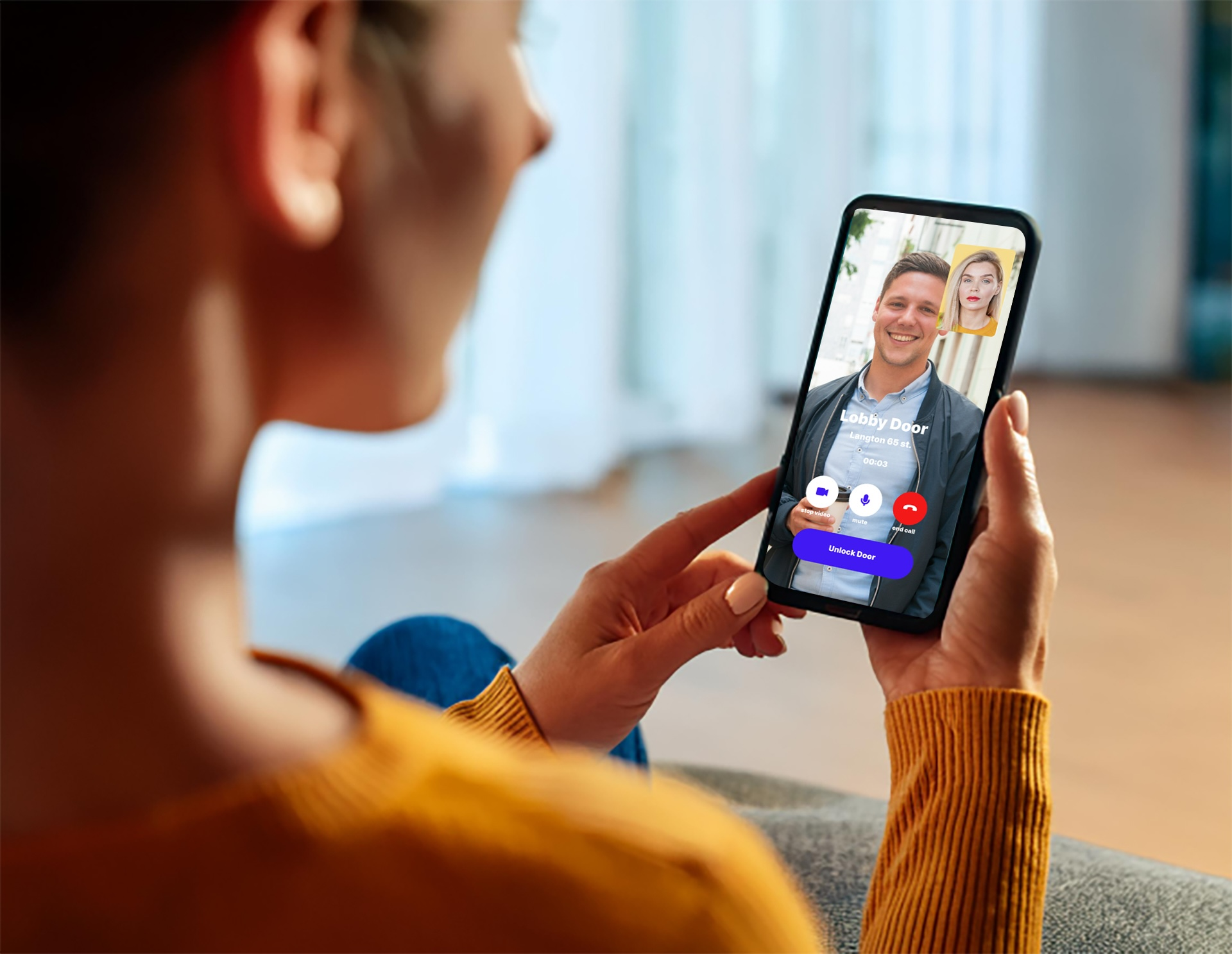
Before comparing specific vendors, it helps to answer a few questions about the building itself. Start with the basics: how many doors, gates, elevators, and amenities need access, since that determines both hardware needs and overall cost. From there, consider whether residents need app-only access, phone fallback, or both, especially if the property has a mix of tech-comfortable and less tech-comfortable residents.
Delivery and vendor access matters too. If drivers or contractors need regular temporary access, confirm the system supports this without requiring a resident to be present each time.
For properties that already have or plan to add access control, check whether the intercom integrates directly with it. See our guide to building access control systems for more on this. Staff should also be able to update resident access remotely, without a site visit, particularly for properties managed by a distributed team.
A few operational questions matter just as much as feature lists: what happens during an internet or power outage, whether the system supports audit logs for resolving disputes, and how easy onboarding and offboarding actually are in practice, not just on paper. Finally, look at the vendor’s specific experience with multifamily properties, since a system built primarily for single-family homes or small offices may not hold up at apartment-building scale.
Common Mistakes to Avoid
- Choosing an app-only system without a phone-call fallback — residents can end up locked out or unable to verify visitors if they don’t have the app installed, lose their phone, or run into connectivity issues
- Ignoring delivery and vendor workflows — if couriers or contractors can’t get in without a resident answering every time, staff end up handling exactly the interruptions a visitor management system for apartments is meant to remove.
- Forgetting gates, elevators, or amenity spaces — planning only for the front door often means the system doesn’t reach the areas that actually cause the most access friction
- Buying a standalone intercom that doesn’t integrate with access control — creates two disconnected systems to manage instead of one
- Not checking cellular or network reliability at the entrance — a system that depends on connectivity is only as good as the signal at that specific location
- Underestimating resident directory maintenance — keeping the directory current takes ongoing work, not a one-time setup
- Not planning a backup entry method — residents need a way in if the app, network, or power isn’t available
Why Swiftlane for Mobile-Access Apartment Intercoms
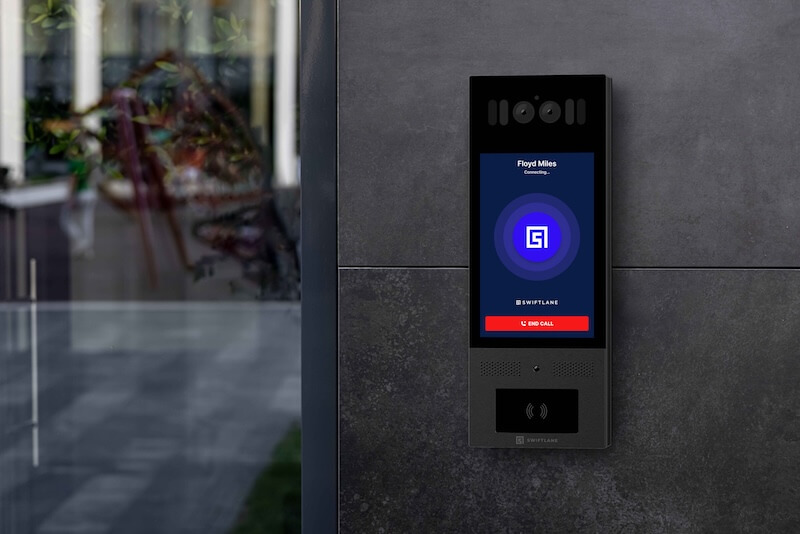
Swiftlane combines mobile app unlock, video intercom, and access control into a single platform, rather than requiring separate intercom and access control systems that must be managed and updated independently.
For multifamily properties, that means a single dashboard for resident directories, visitor and delivery access, and door permissions, instead of syncing changes across multiple vendors whenever a resident moves in or out.
The mobile app supports both video calling and remote unlocking, with a phone call fallback for residents who don’t use the app. Delivery and vendor access can be handled through temporary codes or QR access, so couriers and contractors don’t need a resident to answer every time.
Because access control and intercom run on the same platform, permission changes, whether adding a new resident or revoking access after a move-out, apply across doors, gates, and amenities at once rather than requiring separate updates in separate systems.
Swiftlane is generally the strongest fit for properties that want intercom and access control managed together, or that are already planning an access control upgrade alongside a new intercom. Properties that only need a basic front-door intercom and have no plans to touch access control may find that a simpler standalone system is enough for their needs.
Ready to Compare Systems for Your Building?
If you’re evaluating apartment intercom systems with mobile access, Swiftlane can help you compare options against your building’s specific doors, gates, residents, and delivery workflows. Request a demo or quote to see how it would fit your property.
FAQs
What is an apartment intercom system with mobile access?
It’s an intercom that lets residents answer visitor calls and unlock doors from a smartphone app, in addition to or instead of an in-unit station or landline.
Can residents unlock the door from their phones?
Yes, most mobile-access systems let residents unlock building or unit doors remotely via an app, without being physically at the entrance.
Do residents have to download an app?
Not always. Many systems include a phone-call fallback, so residents without the app can still receive a call and unlock the door using their phone keypad.
Can a mobile intercom work for deliveries?
Yes, most systems support delivery access through temporary codes, QR access, or resident-granted remote entry, so couriers don’t need a resident to answer in person every time. Specific delivery workflows vary by vendor.
What happens if the internet goes down?
This depends on the system. Some systems include offline or backup entry methods, while others may lose remote functionality until connectivity is restored. This is worth confirming directly with any vendor before purchasing.
Can mobile intercoms replace old call boxes?
In most cases, yes, though the building’s existing wiring, door hardware, and network availability affect how straightforward the replacement is.
Are smartphone apartment intercoms secure?
Security depends on the specific system’s encryption, access controls, and the care with which resident and visitor permissions are managed. It’s a fair question to ask any vendor directly during evaluation.
Can one system manage doors, gates, and amenities?
Some systems support multi-door and multi-entrance management from a single platform, while others are built primarily for a single entrance. This is one of the features worth confirming before buying.
What is the best intercom system for a 200-unit apartment building?
At that scale, remote unlock, cloud administration, and multi-door support typically matter most, since staff can’t manually manage access at every entrance. See the provider comparison above for how specific vendors handle this.
How much does an apartment intercom with mobile access cost?
Pricing depends on the number of entrances, existing wiring, hardware tier, and required software features. See the cost drivers section above for details, or request a quote for a building-specific estimate.
References
- National Multifamily Housing Council & Grace Hill, Renter Preferences Survey Report — https://gracehill.com/resources/flyers/renters-preferences-survey-report/
- Parks Associates & Kwikset, Modernizing Multifamily Housing: Retrofitting Access Control (2025) — https://www.prnewswire.com/news-releases/parks-associates-72-of-multifamily-owners-and-operators-report-planning-upgrades-for-smart-building-solutions-especially-access-control-in-the-next-12-months-302418808.html
- Parks Associates & LiftMaster, Multifamily Access: Riding the New Tech Investment Wave — https://www.parksassociates.com/blogs/broadband-communications/parks-associates-over-75-of-key-mdu-decision-makers-plan-on-upgrading-or-replacing-electronic-access-control-solutions
- Rently, 2025 Smart Apartment Trends Report — https://use.rently.com/blog/2025-rently-smart-apartment-trends-report/