If you manage multifamily or mixed-use properties long enough, you’ll eventually face the question of what to do with an old intercom system that technically still works… but barely.
Maybe it’s generating more service tickets than it used to. Maybe residents complain about static or missed calls. Maybe the manufacturer no longer supports it. Or maybe it’s just painfully out of step with how tenants expect to access buildings today.
Whatever the case, the question eventually comes up: What should you actually do with an old intercom system?
Repair it? Replace it? Retrofit it? Remove it entirely?
Drawing on our experience in more than 3,000 deployments across the U.S., this guide breaks down your real options, with a focus on operational impact, cost control, tenant experience, and long-term scalability.
Quick Answer: Intercom Upgrade Options for Older Buildings
Not sure where to start? Here’s the fastest way to match your building’s situation to the right fix:
| Option | Best if… |
| #1 Component Repair | Hardware is under 7 years old and manufacturer parts (e.g., Aiphone, DoorKing) are still in stock |
| #2 2-Wire to Internet Protocol (IP) Retrofit | Multi-conductor or 2-wire copper lines are intact, but you want video/cloud features without running Cat6 to every unit |
| #3 Cloud / Cellular Upgrade (Zero In-Unit Rewiring) | Wiring is degraded or dead: replace only the master door station, with video calls routing directly to resident |
| #4 Complete Rip-and-Replace | Only recommended during full building gut-renovations |
How We Researched This
This guide is based on field experience and deployment patterns across more than 2,000 multifamily buildings in the U.S. We work directly with property managers and operators dealing with legacy intercom systems, including retrofit and full replacement projects. The insights reflect recurring real-world issues such as service ticket trends, installation constraints, tenant behavior, and cost impact. We also draw from aggregated outcomes across past modernization projects. The goal is to reflect what property teams actually see in day-to-day operations, not theoretical scenarios.
Key Takeaways
- If you’re wondering what to do with old intercom system equipment that keeps breaking, it may be time for a bigger change. Ongoing fixes with no long-term plan will only cost you more down the road.
- Full replacement isn’t always needed. In many cases, retrofit or phased upgrades can modernize your system without draining your budget.
- An intercom isn’t just hardware at the door. The right solution should improve security and boost your day-to-day operations.
Table of Contents
- Is Your Intercom Just Old or Is It Becoming a Liability?
- What to Do With an Old Intercom System: 5 Realistic Options
- The Hidden Costs of Keeping an Outdated Intercom
- Retrofit vs. Rip-and-Replace: What Property Managers Should Consider
- 2026 Cost and Disruption Benchmark
- What to Look for in a Modern Intercom System
- Making the Transition Without Disrupting Tenants
- The Bigger Picture: Access Control Is No Longer Just a Doorbell
- When It’s Time to Upgrade
- Final Thoughts
- FAQs
Related Posts
- Apartment Intercom Replacement: What You Need to Know
- Retrofit Intercom System: Complete Guide, Costs, and Options
- 2-Wire Video Intercom Systems: The Complete Retrofit Guide for Apartments
Is Your Intercom Just Old or Is It Becoming a Liability?
Not every older intercom needs immediate replacement. Age alone isn’t the issue. The real question is whether it’s becoming operationally risky.
Here are the signs that your system is crossing that line.
1. Service Tickets Are Increasing
If maintenance requests tied to the intercom are trending upward, that’s your first red flag. Buzzers not working. Doors not releasing. Audio cutting out. Residents missing deliveries.
One isolated repair isn’t a big deal. A steady pattern is.
Track:
- How often your team is troubleshooting the system
- How often you’re calling external vendors
- Whether issues happen during peak hours (evenings, weekends)
Equipment issues are one thing. But if the intercom is consuming staff time on a weekly basis, that’s now an operational problem.
Based on our experience supporting property managers across more than 2,000 buildings annually in America, we’ve observed that intercom-related service tickets tend to rise sharply once systems reach the 12- to 15-year mark.
At scale, this often translates into thousands of dollars in avoidable maintenance and administrative costs each year across multifamily portfolios.
2. Replacement Parts Are Hard to Source
Many legacy intercom manufacturers discontinue models after 10 to 20 years. When parts become backordered or obsolete, repairs get slower and more expensive.
You may find that boards are no longer manufactured or wiring components are difficult to match. If that’s not enough, you learn that only one technician in your region is willing to service it.
This vendor dependency increases risk. If your entire access point relies on aging, unsupported hardware, that’s a serious vulnerability.
Common Hardware Failures in Legacy Video Intercoms
Beyond general wear, legacy video intercoms tend to fail in a few predictable ways as they age:
- Button wear. Mechanical call buttons see thousands of presses over a decade-plus of service. Contacts corrode, springs weaken, and buttons either stop registering presses or stick and trigger false calls.
- Distorted or dropped audio from oxidized wiring. Copper wiring exposed to moisture or temperature swings at exterior entry points oxidizes over time, increasing resistance and degrading audio quality. Static, dropped calls, and one-way audio are common symptoms.
- Moisture intrusion. Entry panels are constantly exposed to rain, humidity, and temperature cycling. Aging door station gaskets and seals fail, letting moisture reach internal electronics, which is a common cause of intermittent faults that get harder to diagnose over time.
- Camera sensor degradation. On video-enabled units, image sensors lose clarity and low-light performance as they age, and older sensors may not have been built for today’s resolution or night-vision expectations in the first place.
Individually, these are minor annoyances. Together, they’re what’s driving the rising service-ticket pattern described above.
3. Residents Are Propping Doors Open
This is a big one.
When intercom systems become unreliable or inconvenient, residents start bypassing them. Doors get propped. Delivery drivers get waved in. Visitors tailgate.
Now you’re no longer dealing with outdated technology. You’re dealing with compromised building security.
We’ve seen this become a recurring issue in larger multifamily properties where residents lose confidence in the entry system. In one 200+-unit community in Phoenix, management reported a noticeable drop in door-propping incidents within months of upgrading the building’s access system.
4. You Have No Audit Trail
Older analog systems often provide zero visibility into who accessed the building and when. In today’s environment, that’s increasingly problematic.
If an incident occurs and you can’t review access logs or footage, you may face:
- Liability exposure
- Insurance complications
- Resident dissatisfaction
- Owner frustration
Modern expectations around access control have changed. Systems without tracking and verification capabilities can become a risk factor.
5. It’s Hurting Leasing Tours
Prospective residents notice the entry experience immediately.
If the front entry feels clunky or dated during a showing, it creates subtle friction. It may not kill the deal, but it affects perception. In competitive rental markets, details matter.
What to Do With an Old Intercom System: 5 Realistic Options
Let’s move beyond generic advice. Here are the practical paths forward and when they actually make sense for property managers.
Option 1: Continue Repairing (Short-Term Hold Strategy)
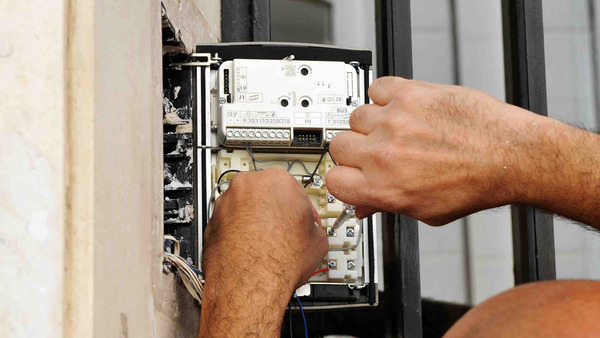
Sometimes the smartest move is to do nothing (in a strategic way). This makes sense if:
- The property is scheduled for renovation within 12 to 24 months
- Ownership plans to sell
- The building has low traffic and minimal access complexity
- Repair costs are still manageable and predictable
But be honest with the math.
If you’re paying for technician visits every month, you’re likely in a slow bleed scenario. Short-term repairs only make sense when there’s a defined long-term plan.
Without one, you’re just delaying a larger decision.
Option 2: Retrofit Using Existing Wiring
Retrofitting can be an excellent middle ground.
You can reuse existing wiring while you’re upgrading your entry hardware and backend system. This can minimize disruption and cost less than a full rip-and-replace project.
Retrofit works best when your wiring is still structurally sound and minimizing downtime is a priority.
It’s also a good approach if you have budget cycles that require phased investment or if you’re upgrading multiple properties gradually.
This approach can modernize functionality while avoiding a full overhaul of your infrastructure.
But you’ll need to assess wiring integrity and compatibility early. Remember that not all legacy systems are retrofit-friendly.
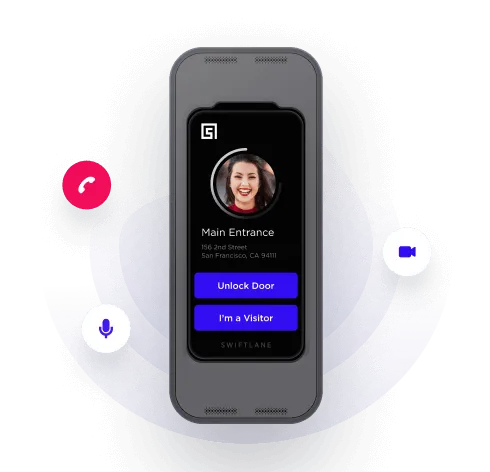
Swiftlane’s SwiftCall Connect is one example of a retrofit-first solution. It replaces costly plain old telephone service (POTS) telephone lines with a VoIP and cellular-connected platform, modernizing intercom functionality without replacing the existing hardware. It’s designed specifically for properties that want to upgrade incrementally.
Are Analog Intercoms Outdated in 2026?
Increasingly, yes, and the reason has less to do with the intercom hardware itself than with the phone network it depends on.
Most legacy dialer-based intercoms rely on copper POTS lines to route calls. Major carriers are accelerating the retirement of legacy copper infrastructure in favor of fiber, IP, and wireless alternatives, and the FCC’s March 2026 order removed several regulatory hurdles that previously slowed that process. AT&T alone has requested authority to discontinue legacy copper-based voice service for roughly 90,000 customers starting in November 2026, and began physically decommissioning copper infrastructure across about 10% of its network footprint in June 2026. Verizon, Lumen, Frontier, and CenturyLink have filed similar retirement notices, with most carriers targeting full copper retirement sometime between 2026 and 2029.
For buildings still running analog dialer intercoms, this shows up in two ways. First, carriers are increasingly unwilling to install or repair copper lines in areas slated for retirement, making service calls slower and sometimes impossible. Second, businesses that once paid $30 to $60 per month for a POTS line are, in many markets, now seeing monthly charges exceeding $300 per line as regulatory price protections are lifted. It’s a cost that scales quickly across a portfolio with multiple analog-dependent entry systems.
In practical terms: an analog intercom that still works today isn’t necessarily “outdated” as hardware, but the phone infrastructure underneath it is being phased out on a carrier-driven timeline outside any property’s control. That’s a strong argument for migrating to IP, cellular, or cloud-based calling before the line itself becomes unavailable or prohibitively expensive, not because the buzzer stopped working.
Option 3: Full Replacement
A complete replacement is a must when your wiring has deteriorated, parts have been discontinued, security gaps have become significant, or the building’s access needs have evolved.
Full replacement is more disruptive and costly upfront. But it can standardize your tech stack and eliminate recurring maintenance headaches.
For portfolio managers, replacement often becomes part of a broader strategy to modernize multiple properties.
In our experience, we’ve seen that full replacements at mid-rise buildings in the 150- to 300-unit range can take 2 to 4 days to install with minimal disruption when phased properly.
Option 4: Decommission and Rely on Alternative Access
In rare cases, properties shift away from traditional intercom systems entirely. This may work for:
- Low-rise properties with minimal foot traffic
- Buildings transitioning to fully mobile-based access
- Gated communities using alternative access control methods
That said, completely eliminating a visitor communication system isn’t practical for most multifamily buildings. Visitor management remains essential.
Option 5: Phase Upgrades Across Your Portfolio
If you’re managing multiple properties with old and new systems, you don’t need to upgrade everything at once. Many operators prioritize high-traffic buildings first, align upgrades with budget approvals, standardize new installations moving forward, and gradually retire legacy systems.
With a phased strategy, you can reduce the financial strain while conducting smoother transitions across your portfolio.
Quick Decision Guide: What to Do With an Old Intercom System
| Option | Best For | When It Makes Sense | Watch Out For |
| Continue Repairing (Short-Term Hold) | Properties nearing sale or renovation | • Renovation planned within 12 to 24 months • Predictable repair costs • Low traffic buildings | • “Slow bleed” maintenance costs • Parts discontinuation • Increasing service tickets |
| Retrofit Using Existing Wiring | Budget conscious upgrades with minimal disruption | • Wiring is structurally sound • Desire to modernize without full rip-and-replace • Phased CapEx planning | • Compatibility limitations • Hidden wiring degradation • Partial modernization may limit scalability |
| Full Replacement | Long-term hold assets and high-traffic buildings | • Wiring deteriorated • Security gaps present • Parts discontinued • Modernization initiative underway | • Higher upfront CapEx • Temporary installation disruption • Resident communication required |
| Decommission and Shift to Alternative Access | Select low-complexity properties | • Low-rise buildings • Mobile-first access model • Minimal visitor traffic | • Visitor management gaps • Delivery friction • Potential security concerns |
| Phase Portfolio Upgrades | Multi-property operators | • Standardizing tech stack over time • Aligning with budget cycles • Reducing operational inconsistency | • Extended transition period • Managing mixed systems across properties |
The Hidden Costs of Keeping an Outdated Intercom
This is where many operators underestimate the impact. An old intercom doesn’t just “sit there.” It quietly drains resources.
Let’s break that down.
1. Technician Call-Out Costs
Emergency visits. After-hours troubleshooting. Weekend service rates. Even modest call-out fees add up annually. Multiply that by several buildings, and the expense becomes material.
2. Staff Time
How often does your on-site team:
- Reset the system manually?
- Field resident complaints?
- Coordinate with vendors?
- Let visitors in manually?
Staff time is an operational cost. If your team spends hours each month babysitting aging hardware, that’s inefficiency. In some cases, the operational impact shows up most clearly during move-ins. Property teams have reported that manual intercom setup and tenant entry workflows can add up to 1 hour per unit.
Across multiple move-ins, that translates into meaningful staff time spent on repetitive administrative work that could otherwise be automated.
3. Resident Frustration
Delivery drivers unable to connect. Guests stuck outside. Audio issues during calls.
Small frustrations accumulate. In renewal conversations, residents rarely say, “We’re leaving because of the intercom.” But friction contributes to churn. Retention is cheaper than acquisition.
4. Security Exposure
Without video verification or access logs, it’s harder to investigate incidents. Modern systems often include time-stamped entry logs, video snapshots, and remote monitoring. Legacy systems don’t.
That gap can become a liability issue, not just a convenience issue.
5. Brand Perception
Access experience is part of your property’s brand. Outdated entry systems signal deferred maintenance, even if the rest of the building is well-managed.
Remember that perception affects pricing power.
What This Looks Like in Real Multifamily Operations
These costs aren’t theoretical. In a multifamily portfolio case, upgrading a legacy intercom system resulted in approximately $8,290 in annual operational savings across maintenance, phone line costs, and reduced manual workflows.
Breaking it down further:
• Maintenance expenses dropped from $2,658 to $471 over four months, translating to roughly $6,600 in annual savings
• Eliminating legacy phone line dependencies saved an additional $360 per year
• Move-in processing time was reduced, with some properties reporting up to one hour saved per unit during tenant onboarding
In many cases, these savings come less from a single cost reduction and more from eliminating small recurring inefficiencies that accumulate over time.
Retrofit vs. Rip-and-Replace: What Property Managers Should Consider
This decision deserves careful evaluation. Here are the factors that matter most.
Wiring Condition
Have a qualified technician assess the insulation integrity, voltage stability, and compatibility with modern systems. Reusing wiring saves money. But only if it’s safe and reliable.
What to Do About the Old In-Unit Wall Station
One detail that’s easy to overlook until installation day: what happens to the old in-unit intercom station embedded in the wall.
Most legacy systems have a wall-mounted handset or panel inside each unit, wired into the building’s original intercom cabling. When you retrofit or replace at the door, that in-unit hardware is being removed or bypassed, which leaves an empty electrical box and a visible footprint (often a different size or shape than any new unit) in the resident’s wall.
Property managers handle this one of two ways:
- Blanking plates or trim covers. A properly sized blank cover plate over the existing electrical box is the faster, lower-cost option, and it keeps the box accessible if wiring is ever reused. This is the preferred route for turnover units or portfolios doing this at scale.
- Sheetrock patching. For a fully finished look (particularly in occupied units or higher-end properties), some teams opt to remove the box, patch and texture the drywall, and repaint. This costs more in labor and time per unit but leaves no visible trace of the old system.
Deciding which approach to use portfolio-wide (rather than case by case) before the rollout starts tends to save a lot of coordination headaches. It’s a small detail, but it’s one of the more common surprises property managers run into mid-project.
Internet Infrastructure
Many modern apartment intercoms rely on cloud connectivity. Ensure:
- Reliable broadband at entry points
- Backup power considerations
- Secure network configuration
Connectivity is foundational to performance.
Installation Disruption
Minimize disruption by communicating early with residents and scheduling work during low-traffic hours. When needed, you should be prepared to grant temporary access. Good planning can reduce complaints during the transition.
Portfolio Standardization
If you manage multiple buildings, consistency matters. Using different systems across properties complicates training, support, vendor coordination, and reporting. Standardization simplifies operations long term.
Costs vary widely depending on which path you take (a cloud/cellular front-door retrofit, a 2-wire video intercom system retrofit or a full hardwired re-pull will land in very different budget ranges). See the 2026 Cost and Disruption Benchmark below for a breakdown by approach. For a full cost analysis specific to your building type, see our apartment intercom replacement cost guide.
2026 Cost and Disruption Benchmark
Getting a realistic sense of cost helps set expectations before you call a vendor. Actual pricing varies by building size, wiring condition, and unit count, but here’s a general range for what property managers can expect in 2026:
| Approach | Typical Cost | Notes |
| Routine Repair / Diagnostic | $250 to $600 per visit – NYC-market pricing (Vertex Security, Connextivity); expect somewhat lower in lower-cost-of-living regions | Frequently abandoned once parts become obsolete (see “Replacement Parts Are Hard to Source” above) |
| Cellular/Cloud Front-Door Retrofit | $800 to $3,000 per door – Sources: Vertex Security, Honor Security (video-upgrade-compatible wiring) | Replaces the entry panel only; zero in-unit disruption |
| 2-Wire IP Retrofit with Adapters | $1,500 to $7,000 per door – Source: Vertex Security (range reflects wireless-backhaul vs. full IP hardware approaches) | Depends on existing wiring condition |
| Full Hardwired Cable Re-Pull | $15,000 to $50,000+ total (multi-entry property) – Sources: Honor Security (national); Umbrella Security (Chicago) per-unit breakdown corroborates | Involves drywall patching and tenant scheduling coordination |
Ranges above reflect per-door or per-entrance industry pricing where noted; totals will scale with the number of entry points in your building.
What to Look for in a Modern Intercom System
Apart from aesthetics, you should also look into functionality that supports your operations. Here’s what matters most for property managers:
Cloud-Based Management
Cloud-based systems allow remote updates, user management, and oversight without on-site server infrastructure. This reduces hardware complexity and simplifies scaling.
Remote Access Control
Your team should be able to:
- Grant access remotely
- Manage credentials centrally
- Deactivate users instantly
Flexibility reduces friction.
Video Verification
Two-way video and entry snapshots enhance both security and resident confidence. It also creates a documented record of access events.
Mobile Credential Support
Residents increasingly expect smartphone-based access options. This reduces reliance on physical keys or fobs and streamlines move-ins and move-outs. If your building still issues fobs, the recurring cost of replacements and reprogramming belongs in the comparison too. Our breakdown of key fob entry system cost walks through those numbers over a three- to five-year window.
Portfolio-Level Dashboard
For regional managers and asset managers, centralized visibility is critical. Being able to monitor and manage multiple properties from one platform improves efficiency.
Integration Capabilities
Look for systems that integrate with:
- Elevator controls
- Access control systems
- Property management software (PMS)
- Smart locks
Disconnected tech stacks create operational silos.
You can also go deeper by reading our guide on the full capabilities of modern intercom systems.
Making the Transition Without Disrupting Tenants
One concern property managers often have is disruption. You can minimize it by communicating early and clearly with residents. You should be ready to provide temporary access credentials if needed and make sure to train on-site staff ahead of the rollout.
It also helps if you schedule installation in phases and set clear expectations about timelines. When managed properly, upgrades often generate positive resident feedback rather than resistance.
The Bigger Picture: Access Control Is No Longer Just a Doorbell
Intercom systems used to be standalone devices. Today, they’re part of a broader access control strategy.
They intersect with:
- Delivery management
- Visitor tracking
- Remote property oversight
- Resident mobile access
- Security audits
Treating your intercom as an isolated hardware issue misses the bigger operational opportunity.
When It’s Time to Upgrade
If two or more of the signs above apply to your property, the cost of continued inaction is likely higher than the cost of change.
Modern platforms are designed for multifamily operators who need centralized, cloud-based control, not just a buzzer at the front door.
The right upgrade doesn’t just replace hardware. It improves operational efficiency, strengthens security posture, and aligns your property with current resident expectations.
Final Thoughts
An old intercom system doesn’t always require immediate replacement. But ignoring mounting warning signs can quietly increase operational costs and security exposure over time.
The right path depends on your building’s condition, budget cycle, ownership strategy, and portfolio complexity.
Whether you repair, retrofit, replace, or phase upgrades across properties, the important thing is to be proactive rather than being reactive.
When you do decide to modernize, the goal shouldn’t be “new hardware” alone. It should be smarter access control.
Swiftlane’s modern video intercom and access control system can integrate into existing buildings and centralize management. It can support remote management, improve entry visibility, and scale across your portfolio without needing to overhaul your infrastructure.
Curious how modern access solutions can fit into your existing buildings? See how Swiftlane fits into your existing building infrastructure, without requiring a full rip-and-replace. Book a demo to walk through a real deployment scenario with our team.
FAQs
Should I repair or replace an old intercom system?
It depends on repair frequency, parts availability, and your ownership timeline. If you’re calling a technician more than once a quarter, parts are discontinued, or the system lacks audit trails and video, replacement or retrofit is likely more cost-effective long term.
How much does it cost to replace an apartment intercom system?
Hardware can range from $1,500 to $5,000. Installation adds up to $3,000 for standard setups. Full replacement across multi-entry or multi-building properties can reach $15,000 or more depending on wiring, access points, and integration requirements.
Can I retrofit an old intercom system instead of replacing it?
Yes, in many cases. If your existing wiring is structurally sound, a retrofit can modernize functionality at lower cost than full replacement. Swiftlane’s SwiftCall Connect is designed specifically for this scenario. It replaces legacy telephone-line intercoms with a cloud-connected platform while reusing existing infrastructure.
How do I know when an intercom system is a security liability?
Key warning signs include no access logs or audit trails, residents propping doors open because the system is unreliable, no video verification of visitors, and no remote management capability. When the intercom contributes to unauthorized access or makes incident investigation impossible, it has become a security risk.
How long do apartment intercom systems last?
Most intercom systems last between 10 and 20 years depending on usage, maintenance, and environmental conditions. But many systems become operationally outdated before they fully fail, especially if replacement parts or manufacturer support become difficult to find.
Is it better to retrofit or fully replace an intercom system?
Retrofitting is often the better option when existing wiring is still in good condition, and you want to minimize disruption. Full replacement may make more sense when wiring has deteriorated, security gaps are significant, or the property is undergoing a larger modernization project.
Can outdated intercom systems affect tenant retention?
Yes. Residents may tolerate occasional issues, but recurring delivery problems, missed visitor calls, and unreliable entry access create ongoing frustration. Over time, those small inconveniences can negatively impact tenant satisfaction and lease renewals.
What features should property managers prioritize in a modern intercom system?
Property managers should prioritize cloud-based management, remote access control, video verification, mobile credentials, audit trails, and integration capabilities with existing access control systems. Portfolio-level visibility is also important for operators managing multiple properties.
Can intercom upgrades be done without disrupting residents?
In most cases, yes. Proper planning helps minimize disruption during installation. Many property managers schedule work in phases, communicate timelines clearly, and provide temporary access solutions during the transition.
Are cloud-based intercom systems better than traditional systems?
Cloud-based systems offer several operational advantages, including remote management, centralized updates, easier scalability, and reduced on-site infrastructure requirements. They also make it easier for property teams to manage access across multiple buildings from a single platform.