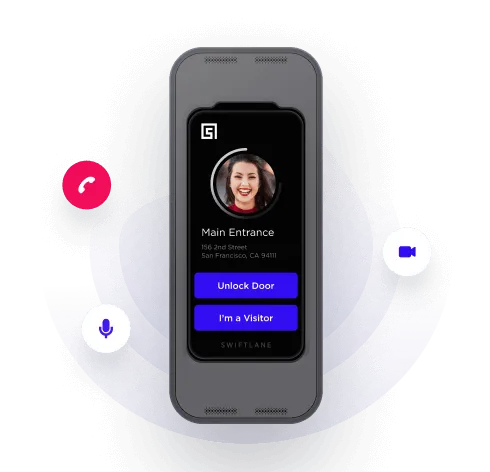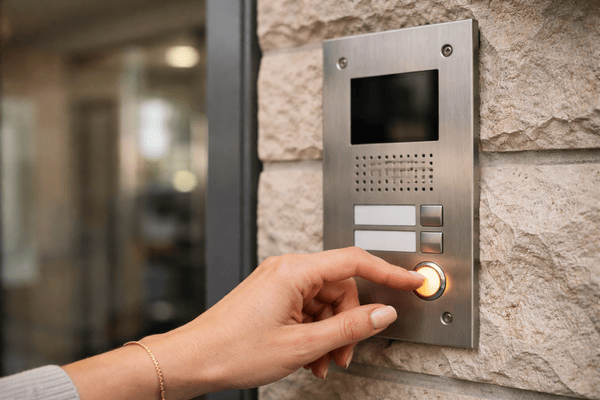
What is an apartment doorbell intercom system?
An apartment doorbell intercom system is a building access system that allows visitors at an entry point to contact residents or property staff and request entry. Modern systems enable residents to verify visitors through audio or video and unlock doors remotely using mobile apps or connected devices. These systems are commonly used in multifamily buildings to manage visitor access, improve security, and streamline entry operations.
Are you considering replacing an apartment doorbell intercom system that still relies on aging copper phone lines and legacy hardware?
Many of these systems continue to function, but they’re becoming increasingly expensive to maintain, difficult to scale, and less reliable as telecom providers retire copper infrastructure. As a result, property teams often face reliability issues, recurring service calls, and missed deliveries – common reasons many multifamily buildings begin planning an apartment doorbell intercom system replacement.
At the same time, resident expectations have changed. Renters now expect video verification, mobile access, and the ability to manage visitors remotely, rather than relying on in-unit buzzers or front-desk coordination.
That gap between legacy capabilities and modern expectations is where much of today’s operational friction originates. For property teams, the challenge is no longer just keeping an old system running. It’s ensuring the apartment doorbell intercom system supports how the building operates today.
Working closely with multifamily operators, the Swiftlane team has helped modernize access at properties ranging from large-scale deployments at Grand Castle Apartments to multi-property upgrades with Atlas Property Group. This guide explains when it’s time to replace a legacy apartment doorbell intercom system, explores practical retrofit options, and outlines what property managers should consider before upgrading.
How We Researched This
This guide combines firsthand experience supporting over 3,000 multifamily access control deployments annually with insights gathered from ongoing conversations with property managers and operators.
It also draws on product implementation experience across a range of building types, helping us focus on the operational tradeoffs, common pain points, and practical considerations that matter when planning an apartment doorbell intercom system replacement or retrofit.
Key Takeaways
- Many apartment doorbell intercom systems still rely on legacy hardware and copper phone lines, making replacement increasingly necessary.
- Replacing a legacy intercom isn’t just about security. It can reduce missed deliveries, resident complaints, and staff workload.
- Cloud-based apartment doorbell intercom systems allow residents to verify visitors and unlock doors remotely while simplifying property management.
- When planning a replacement, focus on long-term scalability, retrofit options, and total cost of ownership, not just upfront hardware costs.
Table of Contents
- What Is an Apartment Doorbell Intercom System?
- What Are the Most Common Problems With Apartment Doorbell Intercom Systems?
- How Modern Apartment Doorbell Intercom Systems Have Changed
- Retrofit Options for Replacing an Old Apartment Doorbell Intercom
- Comparing Apartment Intercom Vendors
- How an Apartment Doorbell Intercom System Impacts NOI
- What Does an Apartment Doorbell Intercom System Cost?
- 7 Signs It’s Time to Replace Your Apartment Doorbell Intercom System
- Questions to Ask Before Choosing a New Intercom System
- Related Guides for Choosing the Right Apartment Intercom
- Why Does an Apartment Doorbell Intercom System Matter?
- FAQs
Related Posts
- Doorbell Intercom Systems: The Game-Changing Building Security Guide
- Apartment Buzzer Systems – Buyer’s Guide and Checklist
- Doorbell Cameras vs Doorbell Intercoms
What Is an Apartment Doorbell Intercom System?
An apartment doorbell intercom system allows a visitor at the building entrance to contact a resident, who can then verify the visitor and grant access remotely.
While the core function hasn’t changed, how these systems operate has evolved.
Legacy vs. Modern Apartment Doorbell Intercom Systems
| Feature | Legacy Systems | Modern Systems |
| Communication | Audio-only | Two-way video and audio |
| Call Routing | In-unit handset or landline | Resident smartphones (anywhere) |
| Directory | Physical directory tied to unit numbers | Digital, cloud-managed directory |
| Connectivity | Hardwired (copper phone lines) | Internet or cellular-based |
| Access Control | Basic door release | Remote unlock, mobile credentials |
| Management | On-site, manual updates | Cloud-based dashboards |
| Visibility | No logs or tracking | Access logs and audit trails |
| Delivery Handling | No built-in support | Delivery PINs or temporary access codes |
| Integration | Standalone system | Integrates with access control and keyless entry |
What Are the Most Common Problems With Apartment Doorbell Intercom Systems?
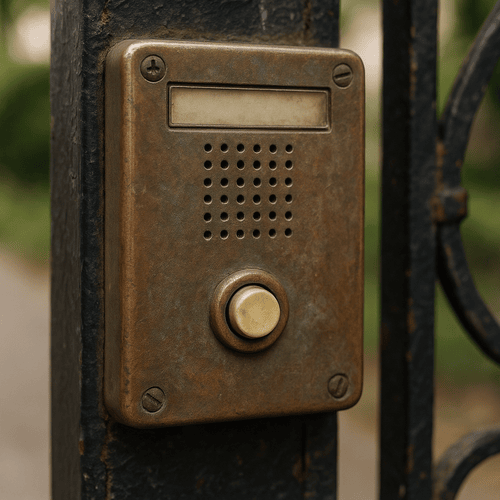
If you’re evaluating your current system, chances are you’re already experiencing operational friction. Here are some of the most common issues in legacy intercom setups:
1. Missed Calls, Missed Deliveries, and Frustrated Residents
Traditional systems only ring a landline or in-unit handset. If the resident isn’t home, they can’t answer.
That leads to:
- Missed package deliveries
- Delivery drivers leaving parcels unattended
- Residents blame management for theft
In a world of daily e-commerce, that’s a recurring headache.
2. Aging Copper Infrastructure
Many older apartment intercom systems rely on copper phone lines. Telecom providers across the U.S. are actively phasing these out.
When those lines go down:
- The intercom stops working.
- Repair timelines can stretch for weeks.
- Replacement parts may be hard to source.
You’re stuck maintaining outdated infrastructure that wasn’t designed for modern usage.
Real-World Example
At Grand Castle Apartments in Grandville, Michigan, the property team faced a similar issue with an aging legacy intercom system that had become increasingly unreliable over time. Staff were regularly dealing with manual access code updates, hardware troubleshooting, and inconsistent system performance across multiple entry points. Over time, these recurring issues led to ongoing maintenance and added friction to day-to-day operations for both residents and on-site teams.
3. Constant Service Tickets
Common complaints include:
- Static in audio
- Buttons that don’t respond
- Directory lighting failures
- Residents not receiving calls
- Door release malfunctions
Each ticket costs staff time. Multiply that across dozens or hundreds of units, and the operational drain becomes clear.
4. No Video Verification
Audio-only systems leave room for risk. Residents may:
- Buzz in someone without being certain who it is.
- Let in tailgaters.
- Feel uneasy about after-hours visitors.
5. No Audit Trail or Liability Protection
If there’s an incident in the building, can you answer:
- Who entered?
- When?
- Who granted access?
Legacy doorbell intercom systems typically offer no logs. That leaves property managers exposed when disputes arise.
6. Staff Interruptions and Front Desk Overload
In mid-rise and high-rise buildings, staff often end up acting as gatekeepers.
Instead of focusing on leasing, maintenance coordination, or resident support, they:
- Field delivery access requests
- Let in vendors
- Manage visitor flow manually
An outdated system quietly eats into productivity.
How Modern Apartment Doorbell Intercom Systems Have Changed
The biggest shift isn’t just in the hardware. It’s the move from isolated building buzzers to connected, software-driven access systems.
Many modern apartment doorbell intercom systems are now cloud-managed and mobile-connected, which changes how both residents and property teams interact with the building.
Mobile-Based Call Routing
Instead of routing calls to a landline or in-unit handset, the system routes them directly to the resident’s smartphone. It still works when residents are off-site, which is increasingly the norm.
Residents can answer calls and unlock doors remotely, while property teams see fewer missed deliveries and fewer access-related complaints.
Two-Way Video and Audio
Video intercom systems allow residents to see and speak with visitors before granting access. This adds context that audio-only systems can’t provide. It also helps residents make faster, more confident decisions at the door, especially during after-hours entries.
Cloud-Based Management
Modern systems give property teams centralized control.
Staff can update directories instantly, issue or revoke credentials, and generate temporary access codes without touching physical hardware. In our experience, this shift reduces the operational burden of managing access across multiple entry points.
Delivery and Vendor Access Solutions
Package theft remains a persistent issue nationwide. In 2024 alone, 58 million packages were reported stolen, according to the US Postal Service (USPS).
Modern systems help reduce exposure through one-time PINs, time-restricted access, remote unlock, and audit logs that track entry activity.
Integration with Broader Access Control
Today’s intercom systems no longer operate in isolation. They integrate with keyless entry, smart locks, parking gates, and credential platforms. This creates a unified access ecosystem rather than a patchwork of disconnected systems, making it easier to manage at scale.
Digital Resident Directories
One of the biggest improvements over legacy apartment doorbell intercom systems is the shift from physical directories to cloud-managed resident directories. Instead of updating names manually at each entry panel, you can make changes from a centralized dashboard.
For example, in a 60-unit building with separate front and side entrances, a single resident move-out can be reflected across both directories in minutes instead of requiring somebody from your team to visit each panel.
This can become even more valuable if you’re managing a larger community where resident turnover is ongoing. Keeping directories synchronized across multiple entrances helps reduce visitor confusion while saving your staff from making the same update multiple times.
Package Room and Locker Integration
Many apartment communities have added package rooms or smart lockers to keep pace with growing delivery volumes.
Modern apartment doorbell intercom systems can support these spaces by issuing one-time PINs or remote access for delivery drivers, allowing them to reach designated delivery areas without exposing the rest of the property.
In practice, this creates a more controlled delivery workflow. Rather than sharing a permanent access code with multiple carriers or asking office staff to let drivers in throughout the day, deliveries can be directed to a specific package room. At the same time, every entry is recorded in the access log.
That gives residents greater confidence that couriers delivered packages securely and provides property teams with a clear record if questions arise.
Retrofit Options for Replacing an Old Apartment Doorbell Intercom
One of the biggest concerns when replacing apartment doorbell intercom systems that still rely on copper phone lines is whether the upgrade will require extensive rewiring or major construction.
In many cases, the answer is no. Modern intercom platforms offer several deployment options, from systems that reuse portions of the existing infrastructure to cellular and cloud-based solutions designed specifically for retrofit projects.
The right approach depends on your building’s wiring, internet connectivity, and long-term operational goals. The comparison below highlights the most common retrofit options and when each is the best fit.
| System Type | Best Retrofit Scenario | Can Reuse Old Wiring? | Works Without Landlines? | Resident App Support? | When to Choose It |
| Traditional Wired | Existing wiring is in good condition and you’re replacing aging intercom hardware | Often, depending on wiring type and compatibility | No (many legacy systems still rely on telephone infrastructure) | No | When preserving an existing wired system is more practical than modernizing the entire access platform |
| Wi-Fi-Based | Smaller buildings with reliable managed Wi-Fi and limited rewiring needs | Sometimes | Yes | Yes | When internet coverage is strong and a lower-cost retrofit is the priority |
| Cellular / LTE | Older buildings where running new network cabling would be expensive or disruptive | Usually | Yes | Yes | When you need a fast retrofit with minimal infrastructure changes |
| Cloud-Managed (Platform-Based) | Properties modernizing visitor management and access control across one or more buildings | Depends on the hardware and existing infrastructure | Yes | Yes | When long-term scalability, centralized management, and remote administration are priorities |
Comparing Apartment Intercom Vendors
Choosing an apartment doorbell intercom system isn’t just about hardware or connectivity. Vendors also differ in their deployment approach, software capabilities, support model, integrations, pricing, and long-term scalability.
If you’re evaluating specific apartment intercom vendors, see our Apartment Intercom Vendor Guide, where we compare leading providers, explain their strengths and tradeoffs, and outline the questions property managers should ask before making a decision.
How an Apartment Doorbell Intercom System Impacts NOI
The decision to upgrade your intercom shouldn’t be based on security alone. It also has direct operational and financial implications that show up in day-to-day NOI performance.
Reduced Package Theft
Stolen packages create a ripple effect for property teams. They drive resident complaints, increase negative online reviews, and pull staff into time-consuming resolution cycles.
Research shows that apartment and condo residents are 3 to 3.5 times more likely to experience package theft than single-family homeowners, which makes delivery security a disproportionate operational burden for multifamily properties.
Improved access control and delivery verification help reduce these incidents and limit avoidable support workload.
Fewer Lockouts and Access Issues
Mobile-based systems reduce the frequency of after-hours lockout calls, manual key handoffs, and reprogramming of physical fobs.
In our experience from 3,000+ deployments every year, these “small” access issues often represent a disproportionate share of maintenance tickets. Over time, reducing them meaningfully lowers operating costs.
Staff Efficiency
When teams spend less time letting in vendors, troubleshooting broken panels, or managing outdated directories, they can focus on higher-value work like leasing and resident retention.
In busy communities, even small reductions in daily access-related interruptions can translate into noticeable gains in on-site productivity.
Parks Associates research on connected building systems found a 20% average increase in operating efficiency and a 21% decrease in safety and security incidents among multifamily properties that deployed connected access solutions.
Our experience in large multifamily projects also tells us that much of the time savings comes from eliminating repetitive credential management and manual updates across systems.
The Grand Castle Apartments case study we mentioned earlier is a good example of how automation reduced the need for ongoing manual administrative work, allowing staff to shift more attention to resident-facing priorities.
Higher Perceived Property Value
Prospective residents increasingly expect video intercoms, mobile access, and keyless entry as baseline features.
According to the NMHC/Grace Hill 2024 Renter Preferences Survey, 65% of renters said they were interested in or wouldn’t rent without video doorbells, and 67% said the same about keyless smart locks.
In competitive rental markets, properties with modern access systems are often perceived as better managed and more secure. That perception can support stronger leasing velocity and reduce price sensitivity.
Stronger Liability Protection
Access logs and video records provide a clear audit trail of who entered and when. This documentation can be critical during disputes or incident reviews, giving ownership and management better visibility and protection when issues arise.
What Does an Apartment Doorbell Intercom System Cost?
Pricing for an apartment doorbell intercom system varies depending on building size, installation complexity, and system features. Typical cost considerations include (with ballpark ranges for cost components):
- Hardware. Entry panels, cameras, and control modules can range from $500 to $2,500 per door depending on functionality.
- Installation. Mounting, wiring, and setup generally run $100 to $500 per door, with higher costs for retrofits.
- Software / Platform Fees. Cloud-based management and mobile access subscriptions can cost $2 to $10 per unit per month.
- Maintenance. Ongoing support, updates, and potential repairs may add $500 to $2,000 annually for the property.
These estimates can help property managers plan budgets and evaluate the total cost of ownership, rather than focusing solely on upfront expenses. You should also ask yourself these questions:
- How much are we spending right now on repairs?
- How much of our staff time is spent managing the existing system?
- What are we losing because of dissatisfied residents?
Sometimes the cost of not upgrading is higher than the upgrade itself.
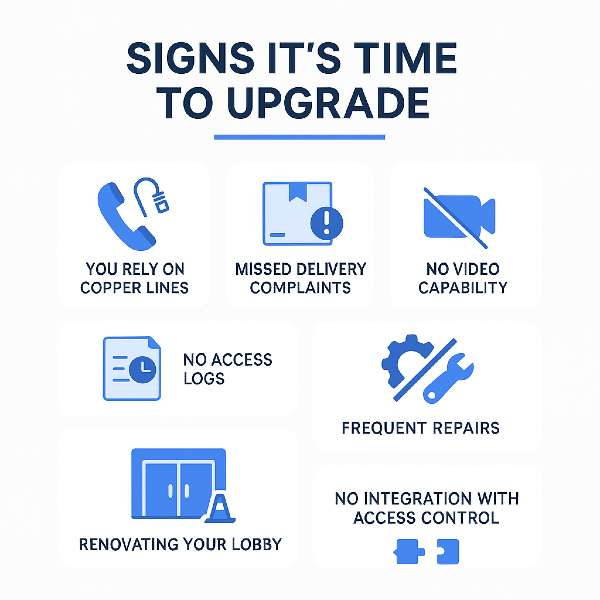
7 Signs It’s Time to Replace Your Apartment Doorbell Intercom System
Questions to Ask Before Choosing a New Intercom System
Before signing with any vendor, clarify:
- Can the system reuse existing wiring?
- What happens if internet service goes down?
- Is cellular backup available?
- Are software updates included?
- How long is the contract term?
- What is the support response time?
- Does the system scale across multiple properties?
- Is there vandal-resistant hardware?
- How easy is it to onboard and offboard residents?
Related Guides for Choosing the Right Apartment Intercom
If you’re still comparing options, these guides can help you choose the next step based on what you’re trying to solve:
- Comparing top systems? See our guide to the best apartment intercom systems.
- Comparing providers? Review our apartment intercom vendor comparison.
- Planning an upgrade? Read the apartment intercom system upgrade guide.
- Need to understand door unlock wiring? See our apartment intercom with door release guide.
Why Does an Apartment Doorbell Intercom System Matter?
An apartment doorbell intercom system is more than a buzzer. It’s a core part of building infrastructure that impacts security, operations, and resident experience. It controls entry, supports mobile and video access, and reduces staff workload by automating visitor and delivery management.
It also helps streamline vendor coordination, improve package handling, and strengthen property perception. At the same time, access logs provide visibility that can support incident reviews and liability protection.
Modern systems have evolved into software-driven platforms that unify access across the property. Instead of operating in isolation, intercoms now connect with smart locks, keyless entry, and broader access control systems, creating a more centralized approach to building management.
For property managers evaluating their next upgrade, the key question isn’t just “Does it ring?” It’s whether the system makes the property easier to manage and more aligned with today’s resident expectations.
If you’re exploring an upgrade, connect with Swiftlane to see how modern systems work in practice to determine what fits your property best.
FAQs
What are the benefits of apartment doorbell intercom systems?
Apartment doorbell intercom systems help control who enters the building while making it easier for residents to receive guests and deliveries. Modern systems can also reduce staff workload by supporting remote access, digital credentials, and centralized management.
How do apartment doorbell intercom systems work?
When a visitor arrives, they use the entry panel to contact a resident or property staff member. The recipient can verify the visitor through audio or video, depending on the system, and unlock the door remotely if appropriate.
What replacement options are available for an old apartment doorbell intercom?
Property managers can replace a legacy apartment doorbell intercom system in several ways, depending on the building’s existing infrastructure and long-term goals. Some retrofit projects reuse portions of the existing wiring while replacing the entry panel. In contrast, others use Wi-Fi, cellular, or cloud-managed systems that minimize new cabling and eliminate the need for copper phone lines. The best replacement option depends on factors such as your building’s wiring, internet connectivity, desired features, budget, and whether you plan to modernize access across a single property or an entire portfolio. Regardless of the approach, replacing an aging intercom is an opportunity to add capabilities such as video verification, mobile access, remote management, and digital audit logs.
What considerations must you keep in mind when choosing an apartment doorbell intercom system?
Look beyond upfront costs and evaluate reliability, scalability, ease of management, and compatibility with your existing infrastructure. It’s also worth considering how the system will support future upgrades as your property’s needs change.
How do you use an apartment doorbell intercom system?
Visitors initiate a call from the building entrance, and the resident or staff member receives the notification on an in-unit device or smartphone. They can then communicate with the visitor and grant or deny access without being physically present at the door.
Do apartment doorbell intercom systems require internet connectivity?
Many modern systems rely on an internet or cellular connection to support features like video calls, mobile access, and cloud management. Old buzzer systems often operate over dedicated wiring or legacy phone lines instead.
Can apartment doorbell intercom systems integrate with other building systems?
Yes. Many modern platforms integrate with access control systems, smart locks, elevator controls, parking gates, and other building technologies to create a more unified access experience.
Can I upgrade my apartment intercom without replacing all the building wiring?
In many cases, yes. Cellular and cloud-based intercom systems can often be installed with minimal rewiring, making them a practical option for retrofit projects. The feasibility depends on your building’s existing infrastructure and the solution you choose.
Are video intercom systems more secure than audio-only systems?
Video adds an extra layer of verification by allowing residents or staff to see who’s requesting access before unlocking the door. While no technology eliminates every risk, visual confirmation can help reduce accidental entry and improve confidence in access decisions.
How long does it take to install an apartment doorbell intercom system?
Installation timelines vary based on the property’s size, wiring conditions, and whether the project is a retrofit or new construction. Smaller deployments may be completed in a matter of days, while larger multifamily installations can take several weeks when multiple entrances or integrations are involved.